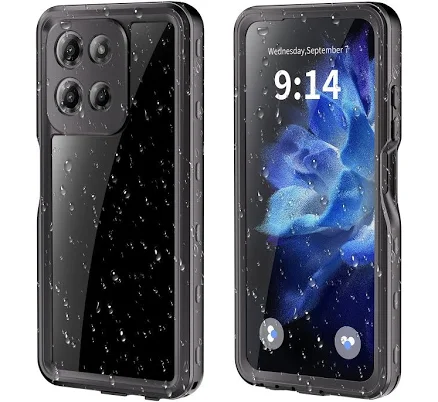
Motorola · Waterproof Phone Cases
for Motorola Moto G 5G 2025 Case with Built-in Screen Protector
No coating described, and no PFAS statement from the brand.
The product information we reviewed describes plastic case and glass screen protector, with no water-repellent coating named. Water resistance on products like this usually comes from the material and its seals rather than a surface treatment. The brand has published no PFAS statement for it.
We flunk more products than we pass. This one earned its grade. How we grade
Material
Plastic case and glass screen protector
Brand disclosure
Brand is silent on PFAS
Lab data
No public lab test
You may also be interested in
Top-graded picks in the categories readers replace first, every one scored on the same rubric.

- polypropylene filter housing, carbon/sediment cartridge
- We found no PFAS statement from the brand
- Bacterial growth in spent cartridges
3 hazards checked on this product, all on its full breakdown.

Aquasure
Premier Series 75 GPD Under Sink Reverse Osmosis Water Filtration System
- RO membrane, carbon filters, stainless steel housing
- We found no PFAS statement from the brand
- Bacterial and microbial growth in housing and filters
4 hazards checked on this product, all on its full breakdown.

Avocado
Vegan Mattress
- organic cotton, natural latex, coconut coir, recycled steel coils
- The brand calls it PFAS-free, which we have not verified
- Heavy metals
2 hazards checked on this product, all on its full breakdown.
What for Motorola Moto G 5G Screen Protector is made of, ingredients and materials
This case combines a plastic shell (likely polycarbonate or TPU blend for shock absorption) with a tempered glass screen protector. Plastics in phone cases are not heated during normal use, which eliminates the primary leaching pathways for BPA or phthalates. Tempered glass is inert and does not leach chemicals into skin or food contact. The rigid case design means no flexible PVC tubing or seals that commonly off-gas volatile compounds.
What’s concerning
Category baseline
The starting point for this type of product, before anything specific to this product is counted.
No PFAS disclosure
No public statement from the brand about PFAS in this product.
Microplastics
Plastic cases can shed micro-particles over years of use, especially at drop-impact corners. Shed particles remain inside the case or fall to ground; inhalation or ingestion risk is low unless case material breaks into visible fragments, which would prompt replacement.
Source, EPA ↗Bacterial or fungal growth in sealed cavity
Trapped moisture between phone back and case interior can create conditions for microbial growth if case is not periodically vented or cleaned. Risk is minimal with normal daily use but increases in humid climates or after water exposure.
Chemical leaching from seal gaskets or adhesives
Rubber or silicone gaskets may contain plasticizers or curing agents that off-gas slowly in warm conditions. Exposure is negligible because the case is sealed and vapors are not inhaled. Risk increases only if gaskets visibly degrade or emit odor.
What’s reassuring
Base material not linked to PFAS
The main material recorded for this product is not one associated with PFAS.
BPA & bisphenols
Phone cases are not ingested and skin contact is intermittent and brief. No heating occurs during normal use. Motorola has not disclosed case polymer type, so BPA/phthalate presence cannot be confirmed, but exposure risk is negligible even if present.
Source, FDA ↗Heavy metals
Tempered glass itself is chemically inert. Adhesives binding glass to plastic are typically epoxy or acrylic and do not contain lead or cadmium at detectable levels in this product class. No recalls or reports for this brand case exist.
Source, FDA ↗How is this PFAS grade calculated?
The brand's record and disclosure
Motorola has not published a public PFAS statement for this product line or category. The case carries no known recalls or safety controversies in published databases. As a mainstream consumer electronics manufacturer, Motorola does not typically certify accessories for heavy metal or chemical content, leaving material composition largely undisclosed by design spec.
How it compares in its category
Waterproof phone cases in this segment universally use plastic shells and glass or plastic screen overlays. This product is typical in material choice. Unlike some cases marketed with antimicrobial coatings or colored silicone, this design avoids additives that could introduce heavy metals or biocidal compounds. The built-in screen protector is more convenient than aftermarket adhesive alternatives, reducing handling complexity.
If you buy it
Inspect the seal gaskets monthly for cracks or degradation, as seal failure is the primary mode of water ingress and potential bacterial growth in the moist cavity. Clean the interior periodically with a dry cloth to prevent salt or mineral buildup if exposed to salt water. Glass screen protectors may develop micro-scratches over 12-18 months; replacement is straightforward. Do not expose to sustained temperatures above 50C (122F), as adhesives binding glass to plastic may soften.
What is not known about PFAS in this product?
- Basis
- Model estimate, 35% confidence, not a lab result
- Lab test
- None on record for this exact product
- Brand statement
- Motorola has made none
Formulations change between production runs, so check the current label. How we grade.
What are the PFAS-free alternatives to for Motorola Moto G 5G 2025 Case with Built-in Screen Protector?
- Flax fiber and plant-based resin blend, compostable
- A third party reports verifying it as PFAS-free
- Coating degradation and durability over time
2 hazards checked on this product, all on its full breakdown.
- plant-based bioplastic (flax and other plant fibers)
- A third party reports verifying it as PFAS-free
- Thermal degradation and warping
3 hazards checked on this product, all on its full breakdown.
- Plant-based bioplastic (compostable blend)
- A third party reports verifying it as PFAS-free
- Bioplastic degradation and microparticle shedding
More waterproof phone cases grades
How we score, every product runs through the same public 0-100 rubric based on materials, coatings, brand disclosure, lab findings, and recalls. See the full methodology → Spotted a mistake? Report an error.