New Balance · Sports Performance Undergarments
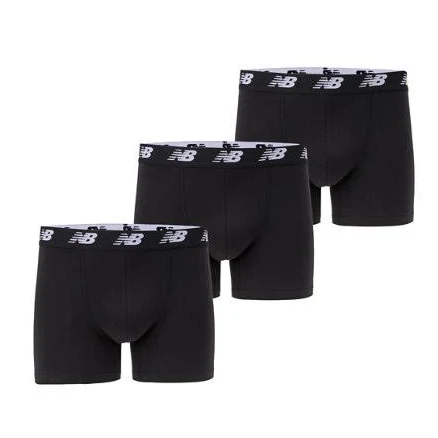
New Balance Men's Premium Performance 3" Trunk Underwear 2-Pack
Low-Medium risk. No waterproof or stain treatments.
New Balance premium trunk underwear uses polyester and elastane without apparent water repellent or stain treatments. No PFAS disclosure available.
Still want this one anyway? Check the price on Amazon. We’d swap it.
Material
polyester and elastane blend
Brand disclosure
Brand is silent on PFAS
Lab data
No public lab test
What New Balance Men's Premium Performance 3" is made of, ingredients and materials
This trunk is a polyester-elastane (spandex) blend, standard for athletic underwear because it stretches, dries quickly, and resists shrinkage. Polyester is a synthetic polymer that does not naturally break down and sheds microfibers when washed, though elastane adds durability over time. The absence of waterproof or stain-repellent coatings (which would add PFAS) is a safety advantage. Neither material requires chemical cross-linking like cotton dyes, so formaldehyde-resin finish risk is minimal in this category.
What’s concerning
Category baseline
The starting point for this type of product, before anything specific to this product is counted.
No PFAS disclosure
No public statement from the brand about PFAS in this product.
Microplastic shedding (polyester fiber fragmentation)
Polyester textiles consistently release microfibers during laundering; elastane blends shed more than 100% polyester. No brand-specific data available for this product, but material composition guarantees some release with every wash.
Azo dyes and synthetic colorants
No public testing or reports document azo dye presence in New Balance underwear. Synthetic textiles are typically dyed with reactive or disperse dyes; azo dyes would be a cost liability and are phased out in major brands, but no certification confirms avoidance here.
Allergic contact dermatitis from elastane or dyes
Elastane and synthetic dyes can trigger contact dermatitis in sensitive individuals, though prevalence is low. No specific adverse event reports for this product exist; standard precaution is patch-test if history of textile sensitivity is present.
What’s reassuring
Base material not linked to PFAS
The main material recorded for this product is not one associated with PFAS.
Antimony in polyester
Antimony trioxide is a known polyester catalyst used in some manufacturing; no recalls or alerts exist for New Balance underwear. Residual antimony levels in finished textiles are generally below dermal absorption risk, and no studies document leaching from body-worn polyester.
Formaldehyde / VOCs
Formaldehyde-based crease-set finishes are rare on stretch underwear because elastane resists pressing. New Balance does not advertise a formaldehyde-free claim, but the material profile makes heavy use unlikely.
Source, ATSDR ↗The full breakdown
The brand's record and disclosure
New Balance has not published a detailed chemical disclosure policy or sustainability report specific to underwear or intimate apparel, and does not currently advertise compliance with bluesign or OEKO-TEX standards for this product. No major product recalls or formaldehyde warnings have been documented for New Balance intimate apparel. The company's silence on PFAS use in athletic textiles is typical for the category but reflects limited transparency.
How it compares in its category
Men's performance trunks in this price range are predominantly polyester-elastane; New Balance sits in the middle of the market. Competitors like Under Armour and Lululemon similarly do not disclose chemical treatments for basic briefs. Organic cotton alternatives (e.g., Patagonia, Boody) eliminate synthetic microfiber shed but cost more and lack moisture-wicking. This product is broadly representative of mainstream athletic underwear with no material safety advantage or disadvantage.
If you buy it
Wash in cool water and avoid high heat, which can degrade elastane fibers and accelerate microfiber release. Air-dry when possible; machine drying on high shortens elastane lifespan. Replace when elastic loses tension or fabric pilling worsens (typically 12-24 months with regular wear). Washing inside-out reduces pilling and fiber shedding in the wash cycle.
What we don’t know
- Basis
- Model estimate, 75% confidence, not a lab result
- Lab test
- None on record for this exact product
- Brand statement
- New Balance has made none
Formulations change between production runs, so check the current label. How we grade.
More sports performance undergarments grades
How we score, every product runs through the same public 0-100 rubric based on materials, coatings, brand disclosure, lab findings, and recalls. See the full methodology → Spotted a mistake? Report an error.