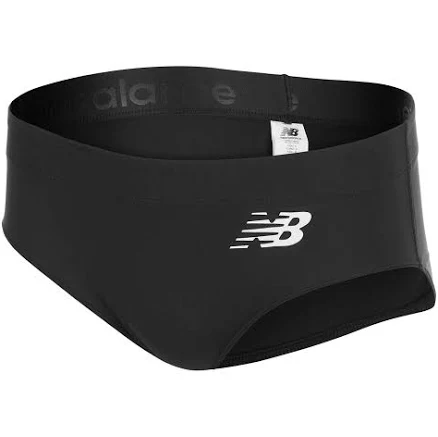
New Balance · Sports Performance Undergarments
New Balance Women's Athletics Brief v3
No evidence of PFAS treatment applied.
Basic nylon and polyester athletic brief without indicated water-resistant treatment. New Balance provides no PFAS disclosure for this product.
Still want this one anyway? Check the price on Amazon. We’d swap it.
Material
Nylon/polyester athletic brief, no water-repellent coating specified
Brand disclosure
Brand is silent on PFAS
Lab data
No public lab test
What New Balance Women's Athletics Brief v3 is made of, ingredients and materials
This brief combines nylon and polyester, both synthetic polymers commonly used in athletic underwear for stretch and moisture-wicking. Nylon itself is chemically stable in normal wear, but polyester can shed microfibers when washed and worn. The dyes used to color the fabric are the primary chemical exposure point; reactive and azo dyes are standard in the industry, though some formulations carry higher allergen risk than others. No water-repellent coating (water-repellent coating) coating is specified, which eliminates a major PFAS pathway in athletic apparel.
What’s concerning
Category baseline
The starting point for this type of product, before anything specific to this product is counted.
No PFAS disclosure
No public statement from the brand about PFAS in this product.
Azo dyes and dye allergens
New Balance does not publish dye supplier or chemical restrictions for basic athletic lines. Azo dyes are legal and widely used in polyester apparel but can trigger contact dermatitis or sensitization in susceptible individuals, particularly if dyes are not fully set during manufacturing.
Microfiber shedding (polyester)
Polyester in this brief will release microfibers during laundering and wear. This is an environmental and potential ingestion pathway rather than a direct toxicology hazard, but relevant to long-term product impact. Frequency increases with washing temperature and agitation.
Antimony in polyester
Antimony trioxide is a common catalyst in polyester synthesis and may be present at trace levels. EU regulations cap antimony migration, but New Balance does not disclose testing or compliance with migration limits. Risk to skin is low in normal wear unless the garment is damaged or heavily abraded.
Elastic degradation and leaching
Elastic components may contain residual plasticizers, accelerants, or uncrosslinked polymer chains that can migrate into skin, especially in warm or moist conditions (prolonged wear, high humidity). Degradation accelerates with heat and detergent exposure.
What’s reassuring
Base material not linked to PFAS
The main material recorded for this product is not one associated with PFAS.
Formaldehyde / VOCs
No formaldehyde finish has been reported in New Balance athletic briefs specifically. However, some manufacturers use formaldehyde-based wrinkle or shape-retention resins in elastic components; New Balance's lack of disclosure means this cannot be ruled out for budget lines.
Source, ATSDR ↗The full breakdown
The brand's record and disclosure
New Balance does not publicly disclose detailed chemical restrictions or third-party testing for their basic athletic underwear lines. The company has faced scrutiny on manufacturing practices and supply chain transparency, but no major product recalls or chemical hazard alerts specific to their briefs are documented. New Balance does not appear to have signed the ZDHC Gateway or committed to phasing out azo dyes, leaving uncertainty about their dyeing standards. Their silence on PFAS is typical for mid-market athletic brands, but absence of a stated policy does not confirm presence of the chemical.
How it compares in its category
Nylon/polyester briefs are the industry standard for athletic underwear and carry the same baseline chemical exposure as competitors like Nike, Under Armour, and store brands. New Balance's lack of published certifications (OEKO-TEX, Bluesign) places it in a lower-transparency tier than premium alternatives, but also at no greater inherent risk. Price point suggests conventional dyeing and finishing rather than low-impact methods. Microfiber shedding from polyester is a universal concern in this category, not unique to New Balance.
If you buy it
Wash in cold water and avoid high heat dryers, which accelerate fiber degradation and dye bleeding. Wash with like colors the first few times to manage dye transfer. Machine washing will release some microfibers into wastewater; using a microfiber-catching bag (e.g., Guppyfriend) reduces environmental impact but does not eliminate it. Replace briefs when elastic degrades or seams separate, typically after 12-24 months of regular use. Do not dry clean or expose to prolonged heat, which can weaken the elastic and increase chemical leaching risk.
What we don’t know
- Basis
- Model estimate, 72% confidence, not a lab result
- Lab test
- None on record for this exact product
- Brand statement
- New Balance has made none
Formulations change between production runs, so check the current label. How we grade.
More sports performance undergarments grades
How we score, every product runs through the same public 0-100 rubric based on materials, coatings, brand disclosure, lab findings, and recalls. See the full methodology → Spotted a mistake? Report an error.