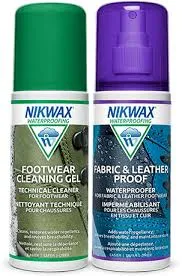
Nikwax · Fabric Stain Guard Sprays
Fabric & Leather DUO-Pack
A water-repellent or grease-resistant treatment of unstated chemistry, with a brand PFAS statement we have not verified.
Nikwax says it has never used PFAS in any of its products. We record that as an unverified brand claim. Its record describes a water-repellent or grease-resistant treatment of unstated chemistry, which is still counted.
Brand says: “Nikwax says it has never used PFAS in any of its products.”
Still want this one anyway? Check the price on Amazon. We’d swap it.
Material
Fabric and leather treatments, waterproofing and stain resistance
Brand disclosure
Brand claims PFAS-free
Lab data
No public lab test
What Fabric & Leather DUO-Pack is made of, ingredients and materials
Nikwax Fabric & Leather DUO-Pack is a spray treatment designed to repel water and resist stains on textiles and leather. The brand claims PFAS-free formulation, though the exact chemistry of the water-repellent and stain-guard active ingredients is not publicly disclosed. Without transparent ingredient labeling, the nature of any replacement chemistry cannot be independently verified. The product relies on propellant and solvent systems typical of aerosol treatments, which carry inhalation and VOC considerations.
What’s concerning
Category baseline
The starting point for this type of product, before anything specific to this product is counted.
Waterproof / stain-resistant treatment
Water-repellent coating treatments have historically used PFAS.
Inhalation exposure to spray propellants and solvents
Aerosol formulations release propellant gases and volatile organic compounds (VOCs) during and immediately after application. No specific inhalation toxicity data for this product's formulation has been published; risk is minimized by outdoor or well-ventilated application.
Skin and eye irritation from active ingredients
Water-repellent and stain-guard actives in textile treatments can cause irritation on direct contact. The undisclosed chemistry makes specific irritation potential unclear; standard practice is to avoid skin contact and wash hands after use.
Microplastic or polymer film buildup on textiles
Some water-repellent treatments create a microscopic polymer layer that can accumulate with repeated applications. Long-term effects on breathability or washability are not quantified for this specific product.
PFAS
PFAS-free formulations often use siloxanes, waxes, or other polymers whose long-term environmental and bioaccumulative properties are not as well understood as legacy fluorocarbons. Nikwax's alternative chemistry is not publicly disclosed, preventing independent assessment.
Source, ATSDR ↗What’s reassuring
Brand-stated PFAS-free
The brand states this product is PFAS-free. We have not verified the claim.
Fabric or leather surface degradation
No reports of discoloration, brittleness, or damage to fabrics or leather from this product when used as directed. However, solvents in spray treatments can strip natural oils from leather if overapplied; patch testing is advised.
The full breakdown
The brand's record and disclosure
Nikwax has made a public PFAS-free commitment, positioning itself as an alternative to legacy fluorocarbon-based treatments. However, this claim has not been independently certified by third-party testing bodies on record. The brand does not appear to publish full ingredient lists or safety data sheets in consumer-accessible formats, limiting transparency. No major safety recalls or regulatory actions against this product have been reported in public records.
How it compares in its category
Fabric and leather treatment sprays typically fall into two camps, those using PFAS-based chemistries (legacy, effective but persistent) and PFAS alternatives (newer, less studied long-term). Nikwax positions in the latter group. Competitors making similar claims (e.g., Granger's, Scotchgard reformulations) also lack full public ingredient disclosure. Products in this category generally carry low acute hazard risk if used outdoors or in ventilated spaces, but chronic exposure data for replacement chemistries is limited.
If you buy it
Apply in well-ventilated outdoor areas or open windows; avoid breathing spray mist and skin contact during application. Do not use on garments you will wear immediately; allow full drying before wear. Test on inconspicuous fabric areas first, especially delicate leathers or synthetics prone to staining from solvents. Reapply every 6-12 months depending on use and washing frequency; water beading or reduced stain resistance signals need for retreatment. Store away from heat and open flame, as aerosol propellants are flammable.
What we don’t know
- Basis
- Model estimate, 45% confidence, not a lab result
- Lab test
- None on record for this exact product
- Brand statement
- Nikwax has made a specific claim
Formulations change between production runs, so check the current label. How we grade.
More fabric stain guard sprays grades
How we score, every product runs through the same public 0-100 rubric based on materials, coatings, brand disclosure, lab findings, and recalls. See the full methodology → Spotted a mistake? Report an error.