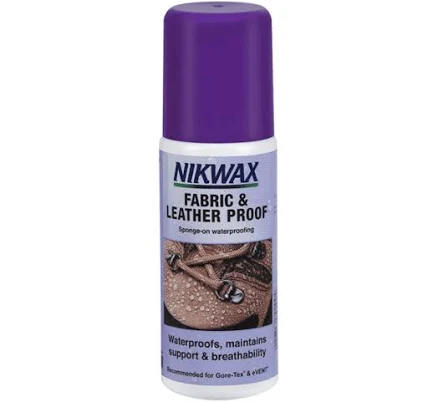
Nikwax · Fabric Stain Guard Sprays
NikWax Waterproofing Spray
A water-repellent or grease-resistant treatment of unstated chemistry, with a brand PFAS statement we have not verified.
Nikwax says it has never used PFAS in any of its products. We record that as an unverified brand claim. Its record describes a water-repellent or grease-resistant treatment of unstated chemistry, which is still counted.
Brand says: “Nikwax says it has never used PFAS in any of its products.”
Still want this one anyway? Check the price on Amazon. We’d swap it.
Material
Wax-based water-repellent coating (water-repellent coating) coating
Brand disclosure
Brand claims PFAS-free
Lab data
No public lab test
What NikWax Waterproofing Spray is made of, ingredients and materials
Nikwax Waterproofing Spray is formulated as a wax-based water-repellent coating (water-repellent coating) coating designed to bond to fabric fibers and shed water without creating a plastic-film barrier. The brand claims PFAS-free composition, but the specific hydrocarbon wax blend, solvents, and any residual additives are not publicly detailed. Wax-based systems typically rely on volatile organic compounds (VOCs) as carriers to enable spray application and solvent evaporation post-application. The absence of fluorocarbon chemistry means reduced bioaccumulation concern, but does not disclose the full chemical identity or volatility profile.
What’s concerning
Category baseline
The starting point for this type of product, before anything specific to this product is counted.
Waterproof / stain-resistant treatment
Water-repellent coating treatments have historically used PFAS.
Volatile Organic Compounds (VOCs) during application and cure
Wax-based spray formulations inherently require volatile solvents to atomize and dry. No VOC content or chemical composition has been disclosed by Nikwax; inhalation exposure during spray application is the primary concern, particularly in enclosed or poorly ventilated spaces.
Respiratory or skin irritation from spray exposure
Hydrocarbon solvents and wax particulates in aerosol form can irritate eyes, respiratory tract, and skin with direct contact. No safety testing data or adverse event reports specific to Nikwax spray have been published; risk is standard for fabric spray products of this type.
Fabric stiffening or altered hand-feel from coating buildup
Repeated applications of wax-based water-repellent coating can accumulate on fibers, reducing fabric softness and breathability over time. This is a known cosmetic and functional concern with wax-based treatments, not a toxicological hazard, but affects garment wearability.
Incomplete ingredient disclosure and lack of third-party verification
The brand's PFAS-free claim is not independently certified, and the full solvent blend and any residual additives remain undisclosed. Consumers cannot verify the complete chemical profile or assess cumulative exposure to unstated components.
What’s reassuring
Brand-stated PFAS-free
The brand states this product is PFAS-free. We have not verified the claim.
Heavy metals
No public data or recalls indicate lead, cadmium, formaldehyde releasers, or brominated flame retardants in Nikwax Waterproofing Spray. This hazard class is not characteristic of wax-based water-repellent coating products.
Source, FDA ↗The full breakdown
The brand's record and disclosure
Nikwax is a UK-based specialist in fabric care and maintains a public commitment to PFAS-free formulations across its product range. The company has not obtained independent third-party certification (such as GOTS, Bluesign, or similar) for this specific spray product as of available public records. Nikwax has not published full ingredient lists or safety data sheets (SDS) readily accessible to consumers, and no major safety recalls or contamination findings have been documented for this product line. Their PFAS stance is stated but not externally verified by accredited labs.
How it compares in its category
Fabric waterproofing sprays divide broadly into fluorocarbon-based (PFOA/PFOS risk), hydrocarbon wax (Nikwax's class), and silicone-based alternatives. Wax-based options like Nikwax position themselves as lower-toxicity alternatives to older fluorinated DWRs, with no known PFOS/PFOA legacy concerns. However, they typically emit more VOCs during application and drying compared to some newer fluorine-free solutions. Durability per wash cycle is generally lower than long-chain fluorocarbon coatings, requiring more frequent reapplication.
If you buy it
Apply in a well-ventilated space or outdoors to minimize inhalation of VOC-laden spray mist; do not spray indoors without open windows and air circulation. Follow the manufacturer's guidance on dry time (typically 24 hours) before wearing or laundering treated garments. Test on an inconspicuous area first to check for any discoloration or stiffening of the fabric. Reapply every 3-5 wash cycles or as water beading diminishes; do not stack layers excessively as this can reduce breathability and increase stiffness.
What we don’t know
- Basis
- Model estimate, 62% confidence, not a lab result
- Lab test
- None on record for this exact product
- Brand statement
- Nikwax has made a specific claim
Formulations change between production runs, so check the current label. How we grade.
More fabric stain guard sprays grades
How we score, every product runs through the same public 0-100 rubric based on materials, coatings, brand disclosure, lab findings, and recalls. See the full methodology → Spotted a mistake? Report an error.