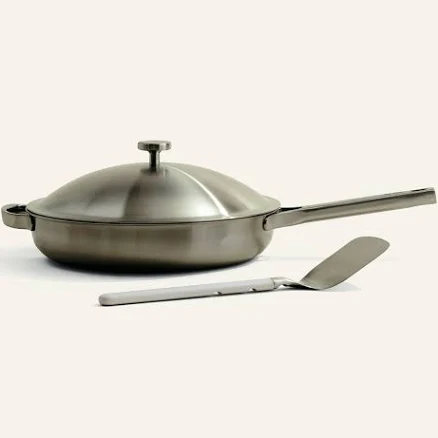
Our Place Titanium Always Pan Pro
Named ceramic non-stick coating, with a brand PFAS statement we have not verified.
Our Place says its ceramic non-stick coating is made without PFAS, including Teflon-type coating and PFOA. We record that as an unverified brand claim. Its record describes a non-stick coating of unstated type, which is still counted.
Brand says: “Our Place says its ceramic non-stick coating is made without PFAS, including PTFE and PFOA.”
We flunk more products than we pass. This one earned its grade. How we grade
Material
Titanium ceramic nonstick coating, unspecified formulation
Brand disclosure
Brand claims PFAS-free
Lab data
No public lab test
Is Our Place Titanium Always Pan Pro non-toxic? What it is made of
The Always Pan Pro uses a titanium-reinforced ceramic nonstick coating over an aluminum core. Ceramic coatings avoid traditional Teflon-type coating (Teflon) chemistry entirely, which eliminates the Teflon-family coating degradation risk at high heat. Our Place does not disclose the exact binding or ceramic-type formulation of this ceramic layer, so independent verification of true PFAS absence is not possible from public data. The aluminum substrate itself is food-safe at normal cooking temperatures when properly sealed by an intact coating.
What’s concerning
Disclosed non-fluorinated coating
Coating is named and the brand states it is made without PFAS.
Category baseline
The starting point for this type of product, before anything specific to this product is counted.
Ceramic coating degradation and aluminum leaching
Ceramic nonstick coatings are durable but do wear over time with use and heat cycling. Once the coating is visibly damaged or flaking, underlying aluminum could contact acidic foods, though leaching risk at normal cooking pH is low.
PFAS
Our Place claims PFAS-free ceramic but does not publish independent lab test results. The exact binder chemistry in the coating is proprietary, so residual fluorine-based processing aids cannot be ruled out entirely by public information.
Source, ATSDR ↗Coating adhesion and durability over time
Ceramic coatings are generally more prone to chipping than traditional Teflon-type coating nonstick if the pan is dropped or used with metal utensils. Long-term adhesion depends on manufacturing quality and user care; titanium reinforcement may improve this, but no durability test data is publicly available for this specific product.
What’s reassuring
Brand-stated PFAS-free
The brand states this product is PFAS-free. We have not verified the claim.
Teflon-type coating/Teflon-family coating fume risk
This product explicitly uses ceramic, not Teflon-type coating, so traditional Teflon decomposition fumes at extreme temperatures are not a concern. Ceramic does not release the same volatile compounds.
Lead
No publicly documented lead or cadmium contamination in Our Place cookware. The titanium ceramic coating is not a traditional glaze or enamel, and the brand has no recall history for heavy metal migration.
Source, ATSDR ↗The full breakdown
The brand's record and disclosure
Our Place has publicly committed to PFAS-free cookware and voluntarily discloses material composition on product pages, which is above average for the category. The company has not faced major product recalls or documented safety controversies in cookware lines. However, the specific formulation of their ceramic coating remains proprietary; they do not publish third-party test reports confirming the PFAS-free claim, so trust relies partly on brand reputation rather than independent certification.
How it compares in its category
Ceramic nonstick cookware sits between traditional Teflon-type coating nonstick (higher Teflon-type coating fume risk at extreme temperatures) and bare stainless steel (no coating hazards but requires more oil). Our Place positions at the premium end with titanium reinforcement, which theoretically improves durability and reduces coating wear over time. Most mainstream ceramic competitors (GreenPan, Caraway) also make PFAS-free claims, so this product is typical for the 'clean' ceramic segment rather than a standout.
If you buy it
Keep the pan below 500F to preserve the ceramic layer; high heat can degrade any ceramic coating over years of use. Hand wash rather than dishwashing when possible to extend nonstick life and reduce mechanical wear. Inspect the coating annually for chips, flaking, or discoloration; if the nonstick surface is visibly compromised, replacement is recommended to avoid aluminum exposure. Avoid metal utensils and abrasive scrubbers; use silicone, wood, or soft plastic tools.
What we don’t know
- Basis
- Model estimate, 42% confidence, not a lab result
- Lab test
- None on record for this exact product
- Brand statement
- Our Place has made a specific claim
Formulations change between production runs, so check the current label. How we grade.
Better-graded alternatives in Cookware
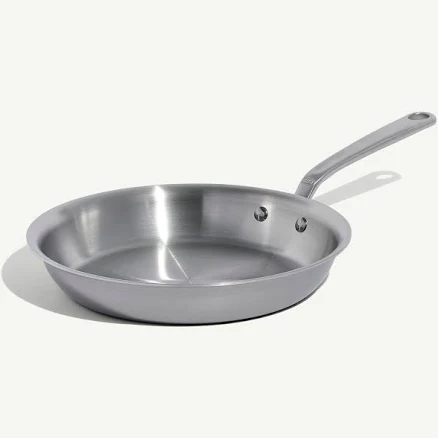
Made In
Stainless Clad Fry Pan
- Stainless steel clad construction, no nonstick coating
- The brand calls it PFAS-free, which we have not verified
- Clad separation or delamination over time
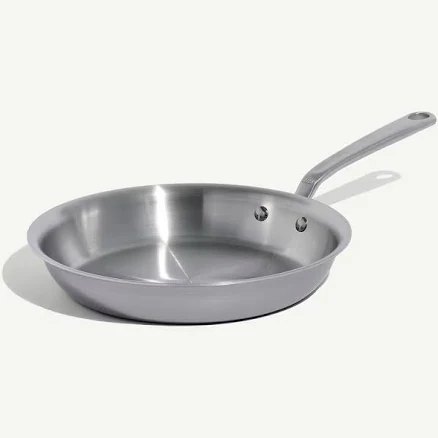
Made In
10' Stainless Clad Frying Pan
- stainless steel clad construction, no nonstick coating
- The brand calls it PFAS-free, which we have not verified
- Nickel leaching from stainless steel
3 hazards checked on this product. See all of them.
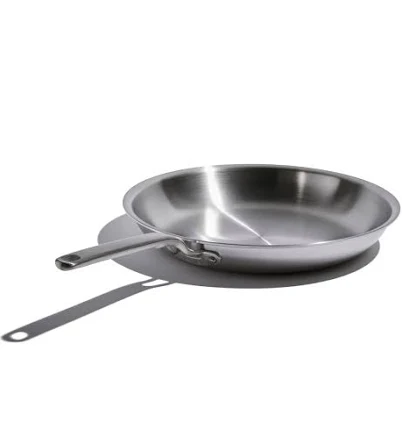
Heritage Steel
Eater Fry Pan
- Clad stainless steel, no coating
- The brand calls it PFAS-free, which we have not verified
- Metal ion release during cooking (iron, nickel, chromium)
More cookware grades
How we score, every product runs through the same public 0-100 rubric based on materials, coatings, brand disclosure, lab findings, and recalls. See the full methodology → Spotted a mistake? Report an error.