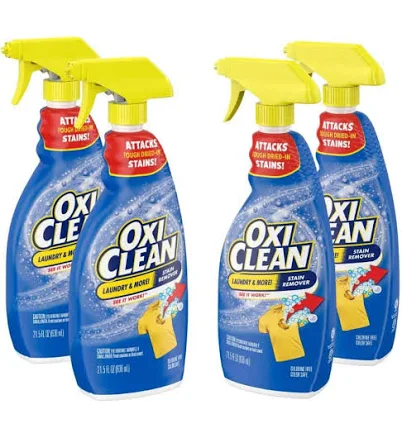
OxiClean · Fabric Stain Guard Sprays
Oxiclean Laundry Stain Remover Spray
Lower concern. Liquid cleaner without known PFAS-prone materials.
OxiClean spray is hydrogen peroxide-based without inherent PFAS risk. No disclosure available but formulation type carries lower concern than coated textiles.
We flunk more products than we pass. This one earned its grade. How we grade
Material
Hydrogen peroxide and surfactants in aqueous spray
Lab data
No public lab test
What Oxiclean Laundry Stain Remover Spray is made of, ingredients and materials
OxiClean Laundry Stain Remover Spray is a dilute hydrogen peroxide solution combined with surfactants and water, designed to oxidize and lift stains before washing. Hydrogen peroxide breaks down into water and oxygen, leaving no persistent chemical residue on fabric. The surfactants help lift oils and dirt; they are not known formulations that trigger phthalate or BPA concerns typical of rigid plastic products. As a liquid spray in an aqueous carrier, the product avoids the volatile organic compound (VOC) off-gassing profile of solvent-based spot removers.
What’s concerning
Category baseline
The starting point for this type of product, before anything specific to this product is counted.
No PFAS disclosure
No public statement from the brand about PFAS in this product.
Hydrogen peroxide irritant exposure (inhalation, skin contact)
Spray application creates aerosolized droplets; at consumer-grade concentrations (typically 3-10% by weight) irritation is unlikely with brief exposure but possible with prolonged inhalation or direct skin contact in sensitive individuals. Adequate ventilation mitigates risk.
Fabric bleaching or color loss
Hydrogen peroxide is an oxidizing agent and can lighten or remove dyes from colored fabrics, especially synthetics or natural dyes, if left in contact too long or applied repeatedly. This is a performance limitation rather than a toxicological hazard but should inform use.
Surfactant allergenicity or dermal sensitivity
OxiClean does not disclose specific surfactant identity; conventional surfactants in cleaning sprays can trigger contact dermatitis or respiratory sensitivity in predisposed individuals, though incidence in laundry sprays is low. Patch testing is prudent for individuals with sensitive skin.
Bacterial growth in spray nozzle or residue
If the spray mechanism is not cleaned regularly or is left with dried product buildup, bacteria or mold can colonize the nozzle or internal passages. Periodic flushing with water after use reduces this risk.
What’s reassuring
Base material not linked to PFAS
The main material recorded for this product is not one associated with PFAS.
Spray bottle housing leachables or contamination
The spray bottle is typically plastic (HDPE or similar) with a trigger mechanism; no known recalls or documented leaching of BPA or phthalates from OxiClean spray bottles have been established. Standard plastic food-contact concerns do not apply as the product is not ingested.
The full breakdown
The brand's record and disclosure
OxiClean (Church & Dwight Co.) does not publicly disclose PFAS use or avoidance in this product line; the silence reflects no known PFAS-prone ingredients in hydrogen peroxide cleaners. The brand has no major recalls or established safety controversies on record for this spray formulation. Ingredient transparency is limited to the product label, which lists hydrogen peroxide as the active ingredient; full surfactant identities are typically proprietary.
How it compares in its category
Hydrogen peroxide-based sprays are generally lower-hazard alternatives to chlorine bleach, solvent-based removers (which carry VOC and inhalation risks), and enzyme pre-soaks that may trigger respiratory sensitivity in sensitive individuals. OxiClean's formulation is mainstream and widely used without reported safety incidents in typical domestic laundry settings. Other peroxide sprays and paste formulations carry similar risk profiles; the spray delivery reduces powder inhalation but requires adequate ventilation during application.
If you buy it
Apply in a well-ventilated area; hydrogen peroxide vapors are low at typical household concentrations but sensitive individuals may experience irritation. Test on an inconspicuous area first to confirm fabric color stability, as peroxide can bleach some dyes with prolonged contact. Allow the spray to sit for 5-10 minutes before rinsing or washing; do not leave it soaking indefinitely, as extended oxidation may weaken delicate fibers. Keep away from eyes and skin; wash hands after application. Store in a cool, dark place to preserve hydrogen peroxide efficacy over time.
What we don’t know
- Basis
- Model estimate, 82% confidence, not a lab result
- Lab test
- None on record for this exact product
- Brand statement
- OxiClean has made a specific claim
Formulations change between production runs, so check the current label. How we grade.
More fabric stain guard sprays grades
How we score, every product runs through the same public 0-100 rubric based on materials, coatings, brand disclosure, lab findings, and recalls. See the full methodology → Spotted a mistake? Report an error.