OxiClean · Fabric Stain Guard Sprays
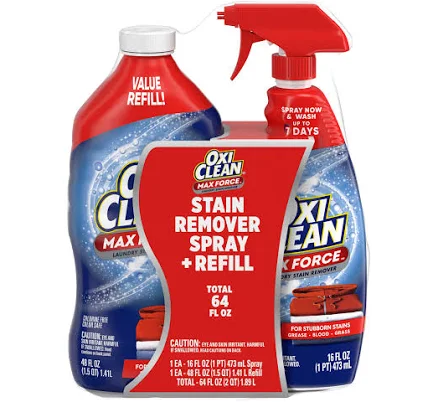
OxiClean MaxForce Advanced Stain Remover
Lower PFAS concern; standard oxygen-based stain remover.
OxiClean MaxForce is hydrogen peroxide-based without known PFAS ingredients or coatings. Brand provides no PFAS information though formulation type suggests lower risk.
We flunk more products than we pass. This one earned its grade. How we grade
Material
Hydrogen peroxide, surfactants, water-based cleaner
Lab data
No public lab test
What OxiClean MaxForce Advanced Stain Remover is made of, ingredients and materials
OxiClean MaxForce is a hydrogen peroxide-based cleaner combined with surfactants and water. Hydrogen peroxide breaks down into water and oxygen when it reacts with stains, leaving no persistent chemical residue. Surfactants help lift oils and dirt from fabric fibers. This chemistry avoids chlorine bleach, which poses greater inhalation and skin irritation risk, and uses a mechanism that does not require heavy metals or halogenated compounds.
What’s concerning
Category baseline
The starting point for this type of product, before anything specific to this product is counted.
No PFAS disclosure
No public statement from the brand about PFAS in this product.
Inhalation risk (spray form)
Hydrogen peroxide vapor and surfactant aerosol from spray application can irritate airways and eyes in poorly ventilated spaces. Risk is reduced with normal home use and cross-ventilation but increases with prolonged exposure in closed rooms.
Skin and eye irritation (direct contact)
Hydrogen peroxide and surfactants in this formula can cause mild to moderate irritation if sprayed directly on skin or eyes. Product labels carry standard warnings; no unusual sensitivity reports specific to OxiClean are on record, but individual reactions vary.
Fragrance allergens (undisclosed composition)
The product contains added fragrance but does not itemize allergens like limonene or geraniol on consumer packaging. People with fragrance sensitivity or asthma may react to inhalation or dermal contact; masking fragrance ingredients limits consumer choice to avoid them.
Hydrogen peroxide instability and off-gassing
Hydrogen peroxide degrades into water and oxygen gas over time, especially when exposed to light and heat. Storage in a warm bathroom or garage reduces shelf life; degraded product becomes less effective and may release small amounts of oxygen gas in sealed or poorly ventilated storage areas.
What’s reassuring
Base material not linked to PFAS
The main material recorded for this product is not one associated with PFAS.
Surfactant bioaccumulation (category-level concern, not brand-specific)
OxiClean does not disclose surfactant origin or biodegradability. Most modern commercial surfactants are biodegradable, but ingredient transparency is absent; this is a category-wide issue rather than an OxiClean-specific concern.
The full breakdown
The brand's record and disclosure
Church & Dwight (OxiClean's parent company) does not prominently disclose fragrance allergen content or surfactant sourcing on consumer-facing labeling, which is typical but limits transparency. No major product recalls for this formulation are on record with the Consumer Product Safety Commission. The brand does not advertise independent certifications like EcoLogo or Green Seal, though the oxygen-based mechanism itself aligns with safer cleaning chemistry. Ingredient lists on labels are minimal and do not break down surfactant types.
How it compares in its category
Oxygen-based stain removers like OxiClean occupy the middle tier of fabric treatment safety. They are lower concern than chlorine bleach or solvent-based spot removers, and comparable to other hydrogen peroxide sprays (e.g., Clorox 2). Some eco-focused alternatives (plant-derived surfactants, enzyme-based cleaners) exist but cost more and may require longer dwell time. OxiClean's broad availability and mild oxidative mechanism make it a conventional choice with no major safety red flags relative to peers.
If you buy it
Test on a hidden area of fabric first, especially delicate or dyed materials, because hydrogen peroxide can bleach some colors. Use in a well-ventilated space to avoid inhalation of mist. Do not mix with ammonia, acids, or other cleaners. Store upright, away from heat and direct sunlight, as hydrogen peroxide degrades over time once opened; replace after 6-12 months if the bottle discolors or loses effectiveness. Follow label instructions for dwell time (typically 5-10 minutes before washing).
What we don’t know
- Basis
- Model estimate, 78% confidence, not a lab result
- Lab test
- None on record for this exact product
- Brand statement
- OxiClean has made a specific claim
Formulations change between production runs, so check the current label. How we grade.
More fabric stain guard sprays grades
How we score, every product runs through the same public 0-100 rubric based on materials, coatings, brand disclosure, lab findings, and recalls. See the full methodology → Spotted a mistake? Report an error.