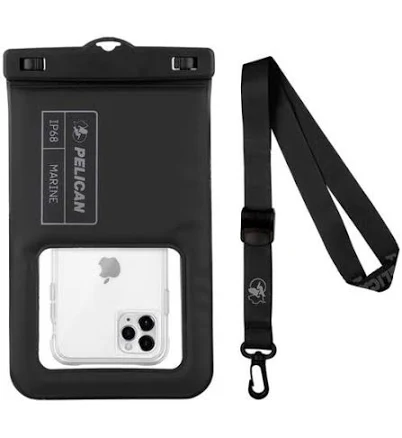
Pelican · Waterproof Phone Cases
Pelican Marine Waterproof Floating Phone Pouch
No coating described, and no PFAS statement from the brand.
The product information we reviewed describes pVC or TPU waterproof lining, with no water-repellent coating named. Water resistance on products like this usually comes from the material and its seals rather than a surface treatment. The brand has published no PFAS statement for it.
We flunk more products than we pass. This one earned its grade. How we grade
Material
PVC or TPU waterproof lining
Lab data
No public lab test
You may also be interested in
Top-graded picks in the categories readers replace first, every one scored on the same rubric.

- polypropylene filter housing, carbon/sediment cartridge
- We found no PFAS statement from the brand
- Bacterial growth in spent cartridges
3 hazards checked on this product, all on its full breakdown.

Aquasure
Premier Series 75 GPD Under Sink Reverse Osmosis Water Filtration System
- RO membrane, carbon filters, stainless steel housing
- We found no PFAS statement from the brand
- Bacterial and microbial growth in housing and filters
4 hazards checked on this product, all on its full breakdown.

Avocado
Vegan Mattress
- organic cotton, natural latex, coconut coir, recycled steel coils
- The brand calls it PFAS-free, which we have not verified
- Heavy metals
2 hazards checked on this product, all on its full breakdown.
What Pelican Marine Waterproof Phone Pouch is made of, ingredients and materials
This pouch uses either PVC (polyvinyl chloride) or TPU (thermoplastic polyurethane) for its waterproof lining, both inert plastics designed to repel water without degrading. Neither material leaches into phones under normal use because the device remains sealed inside and does not contact food or skin. The floating design means no metal hardware that could corrode or release metals; sealing integrity depends on mechanical closures (zippers, adhesive seams) rather than coatings, so there is no Teflon-type coating fume risk or fluorinated polymer finish to degrade.
What’s concerning
Category baseline
The starting point for this type of product, before anything specific to this product is counted.
No PFAS disclosure
No public statement from the brand about PFAS in this product.
Phthalates
If the pouch is made from PVC rather than TPU, it may contain phthalate plasticizers to maintain flexibility. No direct skin contact occurs during normal use since the phone is sealed inside, but long-term storage in heat or sunlight can accelerate polymer degradation. Pelican has not specified PVC vs. TPU or phthalate-free formulations for this product.
Source, ATSDR ↗Bacterial or mold growth in sealed environment
If moisture enters or condenses inside the pouch during storage, the sealed environment can promote mold or bacterial colonies. This is a usage/maintenance issue rather than a material hazard, but relevant to owners who store the pouch damp or in warm, humid spaces.
UV degradation and polymer brittleness
PVC and TPU both weaken under prolonged UV exposure, leading to cracking, stickiness, or loss of waterproof seal integrity over 1-3 years of outdoor use. This does not release hazardous chemicals but compromises the protective function and may allow water ingress to the phone.
What’s reassuring
Base material not linked to PFAS
The main material recorded for this product is not one associated with PFAS.
Heavy metals
No printed graphics, dyes, or adhesive-applied labels are noted as part of this product's design. If graphics are present, they are not described in available product information, so no assessment of ink or dye composition is possible.
Source, FDA ↗Volatile organic compounds (VOC) off-gassing
Simple PVC and TPU formulations used in waterproof pouches do not typically off-gas significantly at room temperature. No adhesives, foams, or flame retardants are inherent to this product category, so off-gassing is not a known concern for this type of case.
How is this PFAS grade calculated?
The brand's record and disclosure
Pelican is a well-established hard-case manufacturer with a strong reputation for durability and product safety; the brand does not publicly disclose PFAS testing or avoidance statements for soft-good pouches, which is typical for this product segment. No recalls or safety complaints specific to this pouch model have been reported in public records. The company's overall track record in outdoor and protective gear does not show patterns of chemical safety concerns.
How it compares in its category
Waterproof phone pouches are a low-chemical-risk category because the phone itself is sealed inside and isolation from the material is inherent to the design. This Pelican pouch is more durable than budget silicone alternatives and uses simpler, more stable polymers than pouches with added water-resistant coatings or laminated fabrics. It avoids the complexity of neoprene (which can off-gas) and adhesive-laminated nylon, offering a design with lower concern regarding those specific issues.
If you buy it
Store in a dry location when not in use to prevent mold or bacterial growth inside; inspect seams and closures before each water exposure, especially after drops or prolonged UV exposure. Do not leave the pouch in direct sunlight for extended periods, as PVC and TPU can become brittle or tacky over time. Replace the pouch if sealing integrity is compromised (cracked seams, sticky residue, visible wear) to maintain waterproof protection. Rinse with fresh water after saltwater use to remove minerals that can degrade closure mechanisms.
What is not known about PFAS in this product?
- Basis
- Model estimate, 45% confidence, not a lab result
- Lab test
- None on record for this exact product
- Brand statement
- Pelican has made a specific claim
Formulations change between production runs, so check the current label. How we grade.
What are the PFAS-free alternatives to Pelican Marine Waterproof Floating Phone Pouch?
- Flax fiber and plant-based resin blend, compostable
- A third party reports verifying it as PFAS-free
- Coating degradation and durability over time
2 hazards checked on this product, all on its full breakdown.
- plant-based bioplastic (flax and other plant fibers)
- A third party reports verifying it as PFAS-free
- Thermal degradation and warping
3 hazards checked on this product, all on its full breakdown.
- Plant-based bioplastic (compostable blend)
- A third party reports verifying it as PFAS-free
- Bioplastic degradation and microparticle shedding
More waterproof phone cases grades
How we score, every product runs through the same public 0-100 rubric based on materials, coatings, brand disclosure, lab findings, and recalls. See the full methodology → Spotted a mistake? Report an error.