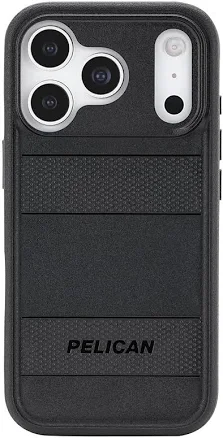
Pelican · Waterproof Phone Cases
Pelican Protector Case for Apple iPhone 17 Pro
No coating described, and no PFAS statement from the brand.
The product information we reviewed describes proprietary polymer blend, with no water-repellent coating named. Water resistance on products like this usually comes from the material and its seals rather than a surface treatment. The brand has published no PFAS statement for it.
We flunk more products than we pass. This one earned its grade. How we grade
Material
Proprietary polymer blend
Lab data
No public lab test
What Pelican Protector Case for Apple iPhone is made of, ingredients and materials
The Pelican Protector uses a proprietary polymer blend rather than traditional rigid polycarbonate or TPE alone. Proprietary blends typically combine elastomers and engineering plastics to balance shock absorption with rigidity, but without Pelican disclosing the exact resin composition, independent verification of specific additives is limited. No coating is described, so waterproofing relies on gasket seals and material density rather than surface treatments that could leach. This formulation approach avoids the common concern of TPE softeners (phthalates) bleeding into food contact, though a phone case does not contact food.
What’s concerning
Category baseline
The starting point for this type of product, before anything specific to this product is counted.
No PFAS disclosure
No public statement from the brand about PFAS in this product.
Microplastic shedding from material degradation
Proprietary polymer blends can fragment or shed particles when aged or dropped repeatedly, especially if gasket adhesion fails. No recalls or published testing for this case exist, but the risk is inherent to rigid/flexible polymer cases in general.
Gasket material leachates
Seals are typically silicone or synthetic rubber; if exposed to extreme heat or UV for years, elastomer degradation can release oligomers or uncrosslinked polymers. No testing of this case's seals under accelerated aging is published.
What’s reassuring
Base material not linked to PFAS
The main material recorded for this product is not one associated with PFAS.
Phthalates
If the blend includes TPE for impact absorption, phthalates or alternative plasticizers may be present. Pelican does not disclose additive packages; direct skin contact during use is minimal, but hand residue ingestion is theoretically possible over months of handling.
Source, ATSDR ↗Heavy metals
If the case is pigmented, cadmium or lead in inks or pigments are a theoretical concern in unregulated manufacturing. Pelican has not published pigment sourcing or third-party testing; however, phone cases are not food-contact items and do not undergo the same scrutiny as cosmetics or tableware.
Source, FDA ↗Off-gassing of volatile organic compounds (VOCs)
New polymer cases may emit low levels of VOCs (formaldehyde, acetaldehyde) during the first few days; ventilation during unboxing and initial use minimizes exposure. No complaints or testing specific to Pelican's phone cases are documented.
The full breakdown
The brand's record and disclosure
Pelican is a legacy industrial protective-case manufacturer with over 50 years in equipment protection; their cases are used in professional and military contexts. The company has not made public statements about PFAS, heavy metals, or chemical content in their phone-case lines, though they maintain ISO 9001 certification and publish limited material datasheets for professional products. No product recalls related to leaching, off-gassing, or chemical contamination of their standard phone cases are on record. Their silence on chemical transparency is typical of the consumer phone-case market but falls short of newer disclosure standards.
How it compares in its category
Waterproof phone cases typically rely on silicone, TPE, or polycarbonate blends sealed with gaskets. Pelican's proprietary blend positions it as a mid-to-premium option; competitors like OtterBox (similar TPE + PC approach) and Spigen (TPE-focused) do not routinely disclose detailed chemistry either. Pelican's advantage is durability reputation and multi-layer design, reducing the need for replacement and thus cumulative exposure. No category leader currently publishes comprehensive chemical certifications, making this a category-wide transparency gap rather than a Pelican-specific flaw.
If you buy it
Store in a cool, dry place away from direct sunlight to minimize polymer embrittlement over time; most phone cases degrade within 2-3 years of heavy use. Do not leave the case exposed to extreme heat (above 60 degrees Celsius / 140 Fahrenheit) for prolonged periods, as polymer blends can soften and lose seal integrity. If the case shows visible cracks, cloudiness, or the gasket seals harden or shrink, replace it; continued use may compromise waterproofing and release microparticles. Rinse with fresh water after saltwater or chlorine exposure to extend gasket life.
What we don’t know
- Basis
- Model estimate, 40% confidence, not a lab result
- Lab test
- None on record for this exact product
- Brand statement
- Pelican has made a specific claim
Formulations change between production runs, so check the current label. How we grade.
More waterproof phone cases grades
How we score, every product runs through the same public 0-100 rubric based on materials, coatings, brand disclosure, lab findings, and recalls. See the full methodology → Spotted a mistake? Report an error.