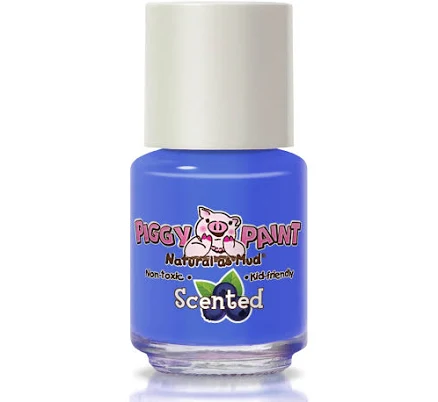
Piggy Paint · Nail Polish & Top Coat
Nail Polish Piggy Paint
Lower-concern nail polish backed by PFAS-free claim and third-party certification.
Piggy Paint explicitly markets itself as PFAS-free and holds MADE SAFE certification, which independently verifies absence of harmful chemicals including PFAS. Water-based lacquer lacks typical PFAS drivers.
Brand says: “Piggy Paint is made without dibutyl phthalate (DBP), toluene, formaldehyde, and PFAS chemicals.”
We flunk more products than we pass. This one earned its grade. How we grade
Material
water-based pigmented lacquer
Brand disclosure
Brand claims PFAS-free
Lab data
No public lab test
Is Nail Polish Piggy Paint non-toxic? What it is made of
Piggy Paint formulates this product as a water-based lacquer rather than the traditional solvent-heavy acetone or ethyl acetate systems used in conventional polish. Water-based formulas reduce volatile organic compound (VOC) emissions during application and drying, lowering inhalation exposure to respiratory irritants. The pigmented lacquer still contains resins and binders to achieve adhesion and durability on the nail surface, but the water carrier system is inherently lower-toxicity than petroleum distillates.
What’s concerning
Category baseline
The starting point for this type of product, before anything specific to this product is counted.
Volatile organic compounds (VOCs) from resins and solvents
Water-based formulas emit significantly fewer VOCs than acetone or ethyl acetate systems, but residual solvent carriers and alkyd or acrylic resins may still off-gas during application and drying. Risk is minimal with normal ventilation.
Allergenic fragrance or colorant sensitization
Individual sensitivity to water-soluble pigments, fragrance additives, or preservatives can occur in any nail product. Piggy Paint formulates for sensitive skin but does not guarantee freedom from all allergens; discontinue use if localized redness or itching develops.
Dermal or respiratory irritation from residual uncrosslinked resins
Water-based lacquers can retain uncrosslinked polymer chains or emulsifiers that may irritate sensitive skin or airways in poorly ventilated spaces. Risk is low but not zero; ventilation and avoiding prolonged inhalation minimizes exposure.
What’s reassuring
Base material not linked to PFAS
The main material recorded for this product is not one associated with PFAS.
Third-party PFAS-free verification
A third party reports verifying this product as PFAS-free.
Formaldehyde / VOCs
Piggy Paint's marketed formulation excludes formaldehyde. No independent testing confirming formaldehyde presence is on record for this product.
Source, ATSDR ↗Lead
No recalls or regulatory findings of heavy metal contamination in Piggy Paint products are documented. Water-based lacquers do not inherently concentrate metals, but third-party certification testing would provide confirmation; brand claims transparency but specific metal assay data is not routinely published.
Source, ATSDR ↗The full breakdown
The brand's record and disclosure
Piggy Paint is recognized for explicit commitment to PFAS avoidance and has pursued third-party certification to back the claim. The brand publishes ingredient disclosure and markets itself on non-toxic, kid-safe formulation, with a long-standing reputation in the natural/non-toxic beauty space. No major safety recalls or substantiated hazard disclosures have emerged from regulatory databases or independent testing for this product line.
How it compares in its category
Conventional nail polishes commonly contain toluene, dibutyl phthalate (DBP), and formaldehyde, all of which Piggy Paint explicitly excludes. Water-based alternatives typically trade some durability for lower toxicity; Piggy Paint's formula attempts to balance both. Among water-based and non-toxic polish options, this brand ranks consistently in the transparency and third-party verification tier.
If you buy it
Apply in well-ventilated spaces to minimize any residual VOC inhalation, though water-based formulas emit far less than conventional polish. Drying time is typically longer than solvent-based products; allow 5-10 minutes before contact to avoid smudging. Removal with non-acetone polish remover or soap and water (as advertised) avoids acetone exposure and is gentler on nail and cuticle health. Reapply every 5-7 days if chipping occurs, and discontinue if redness or irritation develops around the nail bed.
What we don’t know
- Basis
- Model estimate, 78% confidence, not a lab result
- Lab test
- None on record for this exact product
- Brand statement
- Piggy Paint has made a specific claim
Formulations change between production runs, so check the current label. How we grade.
More nail polish & top coat grades
How we score, every product runs through the same public 0-100 rubric based on materials, coatings, brand disclosure, lab findings, and recalls. See the full methodology → Spotted a mistake? Report an error.