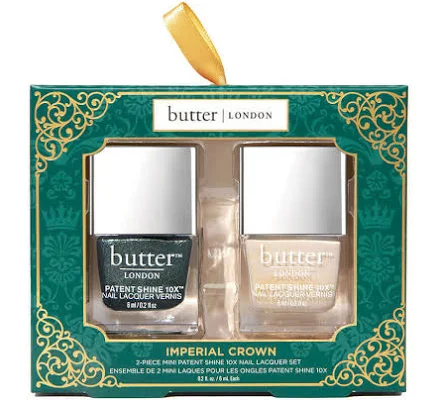
Butter London · Nail Polish & Top Coat
Butter London Imperial Crown Patent Shine Nail Lacquer Set
Lower concern for PFAS; nail polish is not a typical PFAS-use category, but brand offers no transparency.
Butter London's patent-shine nail lacquer is a conventional cosmetic with no known PFAS-prone features or water-repellent or stain-resistant treatment claims typical of cosmetics at PFAS risk. The brand makes no PFAS disclosure.
We flunk more products than we pass. This one earned its grade. How we grade
Material
Nitrocellulose, plasticizers, resins, pigments (typical nail lacquer)
Brand disclosure
Brand is silent on PFAS
Lab data
No public lab test
Is Butter London Imperial Crown Patent Shine non-toxic? What it is made of
Butter London Imperial Crown uses nitrocellulose (cellulose derivative) as the film-former, combined with plasticizers (likely dibutyl phthalate or alternatives) and resins to create shine and adherence. Pigments provide color. Nitrocellulose-based lacquers are the industry standard and have a long safety history when used as directed. The 'patent shine' formulation suggests a higher resin content for gloss, which is cosmetic rather than a safety concern.
What’s concerning
Category baseline
The starting point for this type of product, before anything specific to this product is counted.
No PFAS disclosure
No public statement from the brand about PFAS in this product.
Phthalates
Nail lacquers typically contain phthalate plasticizers to prevent cracking and improve flexibility. Butter London does not disclose whether they use legacy DBP or have switched to alternatives like DINP or non-phthalate plasticizers. Exposure during application and wear is dermal and minimal; risk is higher during removal if large amounts are inhaled or ingested (e.g., by children).
Source, ATSDR ↗Lead
Nail lacquers use FD&C and D&C colorants, which are regulated for heavy metal impurities by the FDA, but limits are set for ingestion, not dermal cosmetics. Butter London does not publish metal testing or certify pigment purity. Risk is low due to external-only exposure, but no verification is available.
Source, ATSDR ↗Volatile organic compound (VOC) inhalation during application
Nitrocellulose-based lacquers emit VOCs (acetone, ethyl acetate, toluene) during and shortly after application. Butter London products have not been specifically tested for VOC levels in published studies, but the standard formulation class is known to release these solvents. Risk is minimized by ventilation and is not a barrier to use.
Fragrance allergens
Premium nail lacquers often contain fragrance to mask solvent odor or add brand identity. Butter London does not disclose fragrance components; if present, undisclosed allergens or sensitizers (e.g., limonene, citral, cinnamaldehyde) could trigger contact sensitization in susceptible individuals during application or removal.
What’s reassuring
Base material not linked to PFAS
The main material recorded for this product is not one associated with PFAS.
Formaldehyde / VOCs
No formaldehyde or formaldehyde-releasers have been reported in Butter London nail lacquers. The product does not require aqueous preservation systems that typically use these agents. Public records and industry databases show no formaldehyde concerns for this brand's nail lacquer line.
Source, ATSDR ↗The full breakdown
The brand's record and disclosure
Butter London does not publish full ingredient lists or third-party safety certifications on their website or product packaging in publicly available sources. The brand has not faced major recalls or documented safety controversies specific to this product line. No statement on phthalate phase-out, heavy metal testing, or formaldehyde-releaser avoidance is on record, meaning customers cannot verify reformulation toward alternatives with lower concern.
How it compares in its category
Nail polish is a low-hazard cosmetic category because exposure is topical, brief, and external (not ingested). Butter London sits in the mid-range premium segment; it lacks the 'clean' or '3-free/5-free' marketing of brands like Zoya or Ella+Mila, but also carries no worse chemical profile than major drugstore brands like Sally Hansen. The lack of transparency is the main differentiator, not the chemistry itself.
If you buy it
Use in a well-ventilated space or with a fan to limit inhalation of volatile organic compounds (VOCs), particularly when applying and during drying. Remove with acetone-based or non-acetone remover; acetone is harsher but more effective for thick lacquers. Replace if the polish thickens, separates, or develops a sour smell, as degraded formula may contain unwanted byproducts. Store in a cool, dark place away from heat and direct sunlight to slow solvent evaporation and maintain consistency.
What we don’t know
- Basis
- Model estimate, 72% confidence, not a lab result
- Lab test
- None on record for this exact product
- Brand statement
- Butter London has made none
Formulations change between production runs, so check the current label. How we grade.
Better-graded alternatives in Nail Polish & Top Coat
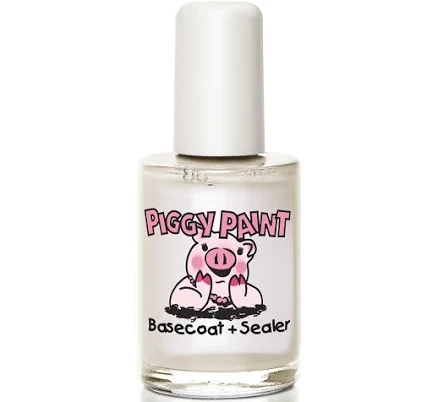
Piggy Paint
Basecoat & Sealer Nail Polish
- Water-based organic pigments and plant-derived resins
- The brand calls it PFAS-free, which we have not verified
- Heavy metals
3 hazards checked on this product. See all of them.
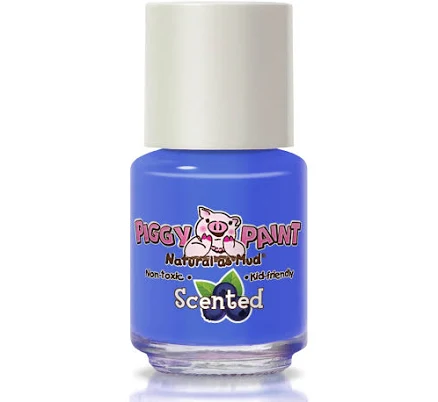
Piggy Paint
Nail Polish Piggy Paint
- water-based pigmented lacquer
- The brand calls it PFAS-free, which we have not verified
- Volatile organic compounds (VOCs) from resins and solvents
3 hazards checked on this product. See all of them.
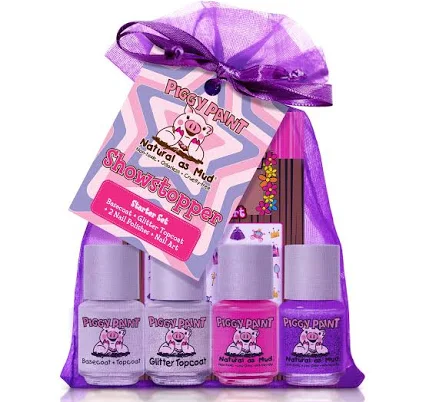
Piggy Paint
Showstopper Nail Polish Set
- organic pigments, plant-based resins, water-based lacquer
- The brand calls it PFAS-free, which we have not verified
- Volatile organic compounds (VOCs)
2 hazards checked on this product. See all of them.
More nail polish & top coat grades
How we score, every product runs through the same public 0-100 rubric based on materials, coatings, brand disclosure, lab findings, and recalls. See the full methodology → Spotted a mistake? Report an error.