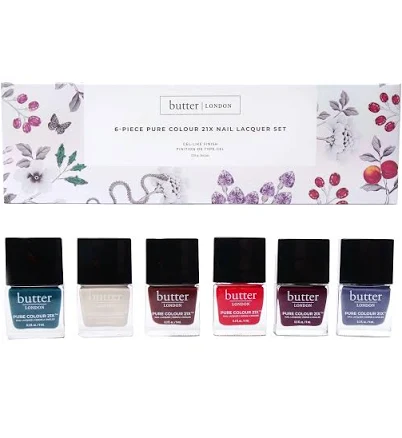
Seasons Everything 6-Piece PC21X Nail Lacquer Set
Lower PFAS concern for nail polish; no known industry drivers for forever chemicals in this format.
The brand's nail lacquer is a traditional nitrocellulose-based product with no documented PFAS drivers like water-resistant coating, nonstick, or water-repellent coating treatment. The brand discloses nothing about PFAS, but the product category carries lower systemic risk than water-resistant apparel or coated cookware.
We flunk more products than we pass. This one earned its grade. How we grade
Material
Nail lacquer (nitrocellulose-based polish)
Brand disclosure
Brand is silent on PFAS
Lab data
No public lab test
Is Seasons Everything 6-Piece PC21X Nail non-toxic? What it is made of
Nail lacquers are nitrocellulose-based polishes, the industry standard formulation. Nitrocellulose itself is inert once dry; risk comes from solvents (toluene, xylene, dibutyl phthalate historically) and additives during application and wear. The PC21X line is marketed as a multi-color set; no reformulation or "3-free" or "5-free" claims appear on public record, meaning solvent safety relies on standard regulatory minimums rather than brand commitment.
What’s concerning
Category baseline
The starting point for this type of product, before anything specific to this product is counted.
No PFAS disclosure
No public statement from the brand about PFAS in this product.
Volatile organic compounds (VOCs) from solvents
Nitrocellulose polish relies on toluene, xylene, and other aromatic solvents for application. Acute inhalation can cause dizziness or headache; chronic exposure has been linked to respiratory irritation in occupational settings. The brand does not specify solvent types or concentrations for this product, so exposure level cannot be independently verified without testing.
Dibutyl phthalate (DBP) plasticizer
DBP is a common nail polish plasticizer historically used to prevent brittleness but has endocrine concerns. EU restricts it; US allows it. No public statement from the brand confirms DBP exclusion in PC21X, so presence or absence cannot be confirmed without ingredient testing or brand certification.
Formaldehyde / VOCs
Some nail lacquers use formaldehyde-releasing resins as hardeners. Formaldehyde is a known respiratory sensitizer and volatile. The brand does not disclose hardener chemistry; assumed standard unless otherwise stated, but lacquer format minimizes skin contact risk compared to other cosmetics.
Source, ATSDR ↗Fragrance allergens
Nail polishes often contain fragrance compounds (e.g., camphor, essential oils) for scent and evaporation; specific ingredients are typically undisclosed proprietary information. Risk is primarily inhalation irritation rather than dermal allergy given brief exposure and rapid drying.
What’s reassuring
Base material not linked to PFAS
The main material recorded for this product is not one associated with PFAS.
Heavy metals
Lead, cadmium, and chromium are restricted in cosmetic colorants across US and EU. No recalls or contamination reports on record for polishes. Small volume of pigment per bottle and no ingestion pathway makes exposure minimal even if trace metals are present.
Source, FDA ↗The full breakdown
The brand's record and disclosure
The brand maintains a publicly visible website and retail presence but does not publish detailed ingredient lists, safety certifications, or third-party testing results for this product line. No major recalls, banned-substance violations, or contamination incidents are documented for the brand in public safety databases. The brand does not make explicit formulation transparency claims (e.g., "free of X chemical"), suggesting reliance on legal compliance rather than precautionary standards.
How it compares in its category
Standard nail polish carries similar solvent exposure risk across brands unless specifically marketed as "non-toxic" or "7-free." Occupies the mid-market segment, more transparent than mass-market drugstore brands, less certified than premium indie or eco-focused lines. A 6-piece set is typical multi-color value packaging; no evidence this format or brand uses alternative binders that would reduce volatile organic compound (VOC) exposure.
If you buy it
Apply in well-ventilated areas to minimize inhalation of solvent vapors. Allow at least 2 minutes drying time before touching to avoid skin contact with wet lacquer. Avoid ingestion or use on damaged skin. Replace lacquer bottles every 1-2 years if they thicken or separate, as degraded formulas may release more volatile compounds. Removal with acetone-based remover is standard; wear gloves if skin irritation occurs during removal.
What we don’t know
- Basis
- Model estimate, 72% confidence, not a lab result
- Lab test
- None on record for this exact product
- Brand statement
- has made none
Formulations change between production runs, so check the current label. How we grade.
Better-graded alternatives in Nail Polish & Top Coat
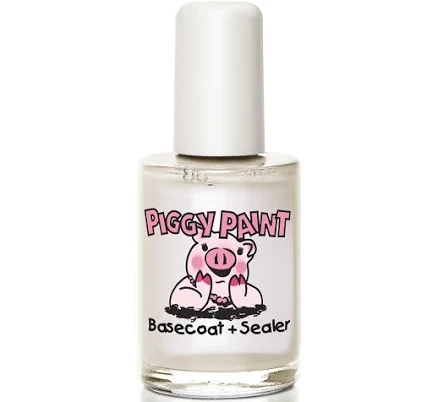
Piggy Paint
Basecoat & Sealer Nail Polish
- Water-based organic pigments and plant-derived resins
- The brand calls it PFAS-free, which we have not verified
- Heavy metals
3 hazards checked on this product. See all of them.
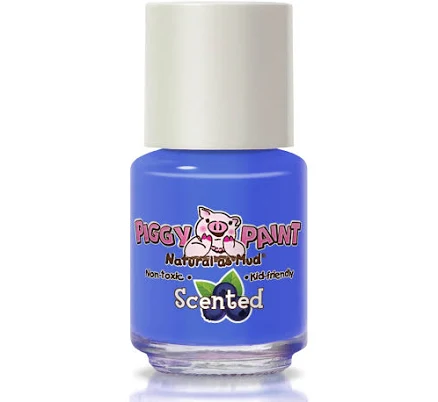
Piggy Paint
Nail Polish Piggy Paint
- water-based pigmented lacquer
- The brand calls it PFAS-free, which we have not verified
- Volatile organic compounds (VOCs) from resins and solvents
3 hazards checked on this product. See all of them.
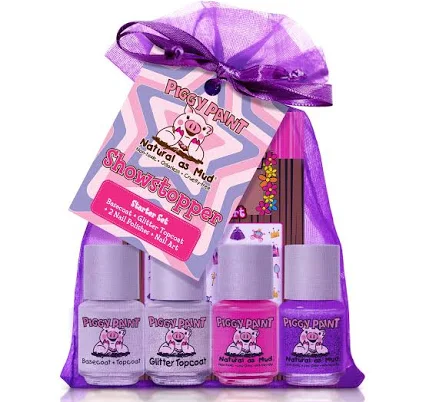
Piggy Paint
Showstopper Nail Polish Set
- organic pigments, plant-based resins, water-based lacquer
- The brand calls it PFAS-free, which we have not verified
- Volatile organic compounds (VOCs)
2 hazards checked on this product. See all of them.
More nail polish & top coat grades
How we score, every product runs through the same public 0-100 rubric based on materials, coatings, brand disclosure, lab findings, and recalls. See the full methodology → Spotted a mistake? Report an error.