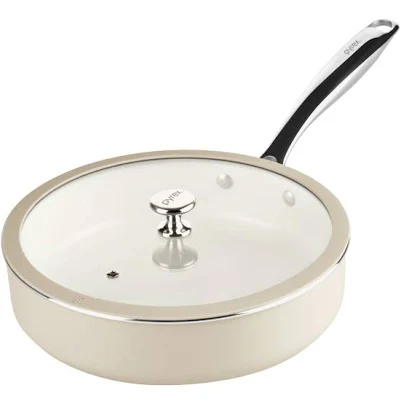
Pyrex Ceramic Cookware 10.8-in/3.5qt Deep Fry Pan with Lid
Lower concern; ceramic cookware avoids common PFAS coatings.
Pyrex ceramic cookware uses ceramic coating on borosilicate glass, an inherently lower-concern material not typically treated with PFAS. Brand makes no PFAS claims; typical ceramic cookware carries minimal fluorochemical risk.
The better-graded swap
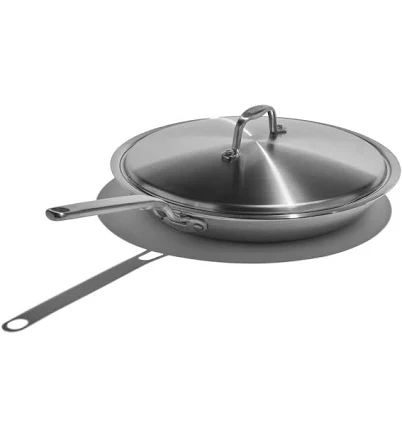
Heritage Steel
Heritage Steel Eater 12" Fry Pan with Lid
100/100 safety
Same rubric that flunked this product. The swap earned Excellent.
Still want this one anyway? Check the price on Amazon. We’d swap it.
Material
ceramic coating on glass base
Lab data
No public lab test
Is Pyrex Ceramic Cookware 10.8-in/3.5qt Deep non-toxic? What it is made of
This pan combines a borosilicate glass base with a ceramic non-stick coating. Borosilicate glass is chemically inert and does not leach metals or compounds into food under normal cooking temperatures. The ceramic coating replaces traditional Teflon-type coating (Teflon) and avoids the fume-release hazard associated with overheated Teflon-family coating coatings. Ceramic coatings are typically inorganic silicate-based compounds that do not off-gas volatile organic compounds during normal use.
What’s concerning
Category baseline
The starting point for this type of product, before anything specific to this product is counted.
No PFAS disclosure
No public statement from the brand about PFAS in this product.
Ceramic coating degradation over time
Ceramic coatings naturally wear with repeated use and thermal cycling. Visible scratching, peeling, or loss of non-stick properties indicates replacement is warranted; no established health threshold exists, but visible degradation is a usage limit marker.
Lid seal or silicone gasket degradation
Lids typically include silicone seals or gaskets that degrade with repeated heat cycles and dishwashing. If this pan is used specifically for frying (high heat), gasket integrity should be checked periodically; no recalls are on record, but user maintenance is expected.
What’s reassuring
Base material not linked to PFAS
The main material recorded for this product is not one associated with PFAS.
Lead
No public recalls or test results on record for lead or cadmium in this Pyrex ceramic cookware line. The glass base is not glazed and the ceramic coating is applied to glass, not a porous clay substrate, reducing traditional glaze-leach vectors.
Source, ATSDR ↗Teflon-type coating fume inhalation risk
This product uses ceramic, not Teflon-type coating (Teflon), so the established overheating fume hazard associated with Teflon-family coating coatings does not apply.
Aluminum leaching
The base is borosilicate glass, not aluminum. Aluminum cookware leaching is not relevant to this product.
The full breakdown
The brand's record and disclosure
Pyrex (now owned by Instant Brands, formerly Groupe SEB) has a long history in glass cookware but does not publish detailed material safety data sheets or third-party certifications for non-stick coatings on consumer websites. No public recalls involving lead, cadmium, or coating degradation hazards specific to this ceramic line are on record. The brand has not made explicit statements on PFAS use or avoidance in this product line, though the ceramic coating formulation itself is not a known PFAS vector.
How it compares in its category
Ceramic-coated cookware is a middle-ground option between bare glass, traditional Teflon-type coating non-stick, and stainless steel. Unlike Teflon-type coating cookware, there is no established fume hazard if the pan is accidentally overheated. Compared to glazed ceramic or enameled cast iron cookware, this product avoids the historical lead-in-glaze concern because the base is glass, not a porous substrate prone to glaze flaking. Ceramic coatings do wear over time and lose non-stick properties faster than Teflon-type coating under typical use.
If you buy it
Use low to medium-high heat; ceramic coatings degrade more quickly at sustained high temperatures than Teflon-type coating. Hand-wash rather than dishwasher to extend coating life. Replace the pan if the ceramic coating becomes visibly worn, scratched, or flaking, as continued use on damaged coating may increase adhesion-loss particles in food. The glass base itself is durable, but the lid (typically glass or silicone) should be inspected for seal integrity to maintain any stated water-retention claims.
What we don’t know
- Basis
- Model estimate, 78% confidence, not a lab result
- Lab test
- None on record for this exact product
- Brand statement
- Pyrex has made a specific claim
Formulations change between production runs, so check the current label. How we grade.
Better-graded alternatives in Cookware
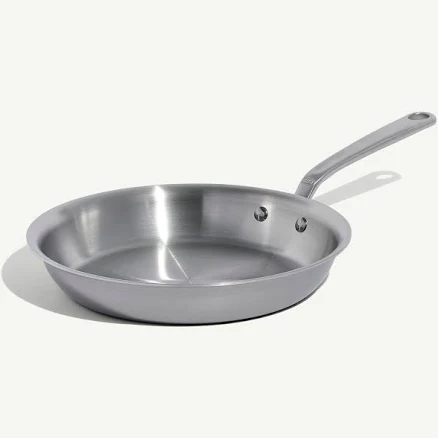
Made In
Stainless Clad Fry Pan
- Stainless steel clad construction, no nonstick coating
- The brand calls it PFAS-free, which we have not verified
- Clad separation or delamination over time
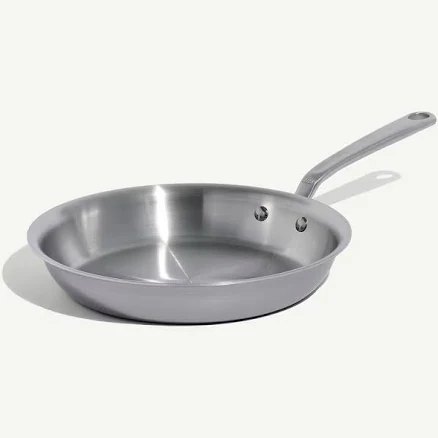
Made In
10' Stainless Clad Frying Pan
- stainless steel clad construction, no nonstick coating
- The brand calls it PFAS-free, which we have not verified
- Nickel leaching from stainless steel
3 hazards checked on this product. See all of them.
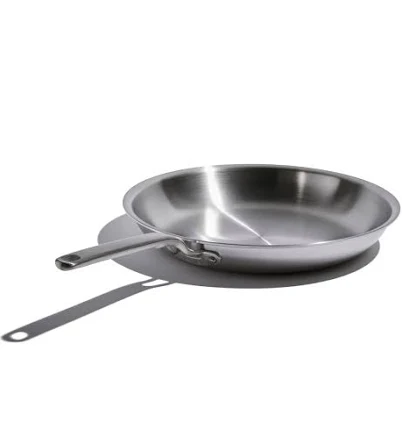
Heritage Steel
Eater Fry Pan
- Clad stainless steel, no coating
- The brand calls it PFAS-free, which we have not verified
- Metal ion release during cooking (iron, nickel, chromium)
More cookware grades
How we score, every product runs through the same public 0-100 rubric based on materials, coatings, brand disclosure, lab findings, and recalls. See the full methodology → Spotted a mistake? Report an error.