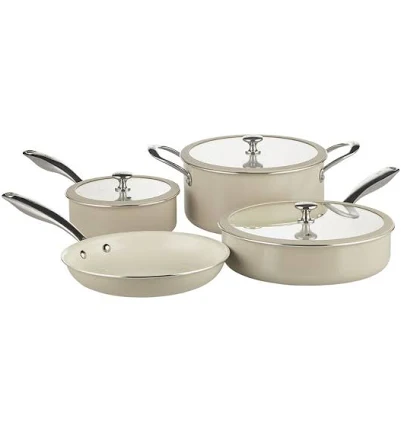
Pyrex Ceramic Cookware 7-pc Set Pyrex Set
Ceramic cookware lower concern than traditional nonstick; brand silence on PFAS.
Pyrex ceramic sets use ceramic coatings instead of Teflon-type coating, which lowers PFAS risk. Brand makes no PFAS claims; confirm product labeling states ceramic-only coating before purchase.
The better-graded swap
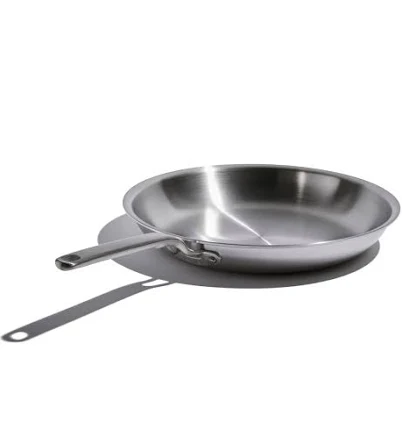
Heritage Steel
Heritage Steel Eater Fry Pan
100/100 safety
Same rubric that flunked this product. The swap earned Excellent.
Still want this one anyway? Check the price on Amazon. We’d swap it.
Material
ceramic nonstick coating
Lab data
No public lab test
Is Pyrex Ceramic Cookware 7-pc Set Pyrex Set non-toxic? What it is made of
This set uses ceramic nonstick coating applied over a ceramic or ceramic-composite substrate, typically free of Teflon-type coating (Teflon) and perfluorinated compounds. Ceramic coatings are inorganic and do not off-gas fluorinated fumes at normal cooking temperatures. The base material chemistry is not disclosed in standard product labeling, so composition of any glazes or secondary coatings cannot be verified without direct testing or manufacturer specification sheets.
What’s concerning
Category baseline
The starting point for this type of product, before anything specific to this product is counted.
No PFAS disclosure
No public statement from the brand about PFAS in this product.
Ceramic coating degradation and particle ingestion
Ceramic nonstick coatings are known to chip, flake, or peel with normal use. Ingestion of small coating particles over time is a concern if the cookware is not replaced when damage is visible. This is a material-class issue, not specific to Pyrex, but the durability of this brand's ceramic coating is not independently tested in public reports.
Aluminum leaching (if substrate is aluminum)
Product composition does not specify whether the substrate is ceramic, aluminum, or composite. If aluminum is present under the ceramic glaze, leaching in acidic foods is possible, though ceramic coating provides a barrier if intact. Confirmation requires manufacturer specification.
Thermal stress cracking or delamination
Ceramic cookware can delaminate or crack if exposed to rapid temperature changes or sustained high heat. This is a durability and safety issue; cracks can trap water or food and promote bacterial growth if not cleaned thoroughly.
What’s reassuring
Base material not linked to PFAS
The main material recorded for this product is not one associated with PFAS.
Lead
No recalls or regulatory action against Pyrex ceramic cookware for lead/cadmium have been documented. However, the manufacturer does not publicly disclose glaze composition or test results, so absence of known reports does not confirm absence of trace metals.
Source, ATSDR ↗Teflon-type coating fume release
Ceramic coatings do not contain Teflon-type coating and do not release perfluorinated fumes. This hazard is not a concern for this product type.
The full breakdown
The brand's record and disclosure
Pyrex does not publicly disclose detailed material composition or third-party test results for heavy metals (lead, cadmium) in ceramic cookware glazes. No major recalls for lead or cadmium in ceramic cookware bearing the Pyrex name have been reported in the FDA or CPSC databases in recent years. The company has not published a statement on PFAS use or avoidance in cookware lines, and does not advertise PFAS testing or certification.
How it compares in its category
Ceramic nonstick cookware sits lower in Teflon-type coating fume risk compared to Teflon-type coating-based nonstick; it avoids the traditional PFOA exposure pathway. It is comparable to enameled cast iron or stainless steel in requiring no seasoning or chemical maintenance, but coatings can wear faster than cast iron under abrasive cleaning. Ceramic coatings typically degrade visibly within 1, 3 years of regular use, requiring eventual replacement.
If you buy it
Hand wash only; avoid dishwashers and scouring pads, which accelerate coating breakdown. Do not exceed medium-high heat; ceramic coatings can degrade or crack under thermal shock or sustained high temperatures. Replace the piece when the coating noticeably flakes, peels, or loses nonstick function to prevent ingestion of coating particles. Store with cardboard or cloth liners between pieces to prevent scratching.
What we don’t know
- Basis
- Model estimate, 72% confidence, not a lab result
- Lab test
- None on record for this exact product
- Brand statement
- Pyrex has made a specific claim
Formulations change between production runs, so check the current label. How we grade.
Better-graded alternatives in Cookware
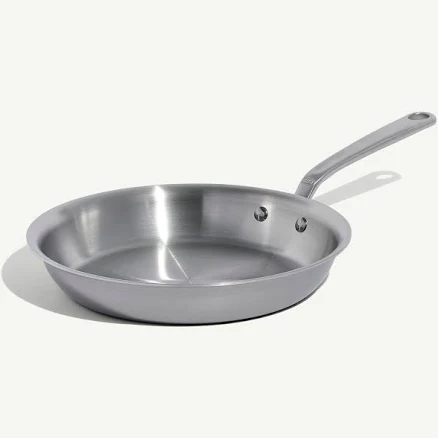
Made In
Stainless Clad Fry Pan
- Stainless steel clad construction, no nonstick coating
- The brand calls it PFAS-free, which we have not verified
- Clad separation or delamination over time
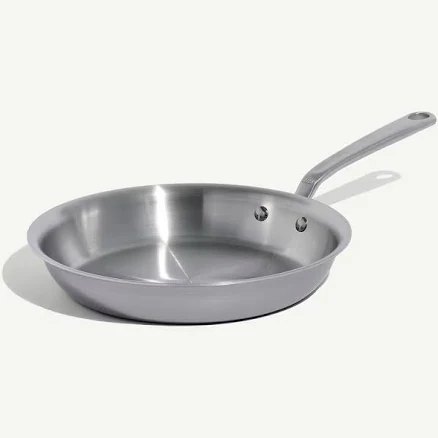
Made In
10' Stainless Clad Frying Pan
- stainless steel clad construction, no nonstick coating
- The brand calls it PFAS-free, which we have not verified
- Nickel leaching from stainless steel
3 hazards checked on this product. See all of them.
Heritage Steel
Eater Fry Pan
- Clad stainless steel, no coating
- The brand calls it PFAS-free, which we have not verified
- Metal ion release during cooking (iron, nickel, chromium)
More cookware grades
How we score, every product runs through the same public 0-100 rubric based on materials, coatings, brand disclosure, lab findings, and recalls. See the full methodology → Spotted a mistake? Report an error.