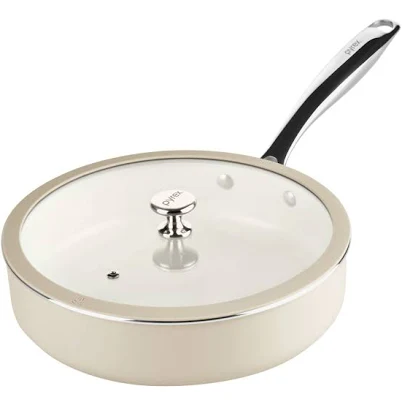
Pyrex Ceramic Deep Fry Pan with Lid, Is It Non-Toxic?
Ceramic non-stick coating of unstated chemistry, and no PFAS statement from the brand.
This ceramic deep fry pan skips Teflon-type coating and known Teflon-family coating coatings. Pyrex hasn't made public PFAS statements, but ceramic is a lower-risk material class.
The better-graded swap
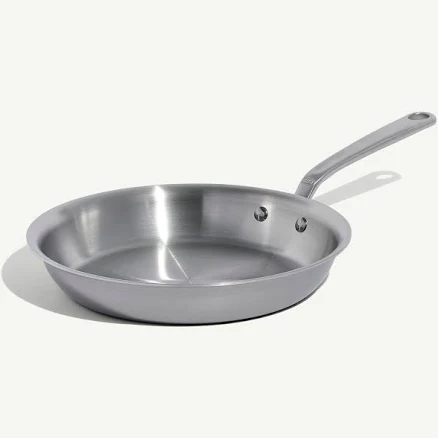
Made In
Made In Stainless Clad Fry Pan
100/100 safety
Same rubric that flunked this product. The swap earned Excellent.
Still want this one anyway? Check the price on Amazon. We’d swap it.
Material
Ceramic (non-stick coating not Teflon-type coating-based)
Lab data
No public lab test
You may also be interested in
Top-graded picks in the categories readers replace first, every one scored on the same rubric.

- polypropylene filter housing, carbon/sediment cartridge
- We found no PFAS statement from the brand
- Bacterial growth in spent cartridges
3 hazards checked on this product, all on its full breakdown.

Aquasure
Premier Series 75 GPD Under Sink Reverse Osmosis Water Filtration System
- RO membrane, carbon filters, stainless steel housing
- We found no PFAS statement from the brand
- Bacterial and microbial growth in housing and filters
4 hazards checked on this product, all on its full breakdown.

Avocado
Vegan Mattress
- organic cotton, natural latex, coconut coir, recycled steel coils
- The brand calls it PFAS-free, which we have not verified
- Heavy metals
2 hazards checked on this product, all on its full breakdown.
Is Pyrex Ceramic Deep Fry Pan with Lid non-toxic? What it is made of
This pan combines a ceramic substrate with a ceramic-based non-stick coating whose exact chemical composition Pyrex has not publicly disclosed. Ceramic itself is inert and stable, but the coating's formulation is the critical unknown, many ceramic non-stick products use proprietary blends that may include inorganic compounds, silicone polymers, or ceramic-type coatings. Without transparency on the coating formula, you cannot independently verify whether PFAS or other chemicals are present.
What’s concerning
Category baseline
The starting point for this type of product, before anything specific to this product is counted.
No PFAS disclosure
No public statement from the brand about PFAS in this product.
Non-stick, chemistry undisclosed
Marketed as non-stick without stating the coating chemistry.
Non-stick coating leaching (unstated chemistry)
The ceramic coating's undisclosed formulation means potential leachable compounds cannot be ruled out. Ceramic non-stick coatings may contain silicones, ceramic-type precursors, or other polymers that could migrate into food if the coating degrades or is heated beyond design limits.
Coating degradation and spalling
Ceramic non-stick coatings are more prone to chipping and peeling than Teflon-type coating when used with metal utensils or in dishwashers. Pyrex has not published wear-resistance data for this specific product; rapid coating loss exposes the substrate and increases ingestion of coating particles or substrate materials.
Thermal shock and lid seal integrity
Ceramic cookware can crack if exposed to sudden temperature swings. The lid seal's material and longevity are not specified; degraded seals may allow steam escape or food splatter, though this is a use hazard rather than a chemical one.
What’s reassuring
Lead
Pyrex cookware is manufactured under FDA compliance for food-contact ceramics, which prohibits intentional lead or cadmium addition. No public recalls or test reports indicate contamination in Pyrex ceramic cookware, but the brand has not published third-party verification of heavy metal absence.
Source, ATSDR ↗Aluminum leaching from substrate (if applicable)
If the ceramic is applied over an aluminum substrate, acidic foods could theoretically promote leaching. Pyrex has not published the substrate material; ceramic cookware typically uses steel or ceramic-only construction, minimizing this risk, but confirmation is absent from product documentation.
How is this PFAS grade calculated?
The brand's record and disclosure
Pyrex has not issued public statements about PFAS in its ceramic cookware or disclosed the non-stick coating chemistry on this product. The brand is owned by Instant Brands (formerly Groupe SEB), which has not broadly committed to PFAS-free cookware certification or transparency comparable to some competitors. No major safety recalls specific to this model's non-stick coating have been published, but the absence of disclosure is itself a red flag for informed purchasing.
How it compares in its category
Ceramic non-stick cookware sits between traditional Teflon-type coating (Teflon) pans and oil-based cast iron in the market. Unlike Teflon-type coating, ceramic coating does not release acute fumes at normal cooking temperatures, which is an advantage. However, ceramic-coated pans often degrade faster than Teflon-type coating, requiring replacement sooner, and many ceramic coatings remain proprietary black boxes, making it harder to assess chemical safety compared to brands that explicitly certify PFAS-free formulations.
If you buy it
Keep temperatures below 400-425 F to avoid accelerating coating breakdown and potential leaching of coating ingredients into food. Inspect the coating regularly for chips, scratches, or peeling; discard the pan if damage is visible. Avoid metal utensils and abrasive scrubbers that will degrade the surface faster. Hand wash rather than dishwasher to extend coating life. If Pyrex provides no timeline for coating replacement, plan to retire the pan within 2-3 years of heavy use.
What is not known about PFAS in this product?
- Basis
- Model estimate, 75% confidence, not a lab result
- Lab test
- None on record for this exact product
- Brand statement
- Pyrex has made a specific claim
Formulations change between production runs, so check the current label. How we grade.
What are the PFAS-free alternatives to Pyrex Ceramic Deep Fry Pan with Lid?
- Stainless steel clad construction, no nonstick coating
- The brand calls it PFAS-free, which we have not verified
- Clad separation or delamination over time
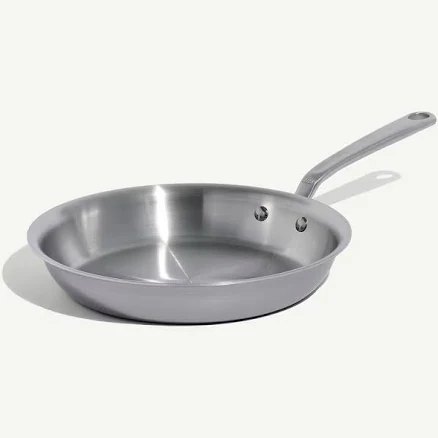
- stainless steel clad construction, no nonstick coating
- The brand calls it PFAS-free, which we have not verified
- Nickel leaching from stainless steel
3 hazards checked on this product, all on its full breakdown.
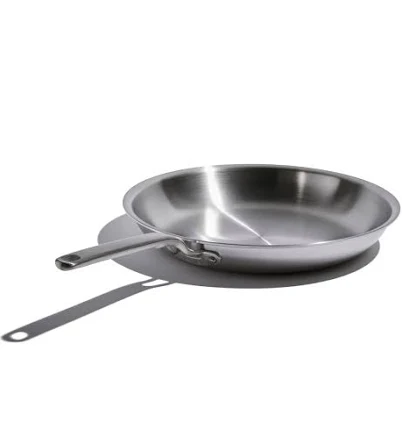
- Clad stainless steel, no coating
- The brand calls it PFAS-free, which we have not verified
- Metal ion release during cooking (iron, nickel, chromium)
More cookware grades
How we score, every product runs through the same public 0-100 rubric based on materials, coatings, brand disclosure, lab findings, and recalls. See the full methodology → Spotted a mistake? Report an error.