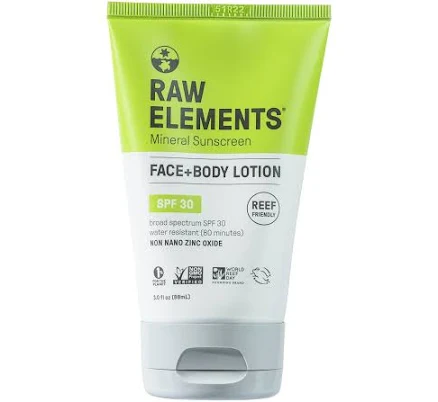
Raw Elements Eco Formula SPF 30 Sunscreen
No coating of concern recorded, and no PFAS statement from the brand.
The brand has published no PFAS statement for this product that we could find.
We flunk more products than we pass. This one earned its grade. How we grade
Material
mineral sunscreen (zinc oxide, titanium dioxide)
Brand disclosure
Brand is silent on PFAS
Lab data
No public lab test
You may also be interested in
Top-graded picks in the categories readers replace first, every one scored on the same rubric.

- polypropylene filter housing, carbon/sediment cartridge
- We found no PFAS statement from the brand
- Bacterial growth in spent cartridges
3 hazards checked on this product, all on its full breakdown.

Aquasure
Premier Series 75 GPD Under Sink Reverse Osmosis Water Filtration System
- RO membrane, carbon filters, stainless steel housing
- We found no PFAS statement from the brand
- Bacterial and microbial growth in housing and filters
4 hazards checked on this product, all on its full breakdown.

Avocado
Vegan Mattress
- organic cotton, natural latex, coconut coir, recycled steel coils
- The brand calls it PFAS-free, which we have not verified
- Heavy metals
2 hazards checked on this product, all on its full breakdown.
What Raw Elements Eco Formula SPF 30 Sunscreen is made of, ingredients and materials
Raw Elements Eco Formula uses zinc oxide and titanium dioxide as UV filters, both mineral (non-nano) actives that sit on skin rather than absorb into it. These inorganic oxides have a decades-long safety record and are recommended by dermatologists for sensitive skin. The formulation avoids synthetic organic UV absorbers (oxybenzone, octinoxate) linked to hormone disruption and reef toxicity, making it a lower-chemical-burden choice.
What’s concerning
No PFAS disclosure
No public statement from the brand about PFAS in this product.
Category baseline
The starting point for this type of product, before anything specific to this product is counted.
Fragrance allergens and undisclosed fragrance components
Product uses fragrance or essential oils for scent; full fragrance ingredient list is not always disclosed on label due to trade secret protection. Individuals with fragrance sensitivity should request full ingredient transparency or perform a patch test before full-face use.
What’s reassuring
Base material not linked to PFAS
The main material recorded for this product is not one associated with PFAS.
Heavy metals
Zinc oxide and titanium dioxide are inert minerals with no established cadmium, lead, or arsenic contamination risk in cosmetic-grade formulations. No recalls or contamination reports for Raw Elements products on record.
Source, FDA ↗Talc contamination
Mineral sunscreens formulated without talc fillers carry no talc asbestos risk. Raw Elements does not list talc in published ingredient declarations.
Formaldehyde / VOCs
Mineral sunscreens have lower likelihood of dioxane as a manufacturing byproduct compared to chemical absorber formulas. No formaldehyde-releasing preservatives are listed in the known formula.
Source, ATSDR ↗Nano-particle inhalation risk
Raw Elements markets non-nano zinc oxide and titanium dioxide, meaning particles are larger than 100 nm and present negligible inhalation or dermal penetration risk. Avoid spray application to minimize any particle aerosolization.
How is this PFAS grade calculated?
The brand's record and disclosure
Raw Elements markets itself as an eco-focused, reef-safe brand and has built reputation on transparency around ingredient sourcing. The brand does not publish a dedicated PFAS statement, but no PFAS-containing coatings or water-repellent treatments are recorded in its formulas. The company maintains certification claims (reef-safe, cruelty-free) but independent verification status varies by certifier.
How it compares in its category
Mineral sunscreens like this occupy the lower-risk end of the UV protection market. They avoid the chemical absorption concerns of oxybenzone and avobenzone formulas, and the nano-particle concerns of some powdered mineral sunscreens. Cost is typically higher than chemical alternatives, but safety profile is more predictable for sensitive skin and environmental harm is lower.
If you buy it
Apply generously (at least one quarter-teaspoon per face) and reapply every two hours or after water exposure; mineral sunscreens do not degrade in heat the way some organic absorbers do, but efficacy can drop if underapplied. Store in a cool, dry place away from direct sunlight to preserve the mineral active ingredients. Patch test first if you have very sensitive or reactive skin, as some users report white cast or mild irritation from zinc oxide.
What is not known about PFAS in this product?
- Basis
- Model estimate, 82% confidence, not a lab result
- Lab test
- None on record for this exact product
- Brand statement
- Raw Elements has made none
Formulations change between production runs, so check the current label. How we grade.
What are the PFAS-free alternatives to Raw Elements Eco Formula SPF 30 Sunscreen?
- Mineral sunscreen, zinc oxide base
- A third party reports verifying it as PFAS-free
- 1,4-dioxane (non-intentional contaminant from surfactants/emulsifiers)
2 hazards checked on this product, all on its full breakdown.
- mineral sunscreen (zinc oxide or titanium dioxide base)
- The brand calls it PFAS-free, which we have not verified
- Synthetic fragrance allergens
More sunscreen grades
How we score, every product runs through the same public 0-100 rubric based on materials, coatings, brand disclosure, lab findings, and recalls. See the full methodology → Spotted a mistake? Report an error.