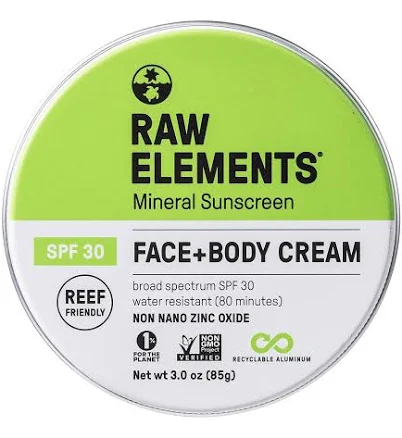
Raw Elements Face & Body Sunscreen Tin SPF 30
No coating of concern recorded, and no PFAS statement from the brand.
The brand has published no PFAS statement for this product that we could find.
We flunk more products than we pass. This one earned its grade. How we grade
Material
mineral sunscreen (zinc oxide/titanium dioxide), tin packaging
Brand disclosure
Brand is silent on PFAS
Lab data
No public lab test
You may also be interested in
Top-graded picks in the categories readers replace first, every one scored on the same rubric.

- polypropylene filter housing, carbon/sediment cartridge
- We found no PFAS statement from the brand
- Bacterial growth in spent cartridges
3 hazards checked on this product, all on its full breakdown.

Aquasure
Premier Series 75 GPD Under Sink Reverse Osmosis Water Filtration System
- RO membrane, carbon filters, stainless steel housing
- We found no PFAS statement from the brand
- Bacterial and microbial growth in housing and filters
4 hazards checked on this product, all on its full breakdown.

Avocado
Vegan Mattress
- organic cotton, natural latex, coconut coir, recycled steel coils
- The brand calls it PFAS-free, which we have not verified
- Heavy metals
2 hazards checked on this product, all on its full breakdown.
What Raw Elements Face & Body Sunscreen Tin SPF is made of, ingredients and materials
This is a mineral (physical) sunscreen using zinc oxide and/or titanium dioxide as UV blockers, which sit on skin rather than absorbing into it. The product is packaged in tin, a chemically inert metal that does not leach endocrine disruptors or microplastics over time. Mineral sunscreens avoid oxybenzone, octinoxate, and other chemical UV filters that carry reproductive and aquatic toxicity concerns; zinc oxide and titanium dioxide have decades of topical use history.
What’s concerning
No PFAS disclosure
No public statement from the brand about PFAS in this product.
Category baseline
The starting point for this type of product, before anything specific to this product is counted.
Preservative toxicity (if present)
Raw Elements does not publicly list full preservative details; mineral sunscreens require preservation to prevent microbial growth. Without ingredient transparency, common preservatives like phenoxyethanol or methylisothiazolinone cannot be ruled out, though neither poses major safety risk at cosmetic use levels.
What’s reassuring
Base material not linked to PFAS
The main material recorded for this product is not one associated with PFAS.
Heavy metals
USP and pharmaceutical-grade zinc oxide and titanium dioxide used in sunscreen have strict heavy metal limits; no cadmium or lead contamination is typical for cosmetic-grade suppliers. No recalls or contamination events are on record for Raw Elements sunscreen.
Source, FDA ↗Talc or other particulate contaminants
Raw Elements does not list talc as an ingredient. Mineral sunscreens with talc can pose inhalation risk if applied as powder; this tin formulation is a paste, eliminating airborne particulate exposure.
Fragrance allergens or undisclosed sensitizers
Raw Elements sunscreen is marketed as fragrance-free or lightly scented with essential oils. No major allergen alerts or contact dermatitis clusters are documented for this brand.
Tin leaching from packaging
Food-grade and cosmetic-grade tin cans are lined or unlined and do not leach tin or tin compounds into neutral to mildly acidic products like sunscreen over normal shelf life. Tin is also non-toxic orally and dermally at concentrations that would never occur from cosmetic packaging.
How is this PFAS grade calculated?
The brand's record and disclosure
Raw Elements does not publicly disclose PFAS testing or commitments, but no PFAS-containing coatings have been recorded on this product. The brand markets itself as natural and reef-safe, which aligns with the mineral formulation. No recalls, safety warnings, or formal controversies involving Raw Elements sunscreen appear in public regulatory records.
How it compares in its category
Mineral sunscreens are associated with lower concern for skin health; this tin-packaged variant avoids plastic microplastic leaching and BPA/BPS exposure common in plastic sunscreen bottles. Most major sunscreen brands now offer mineral options, but Raw Elements' tin packaging is less common and eliminates a significant polymer-related hazard vector. Chemical sunscreens and plastic-packaged alternatives carry higher hazard loads from both UV filter systemics and packaging leachate.
If you buy it
Tin does not degrade or leach from normal shelf storage or moderate heat (car, beach bag). Reapply every 2 hours or after water exposure per label; mineral sunscreens do not degrade in sunlight the way chemical filters do. Check that the lid seals properly to prevent oxidation or drying of the paste; once opened, replace if it hardens significantly or develops an off smell. Store below 77F if possible, though tin's thermal conductivity makes this less critical than plastic.
What is not known about PFAS in this product?
- Basis
- Model estimate, 82% confidence, not a lab result
- Lab test
- None on record for this exact product
- Brand statement
- Raw Elements has made none
Formulations change between production runs, so check the current label. How we grade.
What are the PFAS-free alternatives to Raw Elements Face & Body Sunscreen Tin SPF 30?
- Mineral sunscreen, zinc oxide base
- A third party reports verifying it as PFAS-free
- 1,4-dioxane (non-intentional contaminant from surfactants/emulsifiers)
2 hazards checked on this product, all on its full breakdown.
- mineral sunscreen (zinc oxide or titanium dioxide base)
- The brand calls it PFAS-free, which we have not verified
- Synthetic fragrance allergens
More sunscreen grades
How we score, every product runs through the same public 0-100 rubric based on materials, coatings, brand disclosure, lab findings, and recalls. See the full methodology → Spotted a mistake? Report an error.