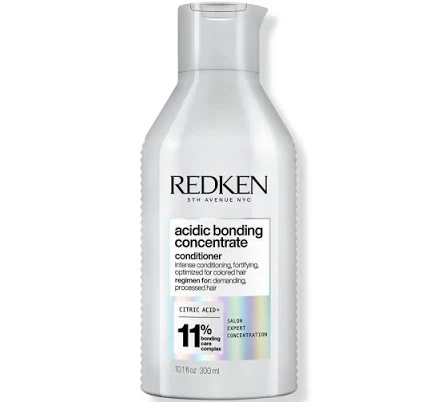
Redken Acidic Bonding Concentrate
Low-Medium risk. Hair cosmetics don't typically require PFAS.
This rinse-off hair treatment shows no known or publicly disclosed PFAS ingredients. Redken makes no PFAS claims either way, and lack of ingredient transparency limits confidence despite the lower-risk product category.
The better-graded swap
Avalon Organics
Rosemary Volumizing Conditioner
85/100 safety
Same rubric that flunked this product. The swap earned Excellent.
Still want this one anyway? Check the price on Amazon. We’d swap it.
Material
aqueous hair treatment concentrate (polymers, conditioning agents)
Brand disclosure
Brand is silent on PFAS
Lab data
No public lab test
You may also be interested in
Top-graded picks in the categories readers replace first, every one scored on the same rubric.

- polypropylene filter housing, carbon/sediment cartridge
- We found no PFAS statement from the brand
- Bacterial growth in spent cartridges
3 hazards checked on this product, all on its full breakdown.

Aquasure
Premier Series 75 GPD Under Sink Reverse Osmosis Water Filtration System
- RO membrane, carbon filters, stainless steel housing
- We found no PFAS statement from the brand
- Bacterial and microbial growth in housing and filters
4 hazards checked on this product, all on its full breakdown.

Avocado
Vegan Mattress
- organic cotton, natural latex, coconut coir, recycled steel coils
- The brand calls it PFAS-free, which we have not verified
- Heavy metals
2 hazards checked on this product, all on its full breakdown.
What Redken Acidic Bonding Concentrate is made of, ingredients and materials
Redken Acidic Bonding Concentrate is a water-based hair treatment containing polymers, conditioning agents, and bond-repair actives designed for color-treated and damaged hair. The formulation relies on humectants and film-forming polymers rather than volatile solvents or heavy metals, making it a relatively low-hazard delivery system. As an aqueous rinse-out product applied topically to hair (not ingested or absorbed systemically in significant amounts), exposure risk is confined to skin contact and inhalation during application.
What’s concerning
Category baseline
The starting point for this type of product, before anything specific to this product is counted.
No PFAS disclosure
No public statement from the brand about PFAS in this product.
Fragrance allergens (undisclosed individual components)
Redken Acidic Bonding Concentrate contains fragrance as a formulation ingredient, but individual allergens (e.g., limonene, linalool) are not listed on labels or INCI declarations in most markets. Individuals with documented fragrance sensitivities or scalp dermatitis should patch test or request full fragrance component disclosure from the brand.
Polymer film buildup and scalp occlusion over time
Bond-repair conditioners rely on film-forming polymers that can accumulate with repeated use if not fully rinsed. Over weeks to months, buildup may cause dullness, itching, or reduced moisture uptake; this is a cosmetic issue, not a toxicity hazard, but managed by clarifying shampoo use every 2-4 weeks.
What’s reassuring
Base material not linked to PFAS
The main material recorded for this product is not one associated with PFAS.
Formaldehyde / VOCs
No specific recalls or widespread reports of formaldehyde-releaser preservatives in this product exist. Aqueous cosmetics typically use non-formaldehyde systems (e.g., phenoxyethanol, methylisothiazolinone), but full preservative identity is not disclosed publicly; only risk to sensitive individuals is contact dermatitis, which is rare and mild.
Source, ATSDR ↗Heavy metals
This is a clear or translucent conditioner with no reported use of synthetic pigments or iron oxides; the likelihood of lead, cadmium, or antimony contamination is extremely low. Redken products sold in regulated markets (US, EU) are subject to cosmetic heavy-metal testing and disclosure rules.
Source, FDA ↗Reproductive or developmental toxicity
No established endocrine disruptors or developmental toxins are documented in Redken Acidic Bonding Concentrate formulations. The polymer and conditioning-agent base shows lower concern per regulatory agency review; pregnancy use is not contraindicated, though dermatologist consultation is advisable for new product introduction during pregnancy due to general precaution.
How is this PFAS grade calculated?
The brand's record and disclosure
Redken is owned by L'Oreal and operates under parent-company safety standards that include pre-market testing and compliance with cosmetic regulations in major markets (US, EU, Canada). The brand does not publicly tout third-party certifications (e.g., EWG verification, cruelty-free seals) but has maintained no major safety recalls or documented regulatory actions on this product line. Redken's ingredient transparency is standard for prestige haircare; full INCI lists are available but detailed hazard disclosures (e.g., fragrance allergen breakdowns) are not volunteered.
How it compares in its category
Acidic Bonding Concentrate positions as a premium bond-repair conditioner and sits above mass-market alternatives in price and formulation specificity. Comparable products (e.g., SalonCare, K18) use similar polymer and conditioning-agent chemistries; this product avoids silicone-heavy formulas favored by some competitors. The acidic pH is intentional for cuticle sealing and is not a hazard--it is within typical topical pH ranges and consistent with professional haircare standards.
If you buy it
Apply to damp hair, leave on 1-3 minutes, and rinse thoroughly to minimize skin contact duration. Avoid contact with eyes; rinse immediately if exposure occurs. Store at room temperature away from direct sunlight; discard if separation, odor change, or visible mold appears (shelf life typically 3 years unopened). If scalp irritation, itching, or rash develops after use, discontinue and rinse thoroughly; these are rare but indicate individual sensitivity to fragrances or preservatives.
What is not known about PFAS in this product?
- Basis
- Model estimate, 55% confidence, not a lab result
- Lab test
- None on record for this exact product
- Brand statement
- Redken has made none
Formulations change between production runs, so check the current label. How we grade.
What are the PFAS-free alternatives to Redken Acidic Bonding Concentrate?
- Water, conditioning agents, organic plant extracts
- We found no PFAS statement from the brand
- Heavy metals
3 hazards checked on this product, all on its full breakdown.
- water-based conditioner, typical surfactants and botanical extracts
- We found no PFAS statement from the brand
- Heavy metals
3 hazards checked on this product, all on its full breakdown.
More conditioner grades
How we score, every product runs through the same public 0-100 rubric based on materials, coatings, brand disclosure, lab findings, and recalls. See the full methodology → Spotted a mistake? Report an error.