Soybean Oil · Cast Iron Cookware Seasoning & Oil
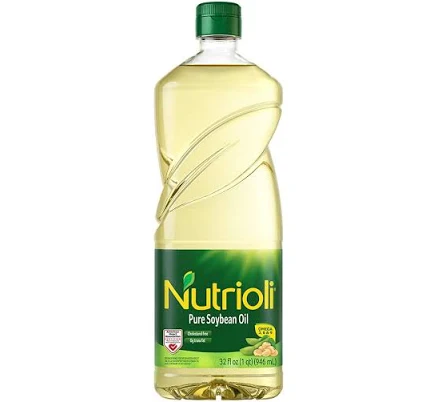
Nutrioli Pure Soybean Oil
Lower concern. Refined soybean oil is not a material linked to PFAS.
Nutrioli Pure Soybean Oil is refined soybean oil with no coating or water-repellent finish on record. The brand has no PFAS statement on record.
The better-graded swap
Crisbee
Stik Cast Iron Seasoning
85/100 safety
Same rubric that flunked this product. The swap earned Excellent.
Still want this one anyway? Check the price on Amazon. We’d swap it.
Material
Refined soybean oil, liquid
Brand disclosure
Brand is silent on PFAS
Lab data
No public lab test
You may also be interested in
Top-graded picks in the categories readers replace first, every one scored on the same rubric.

Aqua Pure
3M Aqua-Pure AP802B Whole House Filter Housing
- polypropylene filter housing, carbon/sediment cartridge
- We found no PFAS statement from the brand
- Bacterial growth in spent cartridges
3 hazards checked on this product. See all of them.

Aquasure
Premier Series 75 GPD Under Sink Reverse Osmosis Water Filtration System
- RO membrane, carbon filters, stainless steel housing
- We found no PFAS statement from the brand
- Bacterial and microbial growth in housing and filters
4 hazards checked on this product. See all of them.

Avocado
Vegan Mattress
- organic cotton, natural latex, coconut coir, recycled steel coils
- The brand calls it PFAS-free, which we have not verified
- Heavy metals
2 hazards checked on this product. See all of them.
What Nutrioli Pure Soybean Oil is made of, ingredients and materials
Nutrioli Pure Soybean Oil is refined soybean oil, a liquid fat extracted from soybean seeds and processed to remove impurities, phospholipids, and free fatty acids. Refined oils are distinct from unrefined versions because the refining process (bleaching, deodorizing, sometimes hydrogenation) reduces micronutrients but also removes contaminants and oxidation products. As a liquid at room temperature, it poses no leaching risk from coatings or ceramics; it is itself the cooking medium.
What’s concerning
No PFAS disclosure
No public statement from the brand about PFAS in this product.
Category baseline
The starting point for this type of product, before anything specific to this product is counted.
Oxidation byproducts from high-temperature reheating
Refined soybean oil oxidizes at high heat, especially if reused for frying. This creates compounds like polar lipid oxidation products, but occurrence depends entirely on how the consumer uses and stores the oil, not the product itself.
What’s reassuring
Base material not linked to PFAS
The main material recorded for this product is not one associated with PFAS.
Genetically modified organism (GMO) content
Most commercial soybean oil is derived from GMO soybeans; Nutrioli does not advertise non-GMO status. No established safety hazard from GMO soybean oil is documented in peer-reviewed literature, though consumer preference may vary.
Pesticide residue
Refined soybean oil undergoes processing that removes most pesticide residues; no recalls or specific contamination reports for Nutrioli are on record. Standard FDA pesticide monitoring applies.
Source, EPA ↗Trans fats from partial hydrogenation
If Nutrioli is fully refined (not partially hydrogenated), trans fat content should be minimal or zero per FDA labeling rules. Product label verification is recommended if trans fat concern exists.
Lead
Soybean oil in liquid form does not leach metals from cookware; any trace metals would come from soil uptake in the crop. No specific testing data for Nutrioli brand is publicly available, and refined oils are not routinely screened for this.
Source, ATSDR ↗The full breakdown
The brand's record and disclosure
Nutrioli is a soybean oil brand with limited publicly available transparency documentation on third-party testing or certifications (such as non-GMO, organic, or heavy-metal screening). No major recalls or safety controversies are on record for this brand. The parent company's commitment to food safety standards is not distinctly documented in public sources, so reliance is on standard FDA oversight for edible oils.
How it compares in its category
Soybean oil is one of the most widely consumed cooking oils globally and among the least regulated for consumer hazard disclosure compared to specialty oils (e.g., olive, coconut). Refined soybean oil is chemically stable and less prone to degradation during normal cooking than unrefined versions. Its high linoleic acid content makes it prone to oxidation at very high temperatures, but this is a quality issue (rancidity, off-flavors) rather than a direct safety hazard at typical home cooking heat.
If you buy it
Store in a cool, dark place to slow oxidation; do not expose to direct sunlight or high ambient heat. Use within 12-18 months of opening for best quality. Refined soybean oil is suitable for most cooking methods up to approximately 450F (medium-high heat frying); avoid repeated heating of the same oil or use above smoke point (around 460F for refined soybean oil) to minimize oxidation byproducts. No special maintenance is needed; replace when it develops off-odors or darkens noticeably.
What we don’t know
- Basis
- Model estimate, 92% confidence, not a lab result
- Lab test
- None on record for this exact product
- Brand statement
- Soybean Oil has made none
Formulations change between production runs, so check the current label. How we grade.
Better-graded alternatives in Cast Iron Cookware Seasoning & Oil
Crisbee
Stik Cast Iron Seasoning
- Organic waxes and oils blend
- We found no PFAS statement from the brand
- Oil rancidity and off-gassing
2 hazards checked on this product. See all of them.
Lodge
Cast Iron Seasoning Spray
- mineral oil and soy-based oil blend
- Aerosol inhalation (mineral oil mist)
3 hazards checked on this product. See all of them.
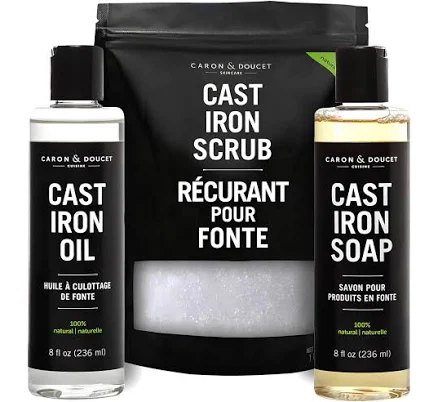
Cast Iron Ultimate Bundle
- cast iron, bare or seasoned with the brand
- We found no PFAS statement from the brand
- Iron leaching into food
2 hazards checked on this product. See all of them.
More cast iron cookware seasoning & oil grades
How we score, every product runs through the same public 0-100 rubric based on materials, coatings, brand disclosure, lab findings, and recalls. See the full methodology → Spotted a mistake? Report an error.