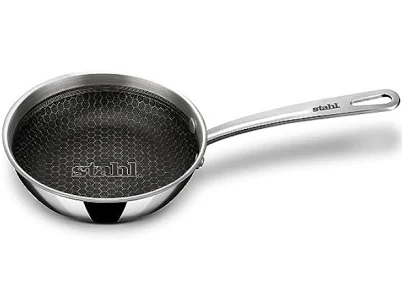
Artisan Hybrid Triply Cooking Pan, Is It Non-Toxic?
Pass until Stahl reveals nonstick coating identity.
Stahl keeps the nonstick coating formula secret on their stainless steel triply hybrid, so PFAS risk can't be determined without ingredient transparency.
The better-graded swap
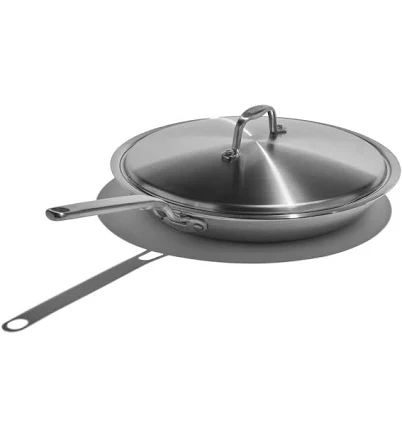
Heritage Steel
Heritage Steel Eater 12" Fry Pan with Lid
100/100 safety
Same rubric that flunked this product. The swap earned Excellent.
Still want this one anyway? Check the price on Amazon. We’d swap it.
Material
stainless steel triply with unspecified nonstick coating
Brand disclosure
Brand is silent on PFAS
Lab data
No public lab test
You may also be interested in
Top-graded picks in the categories readers replace first, every one scored on the same rubric.

- polypropylene filter housing, carbon/sediment cartridge
- We found no PFAS statement from the brand
- Bacterial growth in spent cartridges
3 hazards checked on this product, all on its full breakdown.

Aquasure
Premier Series 75 GPD Under Sink Reverse Osmosis Water Filtration System
- RO membrane, carbon filters, stainless steel housing
- We found no PFAS statement from the brand
- Bacterial and microbial growth in housing and filters
4 hazards checked on this product, all on its full breakdown.

Avocado
Vegan Mattress
- organic cotton, natural latex, coconut coir, recycled steel coils
- The brand calls it PFAS-free, which we have not verified
- Heavy metals
2 hazards checked on this product, all on its full breakdown.
Is Artisan Hybrid Triply Cooking Pan non-toxic? What it is made of
The Artisan Hybrid Triply pan uses three-layer stainless steel construction, which pairs a stainless cooking surface with aluminum and stainless steel layers for heat distribution. The critical unknown is the nonstick coating type, if it is Teflon-type coating-based (Teflon or generic Teflon-family coating), it poses fume risk if overheated; if ceramic or other, the risk profile differs. Triply construction itself reduces direct aluminum contact with food, lowering leaching risk compared to pure aluminum cookware. Without coating disclosure, the safety picture remains incomplete.
What’s concerning
Category baseline
The starting point for this type of product, before anything specific to this product is counted.
No PFAS disclosure
No public statement from the brand about PFAS in this product.
Non-stick, chemistry undisclosed
Marketed as non-stick without stating the coating chemistry.
Teflon-type coating fume risk (nonstick coating)
If the unidentified nonstick coating is Teflon-type coating-based, overheating above 500F can release Teflon-family coating fumes; risk level unknown without coating confirmation. Brand has not ruled this out.
Coating degradation and flaking
Triply pans with unspecified coatings show variability in durability across the product category; peeling coatings can expose stainless/aluminum layers and introduce microparticles into food.
Off-gassing from coating or materials
New cookware may release minor volatile odors during first few uses; severity depends on coating chemistry and manufacturing processes not disclosed by Stahl.
What’s reassuring
Aluminum leaching
Triply construction buffers aluminum from direct food contact via stainless steel outer layer, significantly reducing leaching risk compared to bare aluminum cookware.
Lead
No documented cases of heavy metal contamination in stainless triply cookware; however, enamel trim or handles (if present) are not detailed in product description and warrant visual inspection.
Source, ATSDR ↗How is this PFAS grade calculated?
The brand's record and disclosure
Stahl has not publicly disclosed the nonstick coating chemistry or provided PFAS-free certification for this product line. No major safety recalls or certifications (e.g., GREENGUARD, FDA coating pre-approval statements) are on record for this brand in public databases. The silence on coating identity is the primary concern; responsible cookware brands typically name Teflon-type coating-free alternatives or certify their coatings. Until Stahl provides specific coating information, informed evaluation is not possible.
How it compares in its category
Triply stainless steel pans are mid-range for durability and heat distribution; this is standard for cookware in the 50-150 dollar range. Premium brands (All-Clad, Demeyere) disclose coating details and often use Teflon-type coating-free systems; budget brands often use unnamed Teflon-type coating coatings without disclosure. The Stahl positioning (hybrid, artisan-marketed) suggests premium intent but lacks the transparency expected at that level. Coating undisclosed status places it below brands with clear PFAS-free or Teflon-type coating-free claims.
If you buy it
Contact Stahl directly to confirm nonstick coating type before purchase. Never exceed medium-high heat; sustained high heat can degrade or off-gas unknown coatings. Inspect the pan monthly for peeling, flaking, or discoloration; replace if coating degrades. Hand wash only; dishwasher use accelerates coating breakdown. Store with a protective layer between pans to prevent scratching that exposes underlying layers.
What is not known about PFAS in this product?
- Basis
- Model estimate, 25% confidence, not a lab result
- Lab test
- None on record for this exact product
- Brand statement
- Stahl has made none
Formulations change between production runs, so check the current label. How we grade.
What are the PFAS-free alternatives to Artisan Hybrid Triply Cooking Pan?
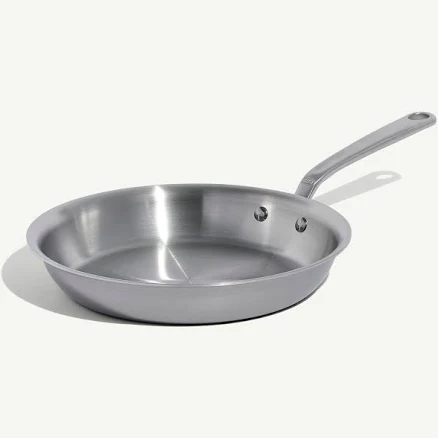
- Stainless steel clad construction, no nonstick coating
- The brand calls it PFAS-free, which we have not verified
- Clad separation or delamination over time

- stainless steel clad construction, no nonstick coating
- The brand calls it PFAS-free, which we have not verified
- Nickel leaching from stainless steel
3 hazards checked on this product, all on its full breakdown.
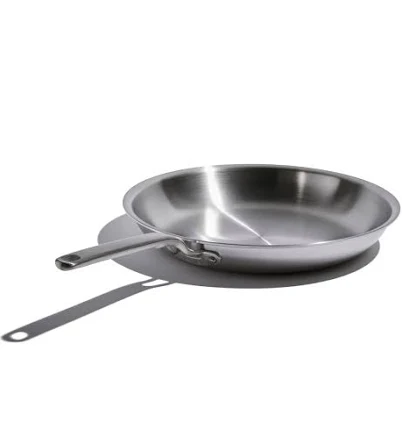
- Clad stainless steel, no coating
- The brand calls it PFAS-free, which we have not verified
- Metal ion release during cooking (iron, nickel, chromium)
More cookware grades
How we score, every product runs through the same public 0-100 rubric based on materials, coatings, brand disclosure, lab findings, and recalls. See the full methodology → Spotted a mistake? Report an error.