T-fal · Non-Stick Kitchen Gadgets
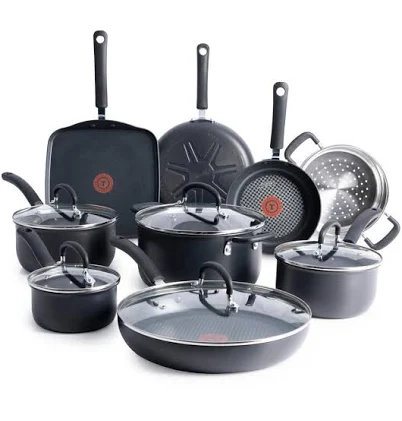
T-Fal Ultimate Hard Anodized Nonstick Cookware Set
Teflon-type coating nonstick cookware; T-Fal discloses no PFAS stance or testing.
T-Fal's hard anodized nonstick uses Teflon-type coating, a Teflon-family coating historically tied to PFAS manufacturing. The brand offers no public PFAS testing, certification, or free claim. Third-party verification is missing.
The better-graded swap
Our Place
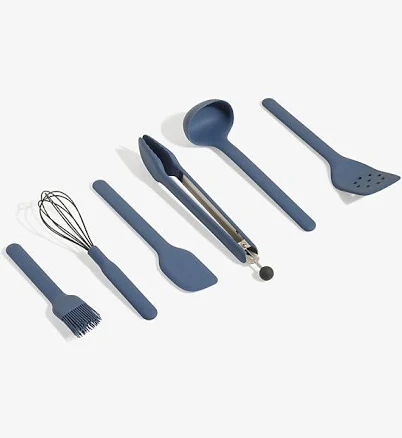
Our Place Utensil Essentials 6-Piece Silicone Utensil Set
90/100 safety
Same rubric that flunked this product. The swap earned Excellent.
Still want this one anyway? Check the price on Amazon. We’d swap it.
Material
Hard anodized aluminum with Teflon-type coating nonstick coating
Lab data
No public lab test
Is T-Fal Ultimate Hard Anodized Nonstick non-toxic? What it is made of
This cookware uses aluminum base metal treated with hard anodization, a electrochemical process that creates a dense oxide layer bonded to the aluminum. Over this sits a Teflon-type coating (polytetrafluoroethylene, Teflon-type) nonstick coating. Hard anodization is more durable than softer anodizing, reducing aluminum leaching risk compared to bare aluminum, but the Teflon-type coating layer remains the critical wear surface. If Teflon-type coating degrades or flakes with age or abuse, both coating failure and potential fume release become concerns.
What’s concerning
Category baseline
The starting point for this type of product, before anything specific to this product is counted.
No PFAS disclosure
No public statement from the brand about PFAS in this product.
PTFE / Teflon confirmed
Uses Teflon-type coating (Teflon), a Teflon-family coating in the PFAS family.
Teflon-type coating thermal degradation
Teflon-type coating nonstick coatings on all cookware risk fume release and particle shedding at high temperatures (above 500F). T-Fal does not specify fume-off temperature, Teflon-type coating composition, or virgin vs. recycled resin source, creating uncertainty about degradation timeline and toxicant profile.
Aluminum leaching from substrate
Hard anodized aluminum reduces leaching compared to bare aluminum, but surface damage (scratches, flaking coating) can expose base metal. Acidic or high-salt foods accelerate leaching. Long-term dietary aluminum intake from cookware is controversial in health literature but remains a recognized exposure route.
Coating separation and microflaking
Hard anodized nonstick coatings can separate with age, mechanical stress, or thermal shock, releasing flakes into food. No specific recalls issued for T-Fal Ultimate line, but this is a known failure mode in mass-market nonstick cookware after 3-5 years of use.
Teflon-type coating manufacturing residues (PFOA, GenX, alternatives)
T-Fal does not disclose whether Teflon-type coating is manufactured using perfluorooctanoic acid (PFOA) or newer alternatives. Modern Teflon-type coating production often uses Gen-X or other alternatives to PFOA, but without testing or certification, residual PFAS content in the coating cannot be ruled out. See separate PFAS grade.
What’s reassuring
Lead
Hard anodized cookware does not use glaze or enamel coatings; this hazard class is not applicable to this product type.
Source, ATSDR ↗The full breakdown
The brand's record and disclosure
T-Fal (Groupe SEB subsidiary) does not publicly disclose PFAS testing, manufacturing standards, or commitment to PFAS phase-out for this product line. The brand has not released third-party certifications (e.g., GREENGUARD, NSF) specific to nonstick cookware. No major recalls for this product related to coating hazards have been documented in FDA or CPSC databases. Absence of disclosure is not proof of hazard, but represents a transparency gap compared to some premium competitors.
How it compares in its category
Hard anodized nonstick cookware is a middle-ground choice, harder than soft-touch nonstick, cheaper than stainless steel or ceramic alternatives, and carries moderate Teflon-type coating risk. T-Fal's Ultimate line sits in mass-market pricing and durability tier, typical for this format. Ceramic-coated or uncoated stainless alternatives eliminate Teflon-type coating exposure entirely but sacrifice nonstick convenience and may require more oil.
If you buy it
Do not exceed 500 degrees Fahrenheit; Teflon-type coating begins thermal breakdown around 530F and releases fumes rapidly above that. Avoid metal utensils, abrasive scrubbers, and direct flame; use wood or silicone to preserve coating integrity. Inspect pans annually for flaking, discoloration, or worn spots; retire and replace if coating shows damage. Hand wash when possible to reduce coating wear; avoid dishwasher if manufacturer advises against it.
What we don’t know
- Basis
- Model estimate, 72% confidence, not a lab result
- Lab test
- None on record for this exact product
- Brand statement
- T-fal has made a specific claim
Formulations change between production runs, so check the current label. How we grade.
Better-graded alternatives in Non-Stick Kitchen Gadgets
Our Place
Utensil Essentials 6-Piece Silicone Utensil Set
- Silicone utensils, no coating
- The brand calls it PFAS-free, which we have not verified
- Microplastic generation
2 hazards checked on this product. See all of them.
Our Place
Essential Utensil Set
- Stainless steel utensils
- The brand calls it PFAS-free, which we have not verified
- Nickel leaching from stainless steel
2 hazards checked on this product. See all of them.
Our Place
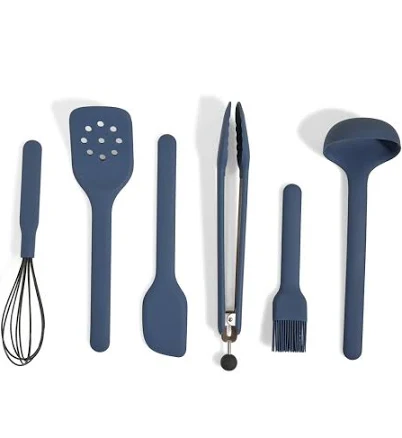
Utensil Essentials Set
- Stainless steel utensils, material unclear
- The brand calls it PFAS-free, which we have not verified
- Handle material degradation (if present)
2 hazards checked on this product. See all of them.
More non-stick kitchen gadgets grades
How we score, every product runs through the same public 0-100 rubric based on materials, coatings, brand disclosure, lab findings, and recalls. See the full methodology → Spotted a mistake? Report an error.