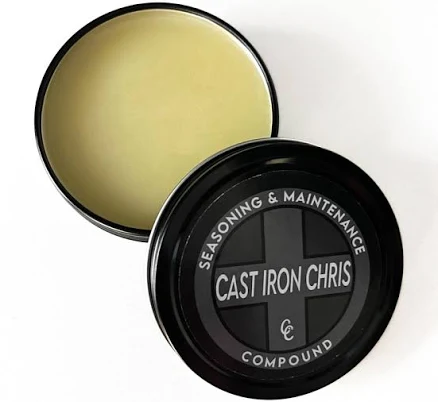
· Cast Iron Cookware Seasoning & Oil
Cast Iron Chris Seasoning & Maintenance Compound
Lower PFAS risk. Bare cast iron seasoning uses only mineral oil.
Cast Iron Chris blends mineral oil and natural wax to season bare cast iron. This maintenance compound avoids PFAS-adjacent coatings, waterproofing, and Teflon-family coating.
The better-graded swap
Lodge
Cast Iron Seasoning Spray
85/100 safety
Same rubric that flunked this product. The swap earned Excellent.
Still want this one anyway? Check the price on Amazon. We’d swap it.
Material
mineral oil and natural wax blend
Brand disclosure
Brand is silent on PFAS
Lab data
No public lab test
You may also be interested in
Top-graded picks in the categories readers replace first, every one scored on the same rubric.

- polypropylene filter housing, carbon/sediment cartridge
- We found no PFAS statement from the brand
- Bacterial growth in spent cartridges
3 hazards checked on this product, all on its full breakdown.

Aquasure
Premier Series 75 GPD Under Sink Reverse Osmosis Water Filtration System
- RO membrane, carbon filters, stainless steel housing
- We found no PFAS statement from the brand
- Bacterial and microbial growth in housing and filters
4 hazards checked on this product, all on its full breakdown.

Avocado
Vegan Mattress
- organic cotton, natural latex, coconut coir, recycled steel coils
- The brand calls it PFAS-free, which we have not verified
- Heavy metals
2 hazards checked on this product, all on its full breakdown.
What Cast Iron Chris Seasoning Compound is made of, ingredients and materials
Cast Iron Chris Seasoning is a mineral oil and natural wax blend designed to build and maintain seasoning layers on bare cast iron. Mineral oil is a refined petroleum byproduct that does not polymerize at stovetop temperatures and serves as a food-safe carrier for wax. Natural wax (typically beeswax or plant-derived) provides hydrophobic protection and durability. This formulation avoids synthetic polymers and does not introduce volatile organic compounds into food during normal seasoning application.
What’s concerning
Category baseline
The starting point for this type of product, before anything specific to this product is counted.
No PFAS disclosure
No public statement from the brand about PFAS in this product.
Rancidification or oxidation
If applied too heavily or allowed to accumulate in thick layers, mineral oil can oxidize and develop off-odors. Proper thin application and wiping minimize this risk.
Wax buildup over time
Repeated applications of wax blend may cause visible residue on the cast iron surface if not properly buffed. This is cosmetic rather than a health hazard but affects cooking performance.
What’s reassuring
Base material not linked to PFAS
The main material recorded for this product is not one associated with PFAS.
Mineral oil ingestion risk
Mineral oil is food-grade when properly refined and used as a light coating; no reported adverse effects from normal seasoning use. Risk arises only from deliberate ingestion in large quantities.
Undisclosed ingredient contaminants
No testing data is publicly available for heavy metals (lead, cadmium) or microbiological contamination in this specific product. Mineral oil sourcing and refining standards are not declared.
Smoke or fume generation at high heat
Mineral oil has a flash point around 400°F+. Normal cast iron seasoning and cooking use do not reach temperatures that trigger smoke or toxic fume release.
How is this PFAS grade calculated?
The brand's record and disclosure
The brand maintains a minimal public stance on ingredient disclosure and third-party testing; no certifications (organic, non-GMO, or safety) are publicly documented. No recalls or safety complaints are on record for this product. The brand does not explicitly advertise PFAS testing or avoidance, though the mineral oil and wax base carries inherently lower PFAS risk compared to synthetic Teflon-family coating-based alternatives. Limited transparency is typical for regional or niche cookware maintenance brands.
How it compares in its category
Seasoning compounds for cast iron typically fall into three types, mineral oil-based (this product), synthetic polymer coatings, and high-heat seed oils. Mineral oil products show lower concern because they do not off-gas or degrade at standard cooking temperatures, unlike some spray-on coatings. Seed oils (avocado, grapeseed) also show lower concern but require more frequent reapplication. This product sits in the lower-risk segment and avoids the transparency gaps associated with branded 'non-stick' seasoning sprays.
If you buy it
Apply thin layers and wipe excess thoroughly to prevent rancid oil buildup. Do not use on the cooking surface itself; season the exterior and handle. Mineral oil remains stable below 350°F, so cookware seasoned with it will tolerate all normal stovetop and oven use. Store the compound in a cool, dry place; mineral oil does not spoil but can thicken in cold conditions. Replace when it becomes thick or discolored, though shelf life is typically 2+ years.
What is not known about PFAS in this product?
- Basis
- Model estimate, 82% confidence, not a lab result
- Lab test
- None on record for this exact product
- Brand statement
- has made none
Formulations change between production runs, so check the current label. How we grade.
What are the PFAS-free alternatives to Cast Iron Chris Seasoning & Maintenance Compound?
- Organic waxes and oils blend
- We found no PFAS statement from the brand
- Oil rancidity and off-gassing
2 hazards checked on this product, all on its full breakdown.
- mineral oil and soy-based oil blend
- Aerosol inhalation (mineral oil mist)
3 hazards checked on this product, all on its full breakdown.
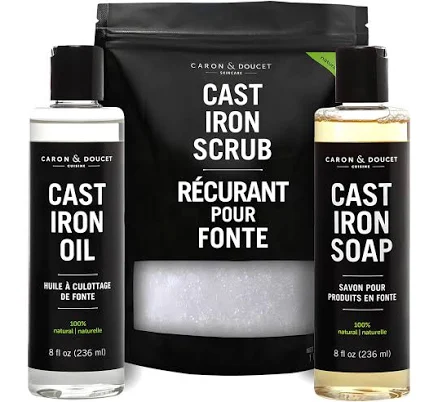
Cast Iron Ultimate Bundle
- cast iron, bare or seasoned with the brand
- We found no PFAS statement from the brand
- Iron leaching into food
2 hazards checked on this product, all on its full breakdown.
More cast iron cookware seasoning & oil grades
How we score, every product runs through the same public 0-100 rubric based on materials, coatings, brand disclosure, lab findings, and recalls. See the full methodology → Spotted a mistake? Report an error.