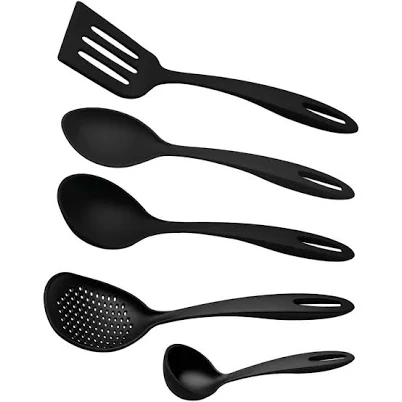
Tramontina · Non-Stick Kitchen Gadgets
Tramontina Ability 5-Pieces
Nonstick cookware with unknown coating; PFAS risk cannot be ruled out.
Tramontina Ability is nonstick cookware with an undisclosed coating. Most nonstick pans contain Teflon-type coating or similar Teflon-family coating tied to PFAS.
The better-graded swap
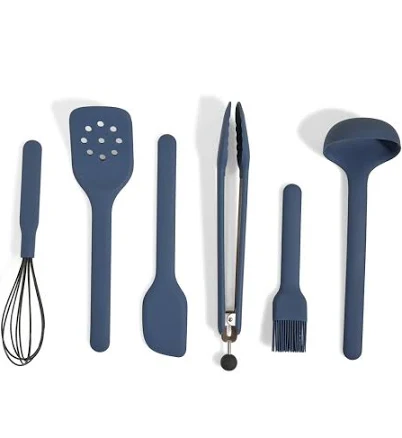
Our Place
Our Place Utensil Essentials Set
90/100 safety
Same rubric that flunked this product. The swap earned Excellent.
Still want this one anyway? Check the price on Amazon. We’d swap it.
Material
nonstick coating, composition unspecified
Lab data
No public lab test
Are Tramontina Ability 5-Pieces non-toxic? What it is made of
Tramontina Ability features a nonstick coating of unspecified composition, which is the critical gap in this product's safety profile. The company does not publicly disclose whether the coating is Teflon-type coating-based (traditional Teflon), ceramic, or hybrid. Without this information, you cannot rule out Teflon-type coating fume risk at high temperatures or assess the durability of ceramic alternatives. The cookware body is typically hard-anodized aluminum, which has a lower leaching risk than bare aluminum but only if the nonstick topcoat remains intact.
What’s concerning
Category baseline
The starting point for this type of product, before anything specific to this product is counted.
No PFAS disclosure
No public statement from the brand about PFAS in this product.
Non-stick, chemistry undisclosed
Marketed as non-stick without stating the coating chemistry.
Teflon-type coating fume risk (thermal degradation)
If the coating is Teflon-type coating-based and used above manufacturer temperature limits, polymer degradation can release fumes associated with Teflon-type coating decomposition. Tramontina does not publicly disclose whether this product uses Teflon-type coating, making risk assessment impossible without contacting the company directly.
Coating degradation and microflaking
Budget-tier nonstick coatings typically show visible wear and flaking within 2-3 years of regular use, especially with dishwasher cleaning. Microflakes ingested with food are generally considered inert by regulatory agencies, but once coating integrity is compromised, the product should be retired.
Aluminum leaching from exposed substrate
Hard-anodized aluminum is resistant to leaching, but damage to the nonstick layer (through scratches, abrasion, or acid) exposes the base metal. Acidic foods (tomato sauce, vinegar) on compromised cookware may increase aluminum transfer; evidence for health risk remains contested but is possible at chronic exposure levels.
Lack of material transparency
Consumer reports and safety analyst reviews consistently flag Tramontina's omission of coating-material details on product labels and websites. This prevents informed PFAS risk assessment and is a transparency failure relative to competitor disclosure standards.
The full breakdown
The brand's record and disclosure
Tramontina, a Brazilian cookware manufacturer owned by Tramontina Group, maintains minimal public transparency on PFAS and coating composition. No published PFAS commitment or third-party certifications (such as GOTS or Oeko-Tex) are readily available for this cookware line. The brand has not faced major product recalls related to nonstick coatings in the US market, but this absence of controversy does not indicate superior disclosure practices. Their silence on material specifics is typical for mid-market cookware manufacturers but leaves consumers unable to make fully informed choices.
How it compares in its category
Tramontina Ability sits in the budget-to-mid-range nonstick segment, competing with brands like T-fal and Calphalon that similarly omit coating-material details on product packaging. Premium brands (All-Clad, Scanpan) and PFAS-free alternatives (ceramic-coated or stainless-steel-only lines from Caraway or GreenPan) typically offer explicit material disclosures and test certificates. The Ability line's lack of transparency is not unusual for its price point, but it is a material disadvantage compared to brands that voluntarily disclose PFAS status.
If you buy it
Do not use at temperatures above 500°F (check product instructions), as nonstick coatings degrade and pose inhalation risks at higher heat. Hand wash if possible; dishwasher cycles can accelerate coating breakdown, especially if the cookware is stacked. Inspect the coating regularly for peeling, scratches, or discoloration; once degradation is visible, replace the pan rather than attempting to continue use. Store with protective sleeves if stacking to prevent abrasion between pieces.
What we don’t know
- Basis
- Model estimate, 35% confidence, not a lab result
- Lab test
- None on record for this exact product
- Brand statement
- Tramontina has made a specific claim
Formulations change between production runs, so check the current label. How we grade.
Better-graded alternatives in Non-Stick Kitchen Gadgets
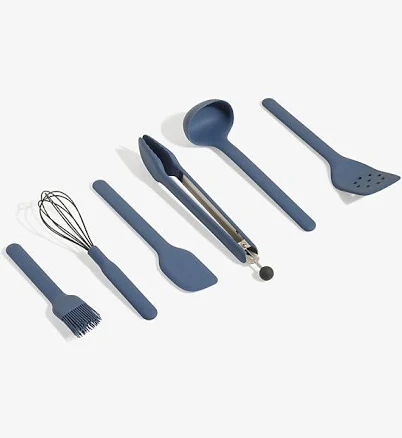
Our Place
Utensil Essentials 6-Piece Silicone Utensil Set
- Silicone utensils, no coating
- The brand calls it PFAS-free, which we have not verified
- Microplastic generation
2 hazards checked on this product. See all of them.

Our Place
Essential Utensil Set
- Stainless steel utensils
- The brand calls it PFAS-free, which we have not verified
- Nickel leaching from stainless steel
2 hazards checked on this product. See all of them.
Our Place
Utensil Essentials Set
- Stainless steel utensils, material unclear
- The brand calls it PFAS-free, which we have not verified
- Handle material degradation (if present)
2 hazards checked on this product. See all of them.
More non-stick kitchen gadgets grades
How we score, every product runs through the same public 0-100 rubric based on materials, coatings, brand disclosure, lab findings, and recalls. See the full methodology → Spotted a mistake? Report an error.