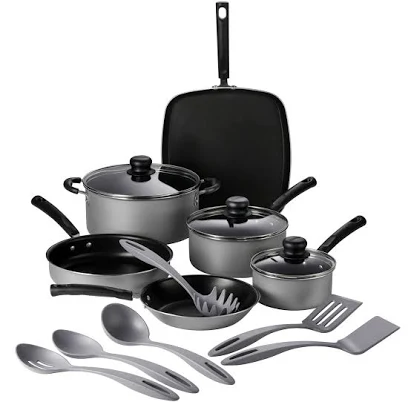
Tramontina · Non-Stick Kitchen Gadgets
Tramontina Primaware 15-Piece Nonstick Cookware Set
Nonstick cookware with unknown coating; skip if PFAS concerns you.
Tramontina Primaware nonstick cookware does not confirm whether the coating contains PFAS-based Teflon-family coating like Teflon-type coating. No third-party testing is available.
The better-graded swap
Our Place
Our Place Essential Utensil Set
90/100 safety
Same rubric that flunked this product. The swap earned Excellent.
Still want this one anyway? Check the price on Amazon. We’d swap it.
Material
Nonstick coating, composition unspecified
Lab data
No public lab test
Is Tramontina Primaware 15-Piece Nonstick non-toxic? What it is made of
Tramontina Primaware uses a nonstick coating of unspecified chemistry. The cookware body is typically hard-anodized aluminum. Because the manufacturer does not publicly disclose whether the nonstick layer is Teflon-type coating-based, ceramic, or hybrid, you cannot verify PFAS exposure risk. Hard-anodized aluminum itself has no hazard of this kind on record for food contact when intact, but the nonstick surface is the critical unknown component.
What’s concerning
Category baseline
The starting point for this type of product, before anything specific to this product is counted.
No PFAS disclosure
No public statement from the brand about PFAS in this product.
Non-stick, chemistry undisclosed
Marketed as non-stick without stating the coating chemistry.
Teflon-type coating thermal fume risk (if Teflon-type coating-based)
If the nonstick coating contains Teflon-type coating, overheating above 500 degrees Fahrenheit can release fumes toxic to birds and potentially irritating to humans. Since Tramontina does not confirm coating type, this risk cannot be ruled out. Standard nonstick cookware use (sauteing, boiling, simmering) stays below this threshold.
Coating degradation and particulate ingestion
Nonstick cookware in general, including hard-anodized sets, shows wear over time with use and cleaning. Microscopic coating flakes entering food are possible once the surface is visibly damaged. Tramontina's hard-anodized aluminum base may resist some wear, but no durability testing is published for this specific line.
Aluminum leaching (if coating fails)
The underlying aluminum in hard-anodized cookware is sealed by the anodization layer and nonstick coating. If either is breached (scratches, chips, peeling), direct aluminum contact with acidic foods could increase leaching. Hard-anodized aluminum is generally more resistant than standard aluminum, but intact coating integrity is assumed.
PFAS
The manufacturer's silence on whether the coating contains PFAS-based chemistry (such as Teflon-type coating or GenX replacements) is the primary concern. Modern alternatives like ceramic are available; Tramontina's choice not to specify suggests possible reliance on conventional Teflon-type coating formulations.
Source, ATSDR ↗What’s reassuring
Lead
No recalls or test reports documenting lead or cadmium in Tramontina Primaware handles or trim have been publicly identified. However, many cookware brands do not routinely test handles for heavy metals, so absence of reports does not confirm safety.
Source, ATSDR ↗The full breakdown
The brand's record and disclosure
Tramontina, a Brazilian cookware manufacturer owned by Groupe SEB, does not publicly disclose coating chemistry or PFAS status for this line. The brand has no established record of third-party toxicity certifications or environmental safety commitments specific to nonstick cookware. This silence on material transparency is typical of mid-tier cookware brands but differs from competitors who voluntarily detail Teflon-type coating-free or ceramic alternatives.
How it compares in its category
Primaware sits in the budget-to-mid-range nonstick segment. It competes with similar hard-anodized aluminum sets from Calphalon and T-fal, which also use Teflon-type coating-based or undisclosed nonstick coatings. Premium alternatives (All-Clad, Le Creuset) disclose materials and offer ceramic or stainless-steel options. Budget ceramic nonstick sets offer more transparency but lower durability; Primaware prioritizes affordability and initial nonstick performance over material disclosure.
If you buy it
Keep heat below 400 to 450 degrees Fahrenheit (manufacturer guidance typically caps nonstick at these levels to prevent coating degradation). Inspect the surface regularly for chips, scratches, or peeling; discard or stop using if coating integrity fails. Hand wash rather than dishwasher to extend coating life. Use soft utensils (wood, silicone, plastic) to minimize physical wear. Because coating type is unknown, assume standard Teflon-type coating thermal risks and avoid high-heat or broiler use.
What we don’t know
- Basis
- Model estimate, 35% confidence, not a lab result
- Lab test
- None on record for this exact product
- Brand statement
- Tramontina has made a specific claim
Formulations change between production runs, so check the current label. How we grade.
Better-graded alternatives in Non-Stick Kitchen Gadgets
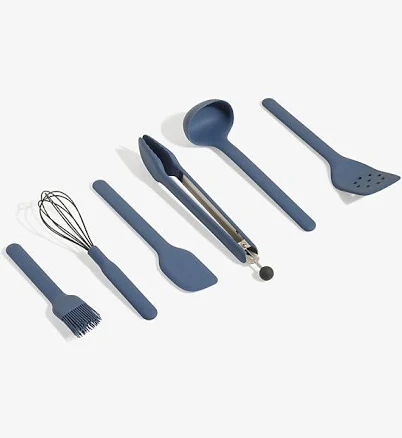
Our Place
Utensil Essentials 6-Piece Silicone Utensil Set
- Silicone utensils, no coating
- The brand calls it PFAS-free, which we have not verified
- Microplastic generation
2 hazards checked on this product. See all of them.
Our Place
Essential Utensil Set
- Stainless steel utensils
- The brand calls it PFAS-free, which we have not verified
- Nickel leaching from stainless steel
2 hazards checked on this product. See all of them.
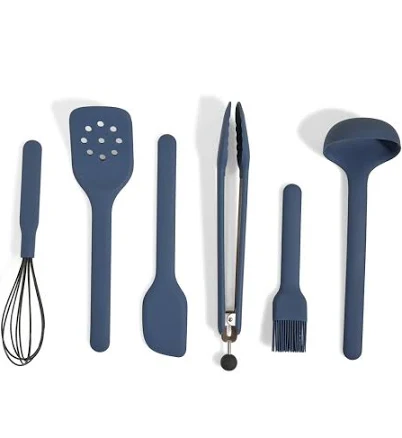
Our Place
Utensil Essentials Set
- Stainless steel utensils, material unclear
- The brand calls it PFAS-free, which we have not verified
- Handle material degradation (if present)
2 hazards checked on this product. See all of them.
More non-stick kitchen gadgets grades
How we score, every product runs through the same public 0-100 rubric based on materials, coatings, brand disclosure, lab findings, and recalls. See the full methodology → Spotted a mistake? Report an error.