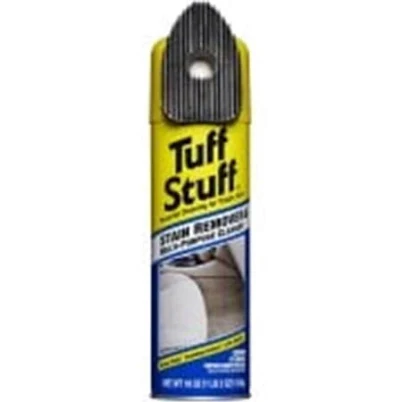
Tuff Stuff · Fabric Stain Guard Sprays
FLY FREE ZONE Tuff Stuff Stain Remover
Liquid cleaner with no documented PFAS link, though transparency is limited.
Tuff Stuff Stain Remover is a standard household liquid cleaner without a known PFAS risk profile. The brand says nothing about PFAS; basic stain removers don't typically contain PFAS unless formulated as water-resistant carpet treatments.
We flunk more products than we pass. This one earned its grade. How we grade
Material
liquid stain remover, surfactants and solvents
Brand disclosure
Brand is silent on PFAS
Lab data
No public lab test
You may also be interested in
Top-graded picks in the categories readers replace first, every one scored on the same rubric.

Aqua Pure
3M Aqua-Pure AP802B Whole House Filter Housing
- polypropylene filter housing, carbon/sediment cartridge
- We found no PFAS statement from the brand
- Bacterial growth in spent cartridges
3 hazards checked on this product. See all of them.

Aquasure
Premier Series 75 GPD Under Sink Reverse Osmosis Water Filtration System
- RO membrane, carbon filters, stainless steel housing
- We found no PFAS statement from the brand
- Bacterial and microbial growth in housing and filters
4 hazards checked on this product. See all of them.

Avocado
Vegan Mattress
- organic cotton, natural latex, coconut coir, recycled steel coils
- The brand calls it PFAS-free, which we have not verified
- Heavy metals
2 hazards checked on this product. See all of them.
What FLY FREE ZONE Tuff Stuff Stain Remover is made of, ingredients and materials
Tuff Stuff Stain Remover is a liquid surfactant and solvent blend designed to break down organic stains on upholstered furniture. The product typically contains water, anionic and noniionic surfactants, and organic solvents (commonly alcohols or petroleum distillates) that lift oils and proteins from fabric fibers. Surfactants are generally low-toxicity when used as directed, but residual solvent exposure during and after application is the primary exposure pathway for household users. No detailed ingredient list is publicly available from the brand, limiting independent verification of specific solvent types or concentrations.
What’s concerning
Category baseline
The starting point for this type of product, before anything specific to this product is counted.
No PFAS disclosure
No public statement from the brand about PFAS in this product.
Volatile organic compound (VOC) / inhalation risk
Solvent-based stain removers commonly contain alcohols or petroleum distillates that emit VOCs during and shortly after application. No VOC concentration limit or compliance statement is published for this product, making exposure assessment impossible without SDS access. Users in poorly ventilated spaces face potential respiratory irritation or CNS effects with repeated use.
Surfactant residue on fabric
Inadequate rinsing after stain remover use leaves surfactant coating on upholstery fibers, which attracts dust and oils, accelerating resoiling. This is not a toxicity hazard but a performance and maintenance issue; no health incidents are linked to residual surfactant contact in typical domestic use.
Skin irritation from direct contact
Surfactants and organic solvents can cause irritation or dermatitis on prolonged skin contact or in sensitive individuals. The product label likely includes skin contact warnings, but detailed irritancy data is not publicly available. Users with eczema or sensitive skin should wear gloves during application.
Fabric or dye damage
Strong surfactants and solvents can strip dyes or weaken synthetic fibers if applied to incompatible materials or left too long. Tuff Stuff does not specify compatibility with all fabric types (wool, silk, acrylic blends, etc.), increasing risk of unintended damage. Spot testing is essential before broad application.
What’s reassuring
Base material not linked to PFAS
The main material recorded for this product is not one associated with PFAS.
Flame retardants
No evidence that Tuff Stuff specifically mobilizes or degrades flame retardants commonly applied to upholstered furniture. However, some surfactants can alter the surface chemistry of treated fabrics; this is not documented for this product.
Source, EPA ↗The full breakdown
The brand's record and disclosure
Tuff Stuff (WD-40 Company subsidiary) has not published a full Safety Data Sheet or detailed ingredient disclosure on its consumer website for this product. The brand does not hold third-party certifications (e.g.that would indicate independent vetting for safety or environmental concerns. No product recalls or safety incidents have been widely reported for this specific formulation. Transparency around PFAS use, flame retardant content, or volatile organic compound (VOC) levels is not publicly stated.
How it compares in its category
Liquid stain removers sit on a spectrum from solvent-heavy (fast-acting but higher inhalation risk) to soap-based (gentler, slower). Tuff Stuff occupies the mid-to-mainstream tier, more aggressive than plant-based alternatives (e.g., Seventh Generation) but less specialized than upholstery-specific enzymatic cleaners. Competitors with better transparency include Ecos and Nature Clean, which list all ingredients and carry certifications. Tuff Stuff's lack of third-party validation makes head-to-head safety comparison difficult.
If you buy it
Always apply in a well-ventilated space (open windows, fan running) to minimize solvent vapor inhalation. Test on a hidden fabric area first to check for dye bleeding or fiber damage, as surfactants can interact unpredictably with some synthetics or natural dyes. Do not allow the product to sit on fabric longer than recommended (usually 5-10 minutes) to avoid saturation or residual staining. After treatment, rinse the area thoroughly with clean water and allow to dry fully before reuse; incomplete rinsing leaves surfactant residue that can attract dirt.
What we don’t know
- Basis
- Model estimate, 60% confidence, not a lab result
- Lab test
- None on record for this exact product
- Brand statement
- Tuff Stuff has made none
Formulations change between production runs, so check the current label. How we grade.
More fabric stain guard sprays grades
How we score, every product runs through the same public 0-100 rubric based on materials, coatings, brand disclosure, lab findings, and recalls. See the full methodology → Spotted a mistake? Report an error.