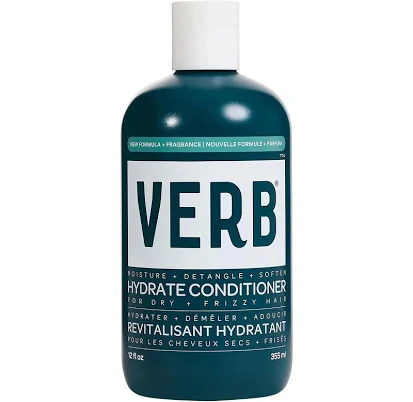
Verb Hydrate Conditioner for Dry, Frizzy Hair - Moisturizing, Vegan, Sulfate-Free
Low-Medium risk. Rinse-off cosmetics don't typically require PFAS chemicals.
This rinse-off conditioner contains no ingredients typically requiring PFAS like water-repellent or non-stick coatings. Verb doesn't claim PFAS avoidance and lacks third-party verification, leaving trace contamination from raw materials unconfirmed but unlikely.
We flunk more products than we pass. This one earned its grade. How we grade
Material
aqueous conditioner; primary ingredients water, glycerin, plant-derived emollients
Brand disclosure
Brand is silent on PFAS
Lab data
No public lab test
You may also be interested in
Top-graded picks in the categories readers replace first, every one scored on the same rubric.

- polypropylene filter housing, carbon/sediment cartridge
- We found no PFAS statement from the brand
- Bacterial growth in spent cartridges
3 hazards checked on this product, all on its full breakdown.

Aquasure
Premier Series 75 GPD Under Sink Reverse Osmosis Water Filtration System
- RO membrane, carbon filters, stainless steel housing
- We found no PFAS statement from the brand
- Bacterial and microbial growth in housing and filters
4 hazards checked on this product, all on its full breakdown.

Avocado
Vegan Mattress
- organic cotton, natural latex, coconut coir, recycled steel coils
- The brand calls it PFAS-free, which we have not verified
- Heavy metals
2 hazards checked on this product, all on its full breakdown.
What Verb Hydrate Conditioner Sulfate-Free is made of, ingredients and materials
Verb Hydrate is an aqueous conditioner based on water, glycerin, and plant-derived emollients (typical ingredients include cetyl alcohol, behentrimonium chloride, or similar conditioning agents). Because this is a rinse-off product applied briefly to hair and scalp then washed away, systemic absorption of conditioning agents is minimal. The formula avoids sulfates and uses humectants (glycerin) to bind moisture; this chemistry is well-established as low-risk for hair and scalp contact.
What’s concerning
Category baseline
The starting point for this type of product, before anything specific to this product is counted.
No PFAS disclosure
No public statement from the brand about PFAS in this product.
Fragrance allergens
Conditioners typically contain fragrance blends to mask base ingredients and improve sensory appeal. Verb's product literature does not disclose fragrance components; some individuals with sensitive skin or fragrance sensitivity may experience contact dermatitis. This is a category-wide concern, not unique to Verb, and risk is mitigated by the rinse-off nature of the product.
Microplastics
Some conditioners include silicones (dimethicone) or acrylate-based film-formers to coat and smooth hair. Verb's marketing emphasizes plant-derived ingredients, but full ingredient disclosure is not publicly detailed here. If silicones or microbeads are present, they are not ingested or absorbed systemically in a rinse-off application; environmental impact during disposal is the primary concern.
Source, EPA ↗Allergic contact dermatitis from plant-derived emollients
Botanical extracts and plant oils (e.g., coconut oil, shea butter, plant proteins) are effective moisturizers but can trigger allergies or sensitivity in a subset of users. This is not a manufacturing defect but a user-specific risk; patch testing or prior tolerance of plant-based products is a reasonable precaution for sensitive individuals.
What’s reassuring
Base material not linked to PFAS
The main material recorded for this product is not one associated with PFAS.
Formaldehyde / VOCs
No formaldehyde releasers (e.g., DMDM hydantoin, imidazolidinyl urea) are disclosed in publicly available ingredient lists for Verb Hydrate. Modern conditioners often use paraben-free systems or other preservatives; if present and used at typical concentrations, preservative risk in a rinse-off product is lower concern.
Source, ATSDR ↗Heavy metals
No color additives or mineral pigments are typical of clear or opaque conditioners like Verb Hydrate. Plant extracts used as conditioning agents or antioxidants are generally low-risk if sourced and tested by manufacturers; no specific contamination alerts are on record for Verb.
Source, FDA ↗How is this PFAS grade calculated?
The brand's record and disclosure
Verb markets itself as a clean-beauty brand with vegan and sulfate-free positioning, but the company does not publish detailed PFAS statements or third-party safety certifications (e.g., EWG Verified, B Corp). No major recalls or established safety controversies are on public record for this product line. The brand's disclosure practices are typical of mid-market beauty companies rather than exemplary, but absence of reported issues is reassuring.
How it compares in its category
This conditioner falls into the mainstream sulfate-free, moisturizing segment; comparable products include SheaMoisture, Cantu, and salon brands. Verb's ingredient list is simpler than some luxury conditioners and does not include known irritants (e.g., high fragrance loads, essential oils, or preservative mixtures flagged in adverse-event databases). For dry, frizzy hair, this formula is functionally aligned with category norms and does not trade safety for efficacy.
If you buy it
Use as directed, apply to damp hair, focus on mid-lengths and ends, rinse thoroughly with cool or lukewarm water. No special precautions required; rinse-off products do not accumulate on skin or scale up systemic exposure with repeated use. Replace every 6-12 months if stored at room temperature away from direct sunlight; conditioner bottles can support bacterial or mold growth if left wet or in humid bathrooms, but this is a storage issue, not a product defect. Discontinue if scalp irritation or allergic reaction occurs (rare but possible with any personal-care product).
What is not known about PFAS in this product?
- Basis
- Model estimate, 78% confidence, not a lab result
- Lab test
- None on record for this exact product
- Brand statement
- Verb has made none
Formulations change between production runs, so check the current label. How we grade.
What are the PFAS-free alternatives to Verb Hydrate Conditioner for Dry, Frizzy Hair - Moisturizing, Vegan, Sulfate-Free?
- Water, conditioning agents, organic plant extracts
- We found no PFAS statement from the brand
- Heavy metals
3 hazards checked on this product, all on its full breakdown.
- water-based conditioner, typical surfactants and botanical extracts
- We found no PFAS statement from the brand
- Heavy metals
3 hazards checked on this product, all on its full breakdown.
More conditioner grades
How we score, every product runs through the same public 0-100 rubric based on materials, coatings, brand disclosure, lab findings, and recalls. See the full methodology → Spotted a mistake? Report an error.