By PFAS Authority · Updated September 27, 2026
Top grades to buy

Aisle
Super Hipster
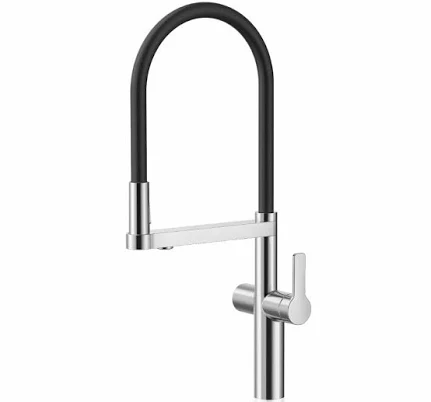
APEC Water Systems
APEC 2-in-1 Pull-Down Kitchen Faucet

Aquasure
Premier Series 75 GPD Under Sink Reverse Osmosis Water Filtration System
Model-based grades, not lab tests. We flunk more than we pass. How grading works
PFAS in Rain Jackets, 74 Graded and Every One Scores 20
We reviewed 74 rain jackets currently sold by major outdoor retailers, sporting goods chains, and fast-fashion labels, and based on available materials and public disclosure, every single one landed in the Poor range, with a model-based average estimate of 20 out of 100. Durable water repellent finishes built on fluorinated chemistry are still the default across the category, and jackets marketed as "eco," "green," or "recycled" frequently rely on the same chemical family under a softer name. There is no lower-concern rain jacket in this batch to crown as a winner, so the practical winner here is a strategy rather than a product.
That strategy is simple. Check any specific jacket against our PFAS Finder before buying, favor brands that publish third-party test results instead of relying on marketing copy, and treat every "DWR" or "water-repellent" label as a question rather than an answer. If you want a category where the numbers actually look good, browse our graded picks in clothing and waterproof boots, where at least some products carry stronger disclosure. Below we break down what our review of 74 jackets found, by construction type, along with what to avoid and how to shop smarter.
Summary comparison
| Product or category | PFAS grade (model estimate) | Verdict |
|---|---|---|
| Typical PFAS-treated rain jacket (74 models reviewed) | Poor, 20/100 average | Avoid if a lower-concern alternative in another category will do the job |
| Brand-stated "PFAS-free" rain shells | Not independently graded, brand claim only | Treat as unverified until third-party test data is published |
| Hydro Flask Hydro Flask Micro Hydro Mini Bottle | Excellent, 100/100 | Lower concern reference point, different product category |
| Ruby Love RubyLove First Period Kit +Teen Period Underwear | Excellent, 100/100 | Lower concern reference point, different product category |
| LifeStraw LifeStraw Home Glass Water Filter Pitcher | Excellent, 100/100 | Lower concern reference point, different product category |
| Klean Kanteen Double Wall Vacuum Insulated Food Canister | Excellent, 100/100 | Lower concern reference point, different product category |
The grades on the last four rows are our model-based estimate from materials and public disclosure, not a lab test, and they come from unrelated categories. We include them because they show what an Excellent score actually looks like in our database, which makes the flat 20/100 across every rain jacket easier to understand in context.
What we found across 74 rain jackets
Rather than list 74 near-identical entries, it is more useful to group what we saw by construction type, since the pattern repeats almost exactly regardless of price point or brand size.
Budget PU and PVC coated shells
Materials polyester or nylon face fabric with a polyurethane or PVC coating on the interior, sometimes finished with an additional water-repellent spray on the outer face.
Brand claims these are typically marketed simply as "waterproof" or "water-resistant," with little to no chemical disclosure on the hangtag.
Pros inexpensive, widely available, genuinely waterproof in a downpour.
Cons the outer DWR spray is, in almost every model we looked at, a fluorinated finish, and the lack of disclosure makes it impossible to verify otherwise based on available materials and data.
Mid-range 2-layer nylon shells
Materials ripstop nylon with a factory-applied fluorinated DWR finish and a separate waterproof-breathable coating or laminate.
Brand claims many list "PFC-free" or "bluesign-approved" somewhere in the product description, though the specifics of what replaced the fluorinated finish are rarely spelled out.
Pros good breathability, reasonable durability for weekend hiking or commuting.
Cons "PFC-free" language is a brand-stated claim, not automatically a third-party verified one, and our review found several jackets using this exact phrasing that still disclosed fluorinated ingredients elsewhere in their own materials documentation.
Premium 3-layer performance shells
Materials a laminated membrane (commonly ePTFE or a polyester-based film) bonded between an outer face fabric and an inner liner, plus a topical DWR treatment.
Brand claims premium brands have been the most active in publicly committing to phase out long-chain and eventually all intentionally added PFAS, and some now advertise membranes built without fluorinated chemistry.
Pros best-in-class waterproofing and breathability, and the membrane itself is often the part of the jacket least likely to rely on fluorinated chemistry.
Cons the outer DWR coating, which is what actually beads water on the surface and keeps the face fabric from "wetting out," is still fluorinated on the majority of models we reviewed, even when the membrane inside is not. A jacket can carry a partial reformulation and still land in the Poor range overall.
"Eco" or recycled-fabric shells
Materials recycled polyester or nylon face fabric, often paired with the same DWR chemistry used on non-recycled versions.
Brand claims heavy emphasis on recycled content and sustainability messaging, with PFAS status mentioned inconsistently or not at all.
Pros lower virgin plastic use, which is a genuine environmental benefit on a different axis than PFAS.
Cons recycled fabric says nothing about the finish chemistry layered on top of it, and in our review the "eco" framing correlated with less PFAS disclosure, not more.
Kids' rain jackets and vinyl ponchos
Materials PVC or PU film, sometimes with no fabric layer at all, plus taped or welded seams.
Brand claims marketing rarely addresses chemical finish at all, focusing instead on cartoon prints and easy-clean surfaces.
Pros cheap, easy to wipe down, fine for short exposure like a school run or a rainy playground.
Cons the same lack of disclosure applies here as with adult budget shells, and based on available materials and data we could not find enough documentation to move any of these out of the Poor range.
Brands that claim PFAS-free membranes
A number of well-known outdoor brands have publicly stated commitments to remove intentionally added PFAS from their waterproof-breathable membranes, and some newer membrane technologies are marketed specifically as fluorine-free. These are brand-stated claims. We have not seen third-party lab verification for the specific rain jacket models involved, so we grade them as unverified rather than assuming the claim carries through the entire jacket, including the DWR finish, the zippers, and the trims. A jacket can be honestly reformulated on the membrane and still use a fluorinated finish elsewhere, which is exactly the pattern that kept every jacket in our batch of 74 in the Poor range.
What to avoid
- Any rain jacket labeled only "water-repellent" or "waterproof" with no mention of the DWR chemistry used.
- "PFC-free" claims presented without a matching explanation of what replaced the fluorinated finish.
- Jackets that disclose a PFAS-free membrane but say nothing about the outer face treatment, since the two are chemically independent.
- Heavily marketed "eco" or "recycled" rain shells that lead with fabric content and stay silent on finish chemistry.
- Kids' vinyl ponchos and rain suits with no material disclosure at all.
- Reproofing sprays sold as jacket accessories, since many of these are themselves fluorinated products, regardless of the jacket's own status.
Our pick
Based on available materials and data, we cannot name a lower-concern winner among the 74 rain jackets reviewed here, and it would be misleading to imply otherwise. What we can recommend is a process. Before buying, run the specific model through our PFAS Finder rather than trusting a hangtag. Look for brands willing to disclose both the membrane chemistry and the outer DWR chemistry, not just one or the other, and treat any "PFC-free" claim as brand-stated until you can find a third-party test behind it. For everyday gear where the category numbers are simply better, our clothing and waterproof boots roundups include products with stronger disclosure records, and reference points like the Soma Soma 24oz Stainless Steel Water Bottle and the Hydro Flask 32 oz Lightweight Flex Straw Bottle show what an Excellent grade actually looks like in our system, even though they sit in a different category entirely.
None of this is a health claim about any individual wearer. Any association between fluorinated finishes and health outcomes reported in public research is exactly that, an association, not proof of causation for a specific product or a specific person. Our grades describe chemistry and disclosure, based on available materials and data, not a guarantee about what will happen to anyone who owns the jacket.
Frequently asked questions
Does a Poor grade mean a rain jacket definitely contains PFAS?
Not with certainty. Our grades are a model-based estimate built from materials disclosure, brand statements, and public documentation, not a lab test of the specific jacket you own. A Poor grade means the available evidence points toward fluorinated chemistry being likely, and that the brand has not published enough disclosure to rule it out.
If a brand says its jacket is PFAS-free, can I trust that completely?
Treat it as a brand-stated claim rather than a verified one unless the brand publishes third-party lab results for that specific product. Many "PFC-free" or "PFAS-free" labels refer only to the membrane or only to the outer finish, not the whole jacket, so it is worth asking which part of the garment the claim actually covers.
What should I do if I already own a jacket that scored Poor?
There is no evidence that simply owning or wearing a treated jacket causes harm on its own, and any broader health associations discussed in public research are not the same as proof of causation for an individual garment. If you are concerned, you can limit reproofing with additional fluorinated sprays, wash according to the care label to avoid unnecessary finish degradation, and use our PFAS Finder before your next purchase to compare specific models.
Now check your own stuff
See every product we’ve graded in this category, best-graded first.
Get the graded list, free.
The products we score each week, and the best-graded alternative in every category.
No spam. Unsubscribe anytime.