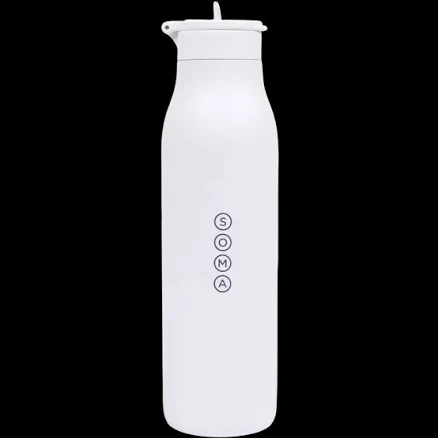
Soma 24oz Stainless Steel Water Bottle
Lower concern for the bottle itself; verify cap materials with brand first.
Soma's stainless steel water bottle uses a lower-PFAS-concern primary material. However, the brand makes no public disclosure about PFAS in the bottle or closures and seals. Stainless steel rarely contains PFAS, but plastic or rubber caps may pose risk if treated for water resistance.
We flunk more products than we pass. This one earned its grade. How we grade
Material
Stainless steel bottle (primary); internal cap/closure materials unspecified
Brand disclosure
Brand is silent on PFAS
Lab data
No public lab test
What Soma 24oz Stainless Steel Water Bottle is made of, ingredients and materials
The Soma 24oz bottle is constructed from stainless steel, a non-reactive metal that does not leach heavy metals, BPA, or other endocrine disruptors into water over time. Stainless steel is not a material linked to PFAS, as it forms a passive oxide layer that resists corrosion and leaching even with acidic beverages. The primary unknown is the composition and treatment of internal cap seals and closure gaskets, which are not detailed in public product specifications and could potentially contain elastomers with trace off-gassing potential.
What’s concerning
No PFAS disclosure
No public statement from the brand about PFAS in this product.
Cap/closure material composition (unspecified)
Soma does not publicly disclose the elastomer or plastic composition of internal cap seals and gaskets. Elastomers in caps can shed trace amounts of volatile compounds or plasticizers if not food-grade; without material confirmation from the brand, low-level off-gassing cannot be ruled out.
Bacterial growth in filter cartridge and internal seals
Filtered water bottle cartridges are known vectors for bacterial colonization if not replaced on schedule or if the bottle is stored wet. Soma does not provide detailed maintenance or replacement intervals in most product documentation, increasing the risk of user error.
Volatile organic compounds (VOCs) from plastic filter housing or cap
The filter cartridge housing and cap elements often contain plastic resins that may off-gas low levels of VOCs, particularly if exposed to warm water or left unused for extended periods. Soma does not provide VOC emissions testing or material safety certifications.
Microplastics
Activated carbon and polymer filter media can shed microfibers or carbon particles if over-used or damaged. Soma's public documentation does not address filter durability testing or particle shedding specifications.
Source, EPA ↗What’s reassuring
Bare uncoated material
Recorded as a bare, uncoated material with no surface coating or treatment.
Stainless steel coating or interior finish degradation
Food-grade stainless steel (typically 304 or 316 grade) does not leach heavy metals under normal use conditions. However, damage to the interior surface from aggressive cleaning, acidic contents, or manufacturing defects could theoretically expose base metal; no defects are documented for this product.
The full breakdown
The brand's record and disclosure
Soma is owned by The Coca-Cola Company and markets itself as a filtered water bottle brand focused on sustainability and reducing single-use plastic. The brand has not published detailed safety data sheets, material certifications (such as NSF, FDA, or third-party testing), or formal statements addressing chemical safety beyond PFAS. No significant safety recalls or controversies appear in public records for this specific product. Transparency on cap material sourcing and manufacturing testing is notably absent from consumer-facing communications.
How it compares in its category
Filtered water bottles typically combine metal or plastic housing with replaceable cartridge filters and plastic or rubber caps. Soma's stainless steel construction places it in the lower-risk tier compared to plastic alternatives (which may contain BPA or degradation byproducts), but it does not stand out for transparency or third-party certification. Competitors like Hydro Flask and S'well also use stainless steel but similarly do not publish comprehensive safety data. The internal filter and cap materials are the variable across this category; Soma's lack of disclosure is standard rather than exceptional.
If you buy it
Use only cold to lukewarm water in stainless steel bottles to avoid any risk of coating or seal degradation under heat stress; do not fill with hot beverages or run through dishwashers unless the manufacturer explicitly confirms the cap is rated for that. Replace the filter cartridge on the manufacturer's recommended schedule (typically every 2-3 months or per usage) to prevent bacterial colonization in the filter media, which becomes a contamination risk if filters are left unchanged. Rinse the bottle interior and cap thoroughly weekly and allow to air-dry completely, particularly the cap threads and seals, to prevent mold or bacterial growth in damp crevices. Contact Soma directly before purchase if you need written confirmation that all internal materials, including cap gaskets, are free of specific hazards (BPA, phthalates, or 1,4-dioxane).
What we don’t know
- Basis
- Model estimate, 72% confidence, not a lab result
- Lab test
- None on record for this exact product
- Brand statement
- Soma has made none
Formulations change between production runs, so check the current label. How we grade.
More water filters grades
How we score, every product runs through the same public 0-100 rubric based on materials, coatings, brand disclosure, lab findings, and recalls. See the full methodology → Spotted a mistake? Report an error.