By PFAS Authority · Updated September 25, 2026
Top grades to buy

Aisle
Super Hipster
APEC Water Systems
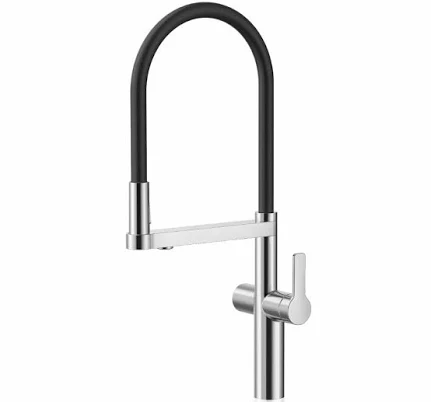
APEC 2-in-1 Pull-Down Kitchen Faucet

Aquasure
Premier Series 75 GPD Under Sink Reverse Osmosis Water Filtration System
Model-based grades, not lab tests. We flunk more than we pass. How grading works
Will the EU's New PFAS Crackdown in 2026 Actually Reduce Your Exposure?
The European Commission is moving forward with a fresh package of restrictions, monitoring requirements, and clean-up initiatives aimed at "forever chemicals," according to the Innovation News Network. The effort signals that European regulators see PFAS pollution as urgent enough to warrant coordinated, cross-border action, but for everyday shoppers, the more useful question is what's actually in the products already sitting in closets, kitchens, and gear bags. On that front PFAS Authority's own scoring of 11,218 products found that 41% fail its PFAS and toxin screen, a reminder that regulation and store shelves often move at very different speeds.
What Did the European Commission Announce?
Per the Innovation News Network's reporting, the European Commission is advancing a multi-part strategy that includes new restrictions on PFAS use, expanded monitoring systems to track contamination in water, soil, and consumer goods, and clean-up initiatives targeting already-polluted sites. The exact scope of restricted chemicals, timelines, and enforcement mechanisms is still being finalized through the EU's regulatory process, but the direction is clear, Brussels is treating PFAS as a pollution class that requires systemic, EU-wide management rather than country-by-country patchwork rules.
This builds on years of prior EU activity, including drinking water limits and a broader PFAS restriction proposal that has been under review by the European Chemicals Agency. The new measures described in this report represent the Commission pushing that groundwork toward more concrete action, according to the source.
Who and What Is Affected?
PFAS, per- and polyfluoroalkyl substances, are used for their water-, stain-, and grease-resistant properties in thousands of everyday products, cookware coatings, rain jackets, tents, food packaging, cosmetics, and industrial processes. Because these chemicals persist in the environment and in the human body for years, EU regulators' monitoring and restriction efforts touch both manufacturers who formulate products and consumers who use them daily.
Scientific and regulatory bodies have associated PFAS exposure with a range of health concerns, including effects on cholesterol levels, immune response, and certain hormone systems, though researchers note these are associations observed in population studies rather than proven cause-and-effect in every individual. That distinction matters, it's why agencies like the EU are pursuing precautionary restrictions even as research continues.
Why Does This Matter for Everyday Shoppers?
Regulation takes time. Even once the EU finalizes new restrictions, manufacturers get phase-out periods, existing inventory often stays on shelves, and enforcement varies by country and product category. Meanwhile, the products consumers buy today were largely made under the current, looser rules.
That gap is exactly where PFAS Authority's scoring data is useful. Rather than waiting for lab results or government test results, which are slow, expensive, and cover only a fraction of products on the market, PFAS Authority scores products based on published ingredients, materials, certifications, and manufacturer disclosures. This approach doesn't replace laboratory testing, but it lets shoppers see, category by category, where PFAS risk tends to concentrate right now.
The pattern is stark in outdoor gear. According to PFAS Authority's own scoring, 100% of the 316 camping tents and tarps assessed failed the PFAS and toxin screen. Rain jackets scored the same way, 100% failing of 74 products, as did cycling rain jackets (100% of 72), sleeping bags (100% of 15), and softshell jackets (100% of 15). These are categories where water-repellent treatments have historically relied heavily on PFAS chemistry, and the data suggests that reliance hasn't gone away just because regulators are paying closer attention.
Compounding the problem, some well-known brands provide no public disclosure about PFAS use at all. PFAS Authority's tracking identifies Cuisinart, The North Face, MAC, Calphalon, T-fal, Nike, Columbia, and Adidas as brands that disclose nothing on this front, meaning consumers have no manufacturer-provided way to know what they're buying into.
What Should You Do Right Now?
You don't have to wait for EU rulemaking to finish before making more informed choices. A few practical steps.
- Check before you buy outdoor gear. Given that entire categories like tents, rain jackets, and sleeping bags are showing near-universal failure rates in independent scoring, it's worth looking specifically for products with third-party PFAS-free certifications rather than assuming "water-resistant" is neutral marketing language.
- Use a product lookup tool. You can search specific items and brands with the PFAS Authority product finder before purchasing, rather than relying solely on brand marketing claims.
- Understand how scoring works. PFAS Authority's methodology page explains how products are evaluated from disclosed ingredients, materials, and certifications, useful context for interpreting any score you see.
- Be skeptical of silence. Brands that disclose nothing about PFAS aren't necessarily using more of it than transparent brands, but the lack of information itself is a signal worth factoring into a purchase decision.
Bottom Line
The European Commission's advancing PFAS restrictions, per the Innovation News Network, represent a meaningful policy shift, but regulatory timelines are long and current store shelves reflect older standards. Independent data, including PFAS Authority's finding that 41% of scored products fail its screen, with outdoor gear categories faring worst, shows the practical exposure landscape consumers face today. Until EU restrictions fully take effect and brands close their disclosure gaps, informed shopping remains the most immediate tool available.
Frequently Asked Questions
Does the EU's announcement mean PFAS products will disappear from stores soon?
Not immediately. According to the Innovation News Network, the Commission is advancing restrictions, monitoring, and clean-up measures, but EU regulatory processes typically involve phase-in periods and country-level enforcement timelines before products actually change.
Is PFAS Authority's scoring the same as laboratory chemical testing?
No. As explained on the methodology page, scores are based on published ingredients, materials, certifications, and manufacturer disclosures, not independent lab analysis of each product.
Does a "lower concern" score mean a product is PFAS-free?
Not necessarily "safe" in an absolute sense, a lower concern score reflects fewer disclosed PFAS-related red flags based on available information, not a guarantee. Consumers can review individual products through the product finder for specifics.
What else we were tracking around this
- Sep 26, 2026Is Your Huntsville Tap Water Safe From PFAS in 2026?
- Sep 26, 2026Perkasie's Water Is PFAS-Free After One Year, What Does That Mean for Your Tap?
- Sep 25, 2026PFAS in the EU, What Does 2026's Regulatory Turning Point Mean for You?
- Sep 25, 2026Can You Still Eat the Fish You Catch in 2024?
The latest PFAS news is updated daily.
Now check your own stuff
Search anything you own and get its PFAS grade in seconds.
Get the graded list, free
The products we score each week, and the best-graded alternative in every category.
No spam. Unsubscribe anytime.