By PFAS Authority · Updated September 26, 2026
Top grades to buy

Aisle
Super Hipster
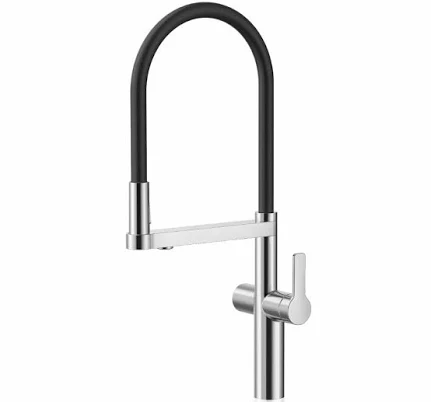
APEC Water Systems
APEC 2-in-1 Pull-Down Kitchen Faucet

Aquasure
Premier Series 75 GPD Under Sink Reverse Osmosis Water Filtration System
Model-based grades, not lab tests. We flunk more than we pass. How grading works
Perkasie's Water Is PFAS-Free After One Year, What Does That Mean for Your Tap?
Residents in Perkasie, Pennsylvania, just passed a milestone that many communities across the country are still working toward, a full year of treated drinking water with more than 200 million gallons processed through a system built to strip out PFAS, the "forever chemicals" linked to a range of health concerns. According to Business Wire, Sentinel Water Solutions marked the one-year anniversary of its temporary granular activated carbon (GAC) treatment system at the Perkasie Regional Authority, which has provided early compliance with PFAS regulations while the Authority builds a permanent facility.
What Happened in Perkasie?
Sentinel Water Solutions installed a temporary GAC treatment system for the Perkasie Regional Authority roughly a year ago. GAC systems work by passing water through activated carbon filters that trap PFAS molecules before they reach household taps. Per the source, the system has treated over 200 million gallons of water during its first year of operation, giving Perkasie a way to comply with emerging PFAS rules before its permanent treatment infrastructure is finished.
Notably, the company says the carbon used in this temporary system is designed to be reused in the Authority's permanent treatment facility once it's operational, a detail that suggests some planning around cost and material efficiency, rather than treating the temporary system as disposable.
Who Is Affected by This?
The most direct beneficiaries are Perkasie Regional Authority customers, households and businesses whose water now passes through this GAC system before reaching their taps. But the story matters more broadly, too. Water utilities across the country are under pressure from the EPA's 2024 PFAS drinking water rule, which set enforceable limits on several PFAS compounds. Many smaller and mid-sized authorities are watching real-world examples like Perkasie to understand what a compliance pathway can look like, how much it costs, and how long full build-outs take.
Why Does This Matter?
PFAS chemicals have been used for decades in everything from firefighting foam to nonstick cookware, and they don't break down easily in the environment. Scientific studies have found associations between PFAS exposure and health effects including changes in cholesterol levels, immune response, and other outcomes, though researchers caution these are associations, not proven cause-and-effect relationships for every individual.
Drinking water is one of the most direct ways people are exposed to PFAS, which is why treatment systems like Perkasie's matter. A working GAC system that's been validated over a full year and 200 million gallons gives residents a concrete data point, rather than a promise, about ongoing compliance.
But water isn't the only exposure pathway. PFAS also show up in everyday consumer products, cookware, rain jackets, tents, and more, often without any indication on the label. PFAS Authority's own scoring of 11,218 products found that 41% fail its PFAS and toxin screen, with entire categories like camping tents and tarps, rain jackets, cycling rain jackets, sleeping bags, and softshell jackets showing 100% failure rates among the items scored. That data comes from our review of published ingredients, materials, certifications, and manufacturer disclosures, not laboratory testing, and it's a reminder that a clean water source is only part of the picture when it comes to reducing PFAS exposure.
What Should You Do If You Live in Perkasie, or Anywhere Else?
If you're a Perkasie Regional Authority customer, the practical takeaway is straightforward, the temporary system has been running for a year and treating substantial volumes of water, according to the company's announcement. If you have specific questions about your household's water quality, your local utility's consumer confidence report (typically published annually) is the best primary source, and you can also contact the Authority directly for testing data.
For everyone else, whether or not your water utility has announced a PFAS treatment system, there are a few things worth doing.
- Check your local water utility's most recent water quality report for PFAS testing results.
- If you're concerned about tap water, consider a water filter certified to reduce PFAS, look for NSF/ANSI 53 or 58 certification specifically for PFAS reduction.
- Review the products you buy regularly, especially outdoor gear and cookware, since these categories show some of the highest PFAS-related failure rates in our own scoring.
- Use a tool like our product finder to check specific brands and items before you buy.
Some major brands, including Cuisinart, The North Face, MAC, Calphalon, T-fal, Nike, Columbia, and Adidas, currently disclose nothing about PFAS in their products, according to our research, which makes it harder for consumers to make informed choices without independent scoring.
Bottom Line
Perkasie's one-year, 200-million-gallon milestone is a useful real-world example of how a temporary treatment system can bridge the gap to permanent PFAS compliance for a water utility. It doesn't mean PFAS exposure risk has disappeared for residents or anyone else, water is just one exposure source among several, including consumer products. Understanding how any product or water system is scored, and by what standard, matters. You can read more about how we evaluate products in our methodology.
Frequently Asked Questions
Does this mean Perkasie's water is now completely free of PFAS?
The GAC system is designed to reduce PFAS levels in treated water and has been operating for a year, per the source. "Lower concern" is a more accurate description than "PFAS-free," since ongoing monitoring and treatment performance can vary. Residents should check the Authority's public water quality reports for specific test results.
What is GAC treatment, and how does it work?
Granular activated carbon (GAC) treatment passes water through beds of carbon that adsorb, or trap, PFAS molecules and other contaminants. It's one of the more common and well-established treatment methods utilities use to address PFAS in drinking water.
How can I check if products I use might contain PFAS?
Many manufacturers don't disclose PFAS content, based on our research into brand transparency. You can use our product finder to check specific items against our scoring, which is based on published ingredients, materials, certifications, and disclosures rather than independent lab testing.
What else we were tracking around this
- Sep 26, 2026Can New PFAS Destruction Technology Actually Protect You?
- Sep 26, 2026Is Your Huntsville Tap Water Safe From PFAS in 2026?
- Sep 25, 2026Will the EU's New PFAS Crackdown in 2026 Actually Reduce Your Exposure?
- Sep 25, 2026PFAS in the EU, What Does 2026's Regulatory Turning Point Mean for You?
The latest PFAS news is updated daily.
Now check your own stuff
Search anything you own and get its PFAS grade in seconds.
Get the graded list, free
The products we score each week, and the best-graded alternative in every category.
No spam. Unsubscribe anytime.