By PFAS Authority · Updated September 25, 2026
Top grades to buy

Aisle
Super Hipster
APEC Water Systems
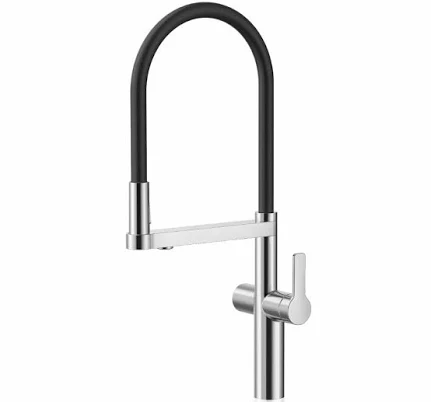
APEC 2-in-1 Pull-Down Kitchen Faucet

Aquasure
Premier Series 75 GPD Under Sink Reverse Osmosis Water Filtration System
Model-based grades, not lab tests. We flunk more than we pass. How grading works
PFAS in the EU, What Does 2026's Regulatory Turning Point Mean for You?
On March 26, 2026, the European Chemicals Agency (ECHA) opened a 60-day public consultation on a draft opinion from its scientific committees regarding the proposed restriction of per- and polyfluoroalkyl substances (PFAS) across the European Union, according to A&O Shearman's summary of the filing. While the details are still moving through Europe's regulatory machinery, the announcement is being described by legal and industry observers as a genuine inflection point, the moment the EU's years-long effort to restrict an entire class of "forever chemicals" starts to take concrete shape.
For everyday shoppers, this can feel like distant policy news. It isn't. While regulators debate definitions and deadlines, PFAS Authority's own scoring of 11,218 products has already found that 41% fail its PFAS and toxin screen today, a reminder that the products on shelves right now, not just future ones, are where the real exposure risk lives.
What actually happened in Brussels?
ECHA's consultation covers the draft opinion of its Committee for Risk Assessment (RAC), part of the long-running process toward an EU-wide restriction on PFAS as a class, rather than chemical-by-chemical. According to A&O Shearman, the 60-day comment window gives manufacturers, importers, trade associations, and the public a formal chance to weigh in before the committee finalizes its scientific opinion, which then feeds into the European Commission's eventual restriction decision. This isn't a final rule yet, but it's a critical procedural step that historically precedes binding EU chemical restrictions.
Who and what is affected?
PFAS show up in an enormous range of consumer goods, nonstick cookware, waterproof outdoor gear, food packaging, cosmetics, and textile treatments. A class-wide restriction, if finalized, would eventually reach manufacturers selling into the EU market, which in practice tends to ripple outward to global supply chains, since many brands don't formulate differently for different regions.
Our own product data shows why certain categories deserve particular attention right now, ahead of any regulation actually taking effect. Based on PFAS Authority's scoring, entire outdoor gear categories are failing at extreme rates, camping tents and tarps (100% of 316 products scored), rain jackets (100% of 74 scored), cycling rain jackets (100% of 72 scored), sleeping bags (100% of 15 scored), and softshell jackets (100% of 15 scored). These are categories where water-repellent treatments have historically relied on fluorinated chemistry, and our findings suggest that reliance hasn't gone away.
It's also worth naming brands that currently disclose nothing about PFAS use in their products, based on our review, Cuisinart, The North Face, MAC, Calphalon, T-fal, Nike, Columbia, and Adidas. A lack of disclosure doesn't automatically mean a product contains PFAS, but it does mean consumers and researchers alike are left guessing.
Why does this matter for your health and your wallet?
PFAS have been associated in scientific studies with a range of health concerns, including effects on the immune system, cholesterol levels, and certain hormone functions, these are associations observed in research, not proven cause-and-effect for any individual product or person. Regulators, including ECHA, have cited these accumulating concerns as part of the rationale for treating PFAS as a class rather than evaluating thousands of individual compounds one at a time, since many break down into other PFAS or persist similarly in the environment and the body.
For your wallet, the concern is different but real, a class-wide EU restriction could eventually force reformulation across entire product categories, meaning shifts in pricing, packaging claims, and product availability over the next several years. Getting ahead of that curve, understanding which products already avoid PFAS, can save both money and guesswork later.
What should you do right now?
You don't need to wait for Brussels to finish its process to make more informed choices today. A few practical steps.
- Check specific products before buying, especially in high-risk categories like rainwear, tents, and sleeping bags, using a tool like PFAS Authority's product finder.
- Understand how scoring works. PFAS Authority evaluates products from published ingredients, materials, certifications, and manufacturer disclosures, not laboratory testing of every item, so scores reflect transparency and formulation data rather than a chemical assay. Details are on our methodology page.
- Be skeptical of brands with no PFAS disclosure at all, particularly in categories where fluorinated treatments are common.
- Look for third-party certifications specifically addressing PFAS-free claims, rather than general "eco-friendly" marketing language.
Bottom Line
The EU's March 2026 consultation is a meaningful step toward a future where PFAS are far less common in consumer products sold in Europe and, likely, beyond. But regulation takes years to finalize and enforce. In the meantime, PFAS Authority's data shows that entire categories of gear, tents, rain jackets, sleeping bags, are failing PFAS and toxin screens at or near 100% rates today. Waiting for regulators to act isn't a substitute for checking what's already on the shelf.
Frequently Asked Questions
Does this EU consultation mean PFAS are now banned?
No. According to A&O Shearman, ECHA's March 2026 action is a 60-day public consultation on a draft scientific committee opinion, a procedural step that precedes any final restriction decision by the European Commission. No ban has taken effect as a result of this announcement alone.
Are all rain jackets and tents unsafe because of PFAS?
Not necessarily unsafe, but PFAS Authority's scoring found that 100% of the camping tents, rain jackets, and sleeping bags it evaluated failed its PFAS and toxin screen, indicating widespread reliance on fluorinated treatments in these categories. Products vary, and checking individual items is the best way to find lower-concern options.
If a brand doesn't mention PFAS at all, does that mean its products contain them?
Not automatically, but a lack of disclosure means there's no public information to confirm a product is PFAS-free. Brands like Cuisinart, The North Face, Nike, and Columbia currently disclose nothing about PFAS use, according to PFAS Authority's review, which limits consumers' ability to make informed comparisons.
What else we were tracking around this
- Sep 26, 2026Perkasie's Water Is PFAS-Free After One Year, What Does That Mean for Your Tap?
- Sep 25, 2026Will the EU's New PFAS Crackdown in 2026 Actually Reduce Your Exposure?
- Sep 25, 2026Can You Still Eat the Fish You Catch in 2024?
- Sep 24, 2026Can Cotton Rain Gear Actually Keep You Dry Without PFAS in 2026?
The latest PFAS news is updated daily.
Now check your own stuff
Search anything you own and get its PFAS grade in seconds.
Get the graded list, free
The products we score each week, and the best-graded alternative in every category.
No spam. Unsubscribe anytime.