By PFAS Authority · Updated September 28, 2026
Top grades to buy

Aisle
Super Hipster
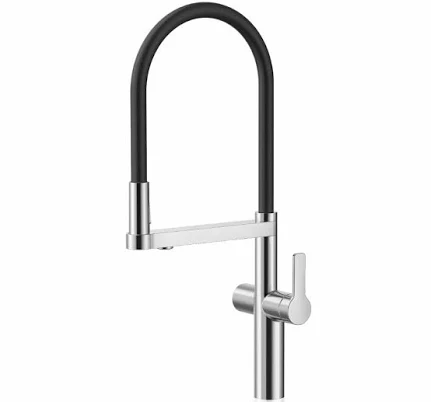
APEC Water Systems
APEC 2-in-1 Pull-Down Kitchen Faucet

Aquasure
Premier Series 75 GPD Under Sink Reverse Osmosis Water Filtration System
Model-based grades, not lab tests. We flunk more than we pass. How grading works
How Can You Get PFAS Out of Your Drinking Water in 2025?
A reader from Reno, Nevada, recently asked a version of the question millions of Americans are now asking, her water utility flagged PFAS, or "forever chemicals," in the local supply, and she wanted to know what that means for her family and what she can actually do about it. It's a fair question, and one that's getting harder to avoid as testing expands and more communities report detections.
What Happened?
Polyfluoroalkyl and perfluoroalkyl substances (PFAS) are a family of thousands of man-made chemicals prized for decades in industry and consumer goods because they resist heat, water, and stains. That same chemical stability is the problem, PFAS do not break down naturally in the environment, and they can accumulate in soil, water, and the human body over time. As monitoring under the EPA's national drinking water rules expands, more utilities are detecting PFAS at levels the agency now considers a health concern, prompting questions from residents like Michelle K. about how the chemicals got into their tap water and how to remove them.
PFAS contamination isn't limited to water systems. It's also embedded in everyday consumer products. PFAS Authority's own scoring of 11,218 products found that 41% fail its PFAS and toxin screen, a reminder that forever chemicals show up far beyond the kitchen faucet, in items people touch, wear, and cook with every day.
Who and What Is Affected?
PFAS have been detected in public water systems across the country, particularly near military bases, airports, and industrial or manufacturing sites where firefighting foams and PFAS-based coatings were historically used, according to the EPA. But contamination isn't only a local-water-utility issue. It's woven into the products people buy.
Our scoring, based on publicly available ingredient lists, materials disclosures, and third-party certifications rather than laboratory testing, has found entire product categories where PFAS use is essentially universal. Camping tents and tarps scored 100% failing across 316 products evaluated. Rain jackets failed 100% of 74 products scored, cycling rain jackets failed 100% of 72, sleeping bags failed 100% of 15, and softshell jackets failed 100% of 15. These outdoor and rain-resistant categories rely heavily on PFAS-based water-repellent treatments, which is why failure rates run so high.
Transparency is also a problem. Brands including Cuisinart, The North Face, MAC, Calphalon, T-fal, Nike, Columbia, and Adidas disclose nothing about PFAS use in their products, according to our review, making it difficult for shoppers to know what they're bringing into their homes without independent scoring tools like our product finder.
Why Does This Matter?
Federal health agencies, including the EPA and the Agency for Toxic Substances and Disease Registry, have linked exposure to certain PFAS with a range of health effects in scientific studies, including changes in cholesterol levels, immune response, and liver function, along with associations to certain cancers and developmental effects in infants and children. These are associations observed in research, not proof that PFAS caused any individual person's health condition, and scientists continue to study the mechanisms involved.
What makes PFAS particularly concerning to regulators is persistence. Because the chemicals resist breakdown, they accumulate in the body and the environment over years, meaning even low-level, ongoing exposure through water, food packaging, cookware, and treated fabrics can add up. That's why the EPA finalized enforceable limits on several PFAS compounds in drinking water, and why product transparency matters just as much as water-utility compliance.
What Can You Do About It?
Start with your water. Utilities are required to notify customers when PFAS levels exceed EPA limits, so check your water utility's annual Consumer Confidence Report or contact them directly to ask about recent PFAS testing results. If you're on a private well, the EPA recommends independent testing since wells aren't covered by public water system monitoring.
If PFAS are detected, home filtration can help. According to EPA guidance, filters certified to NSF/ANSI standards 53 or 58, activated carbon and reverse osmosis systems, respectively, have been shown to reduce many PFAS compounds in tap water. Look for NSF certification specific to PFAS reduction, not just general water filtration claims.
Beyond the tap, consider the products you bring into your home. Rain gear, tents, sleeping bags, and nonstick cookware are common hidden sources of PFAS. Before buying, check whether a brand discloses its PFAS policy, and use a tool like our product finder to compare items using our scoring methodology, which evaluates published ingredients, materials, and certifications rather than conducting lab tests on every product.
The Bottom Line
PFAS contamination in drinking water is a real and expanding concern, but it's manageable. Check your local water quality reports, consider certified filtration if PFAS are detected, and be selective about PFAS-heavy product categories like rain jackets, tents, and sleeping bags, where our scoring shows failure rates near or at 100%. Products that pass our screen represent lower concern, not a guarantee of zero exposure, since PFAS use across entire industries remains widespread and disclosure is inconsistent.
Frequently Asked Questions
Can boiling water remove PFAS?
No. According to EPA guidance, boiling does not remove PFAS and may even concentrate them slightly as water evaporates. Certified filtration is the recommended approach.
Are all water filters effective against PFAS?
Not necessarily. The EPA points to filters certified under NSF/ANSI standards 53 or 58 as effective for reducing many PFAS compounds; check product certification specifics rather than assuming any filter works.
How can I tell if a product contains PFAS?
Many brands don't disclose PFAS use voluntarily. PFAS Authority scores products using published ingredients, materials, and certifications, and you can compare results through our product finder.
What else we were tracking around this
- Sep 28, 2026Is Your Drinking Water Still Protected From PFAS in 2026? What EPA's Guidance Withdrawal Means for You
- Sep 28, 2026Is Your Drinking Water Safe From ‘Forever Chemicals’ in 2026? What Pennsylvania’s Sludge Crisis Means for You
- Sep 27, 2026Is There PFAS in Your Workout Clothes? What the Lululemon Investigation Means for You in 2026
- Sep 27, 2026Are PFAS Pesticides Contaminating California’s Water in 2026, and What Can You Do About It?
The latest PFAS news is updated daily.
Now check your own stuff
Search anything you own and get its PFAS grade in seconds.
Get the graded list, free
The products we score each week, and the best-graded alternative in every category.
No spam. Unsubscribe anytime.