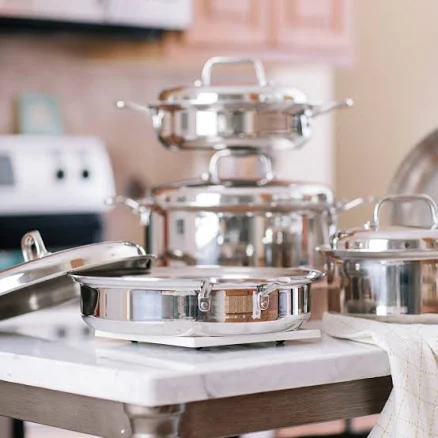
360 Cookware the Essentials Stainless Steel Cookware Set
Bare stainless steel cookware, lower PFAS concern, no nonstick coating.
360 Cookware Essentials is bare stainless steel with no nonstick or chemical coating applied. No PFAS-containing Teflon-family coating expected in uncoated steel cookware.
The better-graded swap
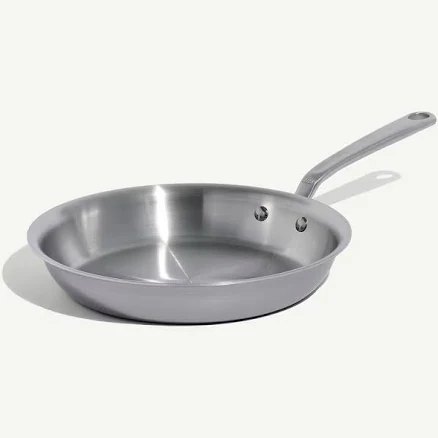
Made In
MADE IN 10' Stainless Clad Frying Pan
100/100 safety
Same rubric that flunked this product. The swap earned Excellent.
Still want this one anyway? Check the price on Amazon. We’d swap it.
Material
Stainless steel, bare (no nonstick or water-repellent coating)
Brand disclosure
Brand is silent on PFAS
Lab data
No public lab test
Is 360 Cookware the Essentials Stainless non-toxic? What it is made of
360 Cookware's Essentials line is constructed from stainless steel with no applied nonstick or chemical-release coating. Stainless steel is a iron-chromium alloy that forms a passive oxide layer preventing rust and minimizing leaching into food under normal cooking conditions. This bare-metal approach eliminates the thermal degradation risk seen in Teflon-type coating or ceramic-coated cookware, where high heat can release volatile compounds or coating fragments.
What’s concerning
Category baseline
The starting point for this type of product, before anything specific to this product is counted.
No PFAS disclosure
No public statement from the brand about PFAS in this product.
Nickel leaching from stainless steel
Stainless steel alloys contain nickel (typically 8-12%); acidic or salty foods in contact with damaged or low-grade stainless steel can mobilize trace nickel. 360 Cookware does not publish alloy composition or nickel-release test data; risk is minimal for food-grade stainless (304 or 316) but unverified here.
Weld integrity and corrosion over time
Stainless steel cookware relies on robust welding and riveting at handle and bottom attachments; poor weld quality or maintenance can lead to pitting corrosion or structural failure after repeated heating and washing cycles. 360 Cookware does not publish weld-quality standards or durability warranties.
What’s reassuring
Bare uncoated material
Recorded as a bare, uncoated material with no surface coating or treatment.
Aluminum core or cladding leaching
If this cookware uses an aluminum heat-distribution core sandwiched between stainless steel layers, leaching is minimal under normal conditions. No documentation of aluminum content or cladding composition is publicly available for this product.
Lead
No recalls, testing reports, or brand disclosures indicate lead or cadmium contamination in 360 Cookware's stainless steel cookware. Lead and cadmium are not typical components of food-grade stainless steel.
Source, ATSDR ↗Teflon-type coating fume release or coating degradation
Bare stainless steel cookware carries no nonstick coating, eliminating Teflon-type coating thermal decomposition risk entirely. No coating-related hazard applies to this product.
The full breakdown
The brand's record and disclosure
360 Cookware operates with minimal public safety disclosures or third-party certifications on their website; no independent recalls or safety violations have been documented for this product line. The brand does not publish material sourcing, nickel-release testing, or heavy-metal screening data. No formal controversies regarding lead, cadmium, or coating degradation have been reported in consumer safety databases.
How it compares in its category
Bare stainless steel cookware ranks favorably against nonstick-coated alternatives (which carry Teflon-type coating fume and coating-degradation risks) and ceramic-coated cookware (which can chip and leach underlying materials). It is more durable long-term than anodized aluminum and does not depend on sustained coating integrity. Compared to enameled cast iron, stainless steel requires less seasoning maintenance but may have slower heat distribution.
If you buy it
Use stainless steel cookware on medium to medium-high heat; avoid prolonged boiling or overheating empty pans, which can discolor the surface and stress welds. Hand-wash or use gentle dishwasher cycles to prevent pitting and surface degradation over time. Monitor handle attachment points and rivets for corrosion after 5 to 10 years of heavy use; replace if structural integrity fails. Avoid acidic foods left in the pan for extended periods, as they may increase minor trace nickel release (though well below dietary concern thresholds for most users).
What we don’t know
- Basis
- Model estimate, 90% confidence, not a lab result
- Lab test
- None on record for this exact product
- Brand statement
- 360 Cookware has made none
Formulations change between production runs, so check the current label. How we grade.
Better-graded alternatives in Cookware
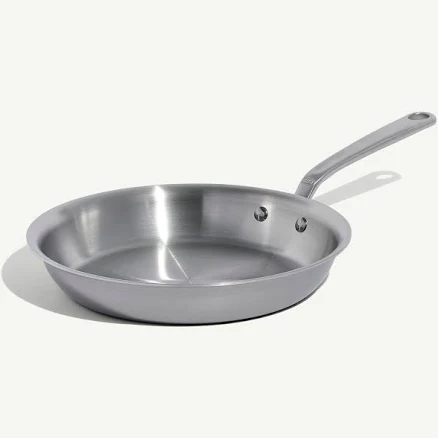
Made In
Stainless Clad Fry Pan
- Stainless steel clad construction, no nonstick coating
- The brand calls it PFAS-free, which we have not verified
- Clad separation or delamination over time
Made In
10' Stainless Clad Frying Pan
- stainless steel clad construction, no nonstick coating
- The brand calls it PFAS-free, which we have not verified
- Nickel leaching from stainless steel
3 hazards checked on this product. See all of them.
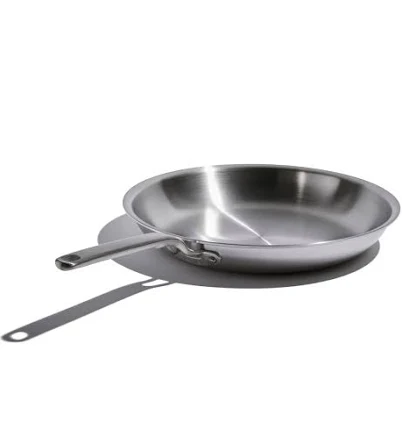
Heritage Steel
Eater Fry Pan
- Clad stainless steel, no coating
- The brand calls it PFAS-free, which we have not verified
- Metal ion release during cooking (iron, nickel, chromium)
More cookware grades
How we score, every product runs through the same public 0-100 rubric based on materials, coatings, brand disclosure, lab findings, and recalls. See the full methodology → Spotted a mistake? Report an error.