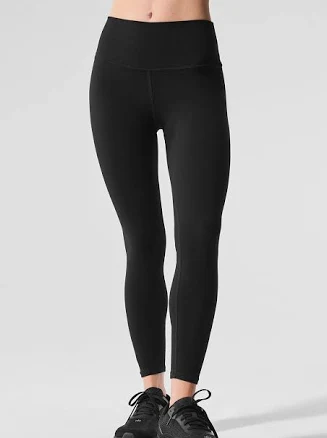
Alo Yoga Alo Alosoft High-Waist 7/8 Highlight Legging
No known PFAS risk, but brand discloses nothing about treatment.
Alo Yoga provides no public disclosure of PFAS or water-repellent coating treatments on this legging. Nylon apparel typically carries lower concern unless treated with fluorinated finishes, which are not mentioned here.
Still want this one anyway? Check the price on Amazon. We’d swap it.
Material
Nylon blend fabric
Brand disclosure
Brand is silent on PFAS
Lab data
No public lab test
You may also be interested in
Top-graded picks in the categories readers replace first, every one scored on the same rubric.

- polypropylene filter housing, carbon/sediment cartridge
- We found no PFAS statement from the brand
- Bacterial growth in spent cartridges
3 hazards checked on this product, all on its full breakdown.

Aquasure
Premier Series 75 GPD Under Sink Reverse Osmosis Water Filtration System
- RO membrane, carbon filters, stainless steel housing
- We found no PFAS statement from the brand
- Bacterial and microbial growth in housing and filters
4 hazards checked on this product, all on its full breakdown.

Avocado
Vegan Mattress
- organic cotton, natural latex, coconut coir, recycled steel coils
- The brand calls it PFAS-free, which we have not verified
- Heavy metals
2 hazards checked on this product, all on its full breakdown.
What Alo Yoga Alo Alosoft High-Waist Legging is made of, ingredients and materials
Alo Alosoft leggings are constructed from a nylon blend, a synthetic polymer chosen for stretch, durability, and moisture-wicking in athletic wear. Nylon itself does not leach heavy metals or BPA; its primary chemical concern in textiles is the dyeing and finishing process, not the fiber. The blend likely includes elastane (spandex) for the high-waist fitted silhouette, which adds stretch but does not introduce documented toxicity risks at normal wear temperatures. No information is publicly available about specific dye types, antimicrobial finishes, or flame retardants applied to this garment.
What’s concerning
Category baseline
The starting point for this type of product, before anything specific to this product is counted.
No PFAS disclosure
No public statement from the brand about PFAS in this product.
Heavy metals
The 'Highlight' colorway requires synthetic dyes; azo and other dye classes are not regulated out of apparel in most markets. No specific testing of this garment has been published. Risk is consistent with standard nylon athletic wear across all brands at this price tier.
Source, FDA ↗Microfiber shedding on washing and wear
All synthetic blend textiles, including nylon-spandex, shed microfibers during laundering and abrasion; this is a material class issue, not brand-specific. Use a microfiber wash bag to reduce environmental release.
What’s reassuring
Base material not linked to PFAS
The main material recorded for this product is not one associated with PFAS.
Formaldehyde / VOCs
No recalls or complaints on record for Alo leggings. Formaldehyde is sometimes used in nylon finishing to improve wrinkle resistance or dye stability; Alo does not disclose use or absence, and industry standards allow residual levels well below regulatory concern.
Source, ATSDR ↗Antimony in polyester or polyamide
Antimony is used as a catalyst in some polyester and polyamide manufacturing but is not typically migrating or bioavailable in finished fabric. No health complaints linked to nylon or nylon-blend athletic wear on this basis.
Elastane (spandex) degradation and chemical release
Elastane does not leach toxins during normal wear or washing at cool temperatures. Degradation from heat or UV accelerates fiber breakdown but does not produce documented health hazard; the concern is garment lifespan and microfiber shedding over time.
How is this PFAS grade calculated?
The brand's record and disclosure
Alo Yoga maintains a premium positioning in athletic apparel but does not publicly disclose material certifications (such as OEKO-TEX, GOTS, or similar) or third-party testing for chemical residues. The brand has not faced major recalls or public health complaints tied to chemical contamination. Their silence on PFAS and formaldehyde finishing is consistent with most mainstream athletic brands; transparency about chemical inputs is not standard in this category and does not indicate hidden hazard.
How it compares in its category
Nylon-blend leggings are among the most common athletic bottoms and carry no higher inherent chemical risk than polyester or cotton alternatives at this price point. Brands with formal certifications (Patagonia, Allbirds) publish more detailed chemical data, while Alo Yoga operates at the level of typical fast-fashion athletic brands in terms of disclosure. No evidence suggests Alo's nylon sourcing or finishing processes differ substantially from competitors offering similar products.
If you buy it
Wash in cool water with mild detergent before first wear to remove any residual dyes or finishes; hot water is not necessary and can degrade elastane. Avoid chlorine bleach and fabric softeners, which can break down the blend and release particulates. Dry on low heat or air-dry; high heat accelerates polymer degradation. Replace when elastic or seams fail, typically after 1 to 2 years of regular use, as microfiber shedding increases with wear and fiber breakdown.
What is not known about PFAS in this product?
- Basis
- Model estimate, 62% confidence, not a lab result
- Lab test
- None on record for this exact product
- Brand statement
- Alo Yoga has made none
Formulations change between production runs, so check the current label. How we grade.
More activewear grades
How we score, every product runs through the same public 0-100 rubric based on materials, coatings, brand disclosure, lab findings, and recalls. See the full methodology → Spotted a mistake? Report an error.