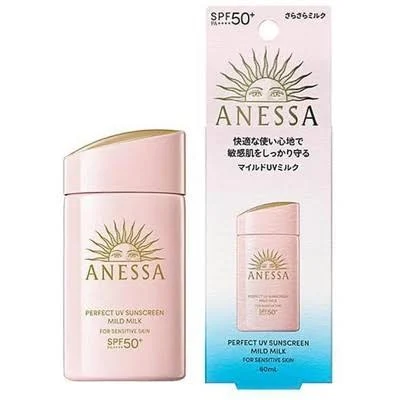
Shiseido Anessa Perfect UV Sunscreen Mild Milk SPF50+ 60ml
Sunscreen with no fluorinated ingredient on record, and no PFAS statement from the brand.
Shiseido has no PFAS statement on record for this sunscreen. Our record does not include an ingredient-level check, so look for fluorinated ingredients such as Teflon-type coating on the label.
We flunk more products than we pass. This one earned its grade. How we grade
Material
aqueous emulsion with waterproofing agents
Brand disclosure
Brand is silent on PFAS
Lab data
No public lab test
You may also be interested in
Top-graded picks in the categories readers replace first, every one scored on the same rubric.

- polypropylene filter housing, carbon/sediment cartridge
- We found no PFAS statement from the brand
- Bacterial growth in spent cartridges
3 hazards checked on this product, all on its full breakdown.

Aquasure
Premier Series 75 GPD Under Sink Reverse Osmosis Water Filtration System
- RO membrane, carbon filters, stainless steel housing
- We found no PFAS statement from the brand
- Bacterial and microbial growth in housing and filters
4 hazards checked on this product, all on its full breakdown.

Avocado
Vegan Mattress
- organic cotton, natural latex, coconut coir, recycled steel coils
- The brand calls it PFAS-free, which we have not verified
- Heavy metals
2 hazards checked on this product, all on its full breakdown.
What Shiseido Anessa Perfect Mild Milk SPF50+ is made of, ingredients and materials
Anessa Mild Milk is an aqueous emulsion sunscreen, meaning UV filters are suspended in water with emulsifiers and waterproofing agents. Shiseido does not publicly list the exact UV filter actives or waterproofing chemistry on the English product page, which limits full hazard assessment. Aqueous emulsion formulas generally pose lower dermal absorption risk than oil-based alternatives, but the specific filter identity (organic vs. inorganic, nano-scale or not) determines whether additional scrutiny applies.
What’s concerning
Category baseline
The starting point for this type of product, before anything specific to this product is counted.
No PFAS disclosure
No public statement from the brand about PFAS in this product.
UV filter chemical identity and dermal absorption
Shiseido does not disclose the specific UV filters in the English product information. Some organic (carbon-based) UV filters have been detected in blood serum in clinical studies; without knowing the active ingredient, risk level cannot be precisely graded for this formulation.
Fragrance allergens and sensitizers
Anessa formulations typically include fragrance (not disclosed as 'fragrance-free'). Fragrance is a known source of allergic contact dermatitis and photosensitivity in sunscreens; ingredient list does not itemize fragrance components in English materials.
What’s reassuring
Base material not linked to PFAS
The main material recorded for this product is not one associated with PFAS.
Nano-scale particles (if present)
Product label does not specify nano-scale UV filters. If titanium dioxide or zinc oxide is used, nano-scale variants pose inhalation risk during powder application; this product is a liquid milk, reducing powder inhalation concern, but nano-scale ingredient disclosure is absent.
Formaldehyde / VOCs
No formaldehyde releasers (DMDM hydantoin, imidazolidinyl urea, diazolidinyl urea) are listed on available product or INCI disclosures. Risk is not elevated for this brand in this category, but full ingredient transparency would confirm absence.
Source, ATSDR ↗Emulsion stability and microbiological contamination
As a regulated cosmetic product in Japan and major markets, Anessa meets microbial and stability standards. No recalls for contamination have been recorded; risk is low if product is stored as directed and used within expiry.
How is this PFAS grade calculated?
The brand's record and disclosure
Shiseido is a major Japanese cosmetics corporation with established safety compliance in regulated markets (EU, US, Japan). The brand does not publish a dedicated PFAS avoidance statement, nor have major recalls for this product line been recorded in public databases. Shiseido does comply with EU Cosmetics Regulation and Japanese METI standards, which restrict certain hazardous substances, but transparency on emerging concerns (nano-scale UV filters, fragrance allergens) is limited compared to indie or certified organic brands.
How it compares in its category
Sunscreen formulations are among the most regulated cosmetic products globally. Anessa's waterproofing and SPF50+ claim place it in the mainstream commercial segment; reef-safe mineral-only alternatives (zinc oxide, titanium dioxide) would carry lower nano-scale risk, while chemical-only sunscreens may have higher dermal penetration concerns. Shiseido's product lacks third-party certifications (EWG, Reef Safe, etc.), which some consumers use as transparency proxies.
If you buy it
Apply generously (at least 2 mg/cm2 of skin) and reapply every two hours or after water exposure, as directed on the label. Store below 25 degrees Celsius away from direct sunlight to prevent emulsion breakdown. Discontinue use if irritation, rash, or sensitization occurs; sunscreen reactions are rare but possible with chemical filters or fragrance additives. Check the product date and do not use beyond the stated expiry, as UV filter efficacy degrades over time.
What is not known about PFAS in this product?
- Basis
- Model estimate, 45% confidence, not a lab result
- Lab test
- None on record for this exact product
- Brand statement
- Shiseido has made none
Formulations change between production runs, so check the current label. How we grade.
What are the PFAS-free alternatives to Shiseido Anessa Perfect UV Sunscreen Mild Milk SPF50+ 60ml?
- Mineral sunscreen, zinc oxide base
- A third party reports verifying it as PFAS-free
- 1,4-dioxane (non-intentional contaminant from surfactants/emulsifiers)
2 hazards checked on this product, all on its full breakdown.
- mineral sunscreen (zinc oxide or titanium dioxide base)
- The brand calls it PFAS-free, which we have not verified
- Synthetic fragrance allergens
More sunscreen grades
How we score, every product runs through the same public 0-100 rubric based on materials, coatings, brand disclosure, lab findings, and recalls. See the full methodology → Spotted a mistake? Report an error.