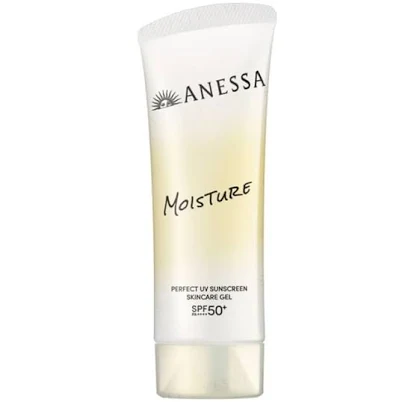
Shiseido Anessa Perfect UV Sunscreen Skincare Gel NB SPF50+ PA++++
Sunscreen with no fluorinated ingredient on record, and no PFAS statement from the brand.
Shiseido has no PFAS statement on record for this sunscreen. Our record does not include an ingredient-level check, so look for fluorinated ingredients such as Teflon-type coating on the label.
We flunk more products than we pass. This one earned its grade. How we grade
Material
Water-resistant gel sunscreen with silicone and UV filters
Brand disclosure
Brand is silent on PFAS
Lab data
No public lab test
You may also be interested in
Top-graded picks in the categories readers replace first, every one scored on the same rubric.

- polypropylene filter housing, carbon/sediment cartridge
- We found no PFAS statement from the brand
- Bacterial growth in spent cartridges
3 hazards checked on this product, all on its full breakdown.

Aquasure
Premier Series 75 GPD Under Sink Reverse Osmosis Water Filtration System
- RO membrane, carbon filters, stainless steel housing
- We found no PFAS statement from the brand
- Bacterial and microbial growth in housing and filters
4 hazards checked on this product, all on its full breakdown.

Avocado
Vegan Mattress
- organic cotton, natural latex, coconut coir, recycled steel coils
- The brand calls it PFAS-free, which we have not verified
- Heavy metals
2 hazards checked on this product, all on its full breakdown.
What Shiseido Anessa Perfect NB SPF50+ PA++++ is made of, ingredients and materials
Anessa Perfect UV is a silicone-based gel sunscreen containing organic UV filters (likely avobenzone, octinoxate, or similar) and inorganic mineral filters. Silicone polymethylsiloxane provides water resistance and smooth texture without forming a fluorinated repellent coating. The gel matrix itself does not require Teflon-type coating or Teflon-family coating additives; water resistance comes from silicone's inherent hydrophobic chemistry and formulation design, not from surface treatments.
What’s concerning
Category baseline
The starting point for this type of product, before anything specific to this product is counted.
No PFAS disclosure
No public statement from the brand about PFAS in this product.
Synthetic UV filter stability and photodegradation
Gel sunscreens relying on avobenzone or octinoxate can degrade under UV exposure or in heat, reducing SPF protection over time. Shiseido does not publicly disclose stabilizer chemistry (e.g., octocrylene) for this formula, so long-term efficacy claims cannot be independently verified.
Fragrance allergens and undisclosed fragrance components
Most Anessa sunscreens contain added fragrance, which can include allergens and sensitizers not itemized on the label (1,4-dioxane is sometimes present as a fragrance solvent contaminant in cosmetics, though not confirmed for this product). Individuals with sensitive skin or fragrance sensitivities should patch test.
Silicone accumulation on skin and potential microbiome effects
Silicone polymers do not biodegrade and can build up on skin with repeated daily use. Long-term effects on skin microbiota or barrier function are not well established in clinical literature; this is a category-wide concern, not a Shiseido-specific defect.
What’s reassuring
Base material not linked to PFAS
The main material recorded for this product is not one associated with PFAS.
Heavy metals
No public recalls or independent test results document lead, cadmium, or arsenic in Anessa sunscreens. However, cosmetics manufacturers are not uniformly required to test for these contaminants, and Shiseido does not disclose heavy metal testing data for this product.
Source, FDA ↗Formaldehyde / VOCs
No public data links Anessa to formaldehyde-releasing preservatives. Gel sunscreens typically use safer preservative systems (e.g., phenoxyethanol) than older cream formulas, but Shiseido does not list preservatives on English-language product pages for this formula.
Source, ATSDR ↗How is this PFAS grade calculated?
The brand's record and disclosure
Shiseido does not publicly disclose PFAS avoidance or a fluorine-free sunscreen policy. The company has no widely documented recalls or contamination findings specific to this product line. Shiseido maintains moderate cosmetics transparency but does not lead on ingredient disclosure compared to some Western brands; no independent testing of this formula for heavy metals or undisclosed additives is on public record.
How it compares in its category
Silicone-gel sunscreens occupy a middle ground, they offer better water resistance than lotions without the occlusive heaviness of mineral-only formulas, but they typically contain synthetic UV filters that require more rigorous stability monitoring than inorganic zinc oxide or titanium dioxide. Anessa's high SPF50+ and PA++++ rating is standard for Japanese cosmetics marketing; equivalent mineral-only or hybrid alternatives from other brands would carry lower hazard profiles for skin sensitization but may be less elegant in application.
If you buy it
Store in a cool, dark place away from direct sunlight to prevent UV filter photodegradation. Sunscreens do not require replacement based on heat exposure in typical household storage, but efficacy may decline if exposed to extreme temperature swings over months. Apply generously and reapply every 2 hours or after swimming. Discontinue if you experience unexplained skin irritation; synthetic UV filters occasionally trigger sensitivity in predisposed individuals, particularly avobenzone in combination with other actives.
What is not known about PFAS in this product?
- Basis
- Model estimate, 42% confidence, not a lab result
- Lab test
- None on record for this exact product
- Brand statement
- Shiseido has made none
Formulations change between production runs, so check the current label. How we grade.
What are the PFAS-free alternatives to Shiseido Anessa Perfect UV Sunscreen Skincare Gel NB SPF50+ PA++++?
- Mineral sunscreen, zinc oxide base
- A third party reports verifying it as PFAS-free
- 1,4-dioxane (non-intentional contaminant from surfactants/emulsifiers)
2 hazards checked on this product, all on its full breakdown.
- mineral sunscreen (zinc oxide or titanium dioxide base)
- The brand calls it PFAS-free, which we have not verified
- Synthetic fragrance allergens
More sunscreen grades
How we score, every product runs through the same public 0-100 rubric based on materials, coatings, brand disclosure, lab findings, and recalls. See the full methodology → Spotted a mistake? Report an error.