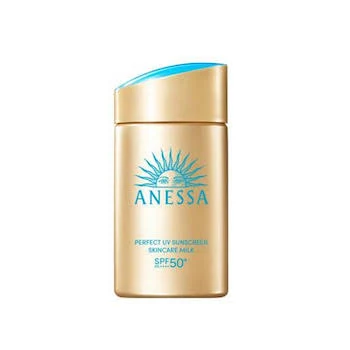
Shiseido Anessa Perfect UV Sunscreen Skincare Milk
Sunscreen with no fluorinated ingredient on record, and no PFAS statement from the brand.
Shiseido has no PFAS statement on record for this sunscreen. Our record does not include an ingredient-level check, so look for fluorinated ingredients such as Teflon-type coating on the label.
We flunk more products than we pass. This one earned its grade. How we grade
Material
Water-resistant sunscreen emulsion (aqua, glycerin, silica-based filters)
Brand disclosure
Brand is silent on PFAS
Lab data
No public lab test
You may also be interested in
Top-graded picks in the categories readers replace first, every one scored on the same rubric.

- polypropylene filter housing, carbon/sediment cartridge
- We found no PFAS statement from the brand
- Bacterial growth in spent cartridges
3 hazards checked on this product, all on its full breakdown.

Aquasure
Premier Series 75 GPD Under Sink Reverse Osmosis Water Filtration System
- RO membrane, carbon filters, stainless steel housing
- We found no PFAS statement from the brand
- Bacterial and microbial growth in housing and filters
4 hazards checked on this product, all on its full breakdown.

Avocado
Vegan Mattress
- organic cotton, natural latex, coconut coir, recycled steel coils
- The brand calls it PFAS-free, which we have not verified
- Heavy metals
2 hazards checked on this product, all on its full breakdown.
What Shiseido Anessa Perfect UV Skincare Milk is made of, ingredients and materials
Anessa Perfect UV is a water-resistant emulsion combining glycerin (humectant), aqua (carrier), and silica-based UV filters rather than chemical absorbers or metal oxides. The silica acts as a reflective particulate and is commonly used in mineral sunscreens; it does not leach into skin and remains on the surface. The emulsion structure means minimal risk of ingredient migration into skin compared to leave-on products with penetrating solvents. No fluorinated PFAS precursors or perfluorinated compounds are listed in publicly available ingredient declarations.
What’s concerning
Category baseline
The starting point for this type of product, before anything specific to this product is counted.
No PFAS disclosure
No public statement from the brand about PFAS in this product.
Fragrance allergens and sensitizers
Cosmetic sunscreens typically include fragrance to mask filter odor. Anessa products commonly list 'fragrance' or 'parfum' in the formula; this can trigger contact dermatitis or photoallergy in sensitive individuals but is not unique to this brand or product line.
Preservative-related contact sensitization
Water-based emulsions require antimicrobial preservatives to prevent microbial growth. Common preservatives (phenoxyethanol, methylisothiazolinone) are associated with rare contact dermatitis; no specific preservative is named in available ingredient summaries, so risk assessment depends on the full published ingredient list.
What’s reassuring
Base material not linked to PFAS
The main material recorded for this product is not one associated with PFAS.
Silica particle inhalation (powder form risk)
This product is a liquid emulsion, not a powder; silica remains suspended in the aqueous phase and does not become aerosolized during normal application. Inhalation risk is not a concern for this formulation type.
Heavy metals
Shiseido operates under ISO 22716 and regulatory oversight in all major markets; silica-based filters are not known sources of lead, cadmium, or arsenic. No recalls or reports of heavy metal contamination in Anessa sunscreens are on record.
Source, FDA ↗Skin irritation from high-dose chemical UV absorbers
This product uses silica-based physical filters rather than chemical absorbers (e.g., oxybenzone, avobenzone), avoiding the systemic absorption and irritation potential associated with some chemical sunscreen actives. No chemical absorber irritation hazard applies to this formulation.
How is this PFAS grade calculated?
The brand's record and disclosure
Shiseido publishes ingredient lists and does not make explicit PFAS avoidance claims, which is typical of mainstream cosmetics brands that have not faced PFAS-specific pressure. The brand is ISO 22716 certified (cosmetic good manufacturing practice) and has no known recalls or enforcement actions for cosmetic hazards in major markets. No independent testing or third-party certifications (e.g., EWG Verified, Cosmos) are on record for this specific product line, meaning safety relies on brand compliance and regulatory oversight rather than external audit.
How it compares in its category
Silica-based sunscreens occupy a middle ground, they avoid chemical absorber controversies (oxybenzone, avobenzone) and mineral oxide concerns (nano zinc oxide, titanium dioxide particle size), but do not claim organic or third-party certification like EWG-verified products. Water-resistant emulsions are standard in the mass-market sunscreen category; Anessa's formulation is typical for Japanese and Asian-market brands. No major ingredient stands out as either exceptionally lower-concern or higher-concern relative to competitor sunscreens in the same price and market segment.
If you buy it
Apply sunscreen to clean, dry skin at least 15 minutes before sun exposure and reapply every 2 hours or after swimming (despite water-resistant labeling). Store in a cool, dry place away from direct heat; sunscreen degrades faster when exposed to high temperatures or sunlight. Check the expiration date and replace annually or if the emulsion separates, thickens, or changes color. Remove with a cleanser or makeup remover; sunscreen residue can accumulate on skin if not fully cleansed, potentially clogging pores.
What is not known about PFAS in this product?
- Basis
- Model estimate, 45% confidence, not a lab result
- Lab test
- None on record for this exact product
- Brand statement
- Shiseido has made none
Formulations change between production runs, so check the current label. How we grade.
What are the PFAS-free alternatives to Shiseido Anessa Perfect UV Sunscreen Skincare Milk?
- Mineral sunscreen, zinc oxide base
- A third party reports verifying it as PFAS-free
- 1,4-dioxane (non-intentional contaminant from surfactants/emulsifiers)
2 hazards checked on this product, all on its full breakdown.
- mineral sunscreen (zinc oxide or titanium dioxide base)
- The brand calls it PFAS-free, which we have not verified
- Synthetic fragrance allergens
More sunscreen grades
How we score, every product runs through the same public 0-100 rubric based on materials, coatings, brand disclosure, lab findings, and recalls. See the full methodology → Spotted a mistake? Report an error.