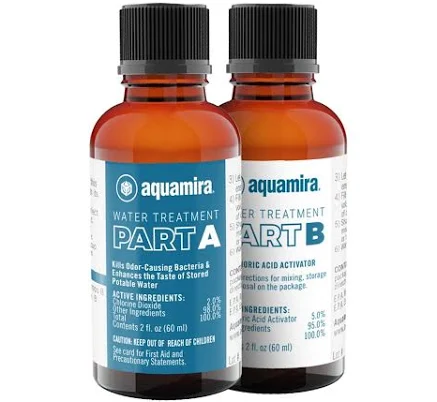
Aquamira Water Storage Treatment 2 oz Glass Bottles 60 gallons Purification
Glass bottles and treatment chemical show no PFAS linkage on record.
The glass bottles have no coating on record. The sodium dichloroisocyanurate treatment chemical is not a material linked to PFAS. The brand has no PFAS statement on record.
We flunk more products than we pass. This one earned its grade. How we grade
Material
glass bottles, sodium dichloroisocyanurate treatment chemical
Brand disclosure
Brand is silent on PFAS
Lab data
No public lab test
What Aquamira Water Storage Treatment 2 oz is made of, ingredients and materials
Aquamira Water Storage Treatment consists of sodium dichloroisocyanurate (NaDCC) tablets or liquid dispensed in glass bottles. Glass is chemically inert and will not leach contaminants into the treatment chemical or treated water. The active ingredient NaDCC is a dry chlorine-releasing compound commonly used in emergency water purification and registered with the EPA as a pesticide for point-of-use water disinfection. At the stated dose (one tablet per gallon), it releases chlorine slowly to kill bacteria and viruses without introducing heavy metals or synthetic polymers.
What’s concerning
No PFAS disclosure
No public statement from the brand about PFAS in this product.
Chemical overdose or misuse
Sodium dichloroisocyanurate can cause gastrointestinal irritation or elevated chlorine residue if users exceed the recommended amount. The small bottle size and tablet/liquid format reduce bulk-handling risk, but user error remains the primary concern.
Degradation and loss of efficacy over time
NaDCC tablets and solutions lose potency with age, moisture, and temperature fluctuation. Expired or improperly stored products may fail to disinfect water adequately, though they do not become toxic. No hazard from the degradation products themselves is documented.
Glass bottle breakage and spillage
Glass containers can crack or break during storage or transport, spilling the concentrated treatment chemical. Direct skin or eye contact with undiluted NaDCC solution can cause irritation; containment and handling care are necessary.
Chlorine residue and taste/odor
At correct doses, residual chlorine remains within EPA drinking water limits (up to 4 ppm). However, users sometimes report off-flavors or odors; this is a quality-of-life issue rather than a health hazard at labeled use.
Bacterial growth if treated water stored improperly
Once treated, water must be stored in clean, sealed containers and kept cool. If chlorine residue is insufficient (from underdosing or degraded product) or if treated water is exposed to contamination, microbial growth can occur. This is a user-storage issue, not a product defect.
What’s reassuring
Bare uncoated material
Recorded as a bare, uncoated material with no surface coating or treatment.
The full breakdown
The brand's record and disclosure
Aquamira, owned by McNett Corporation, has been selling water treatment products for decades with no publicized product recalls or safety violations related to this line. The product carries EPA registration, indicating it has met basic safety and efficacy requirements. The brand does not make explicit PFAS disclosures, which is typical for this product category since the treatment chemical itself is not a known PFAS source. No major controversies or third-party safety flags are on record for this specific product.
How it compares in its category
Water treatment products fall into chemical (like this one), filtration, and UV categories. Chemical treatments like NaDCC are simpler and lower-cost than cartridge filters but require correct dosing and contact time. Glass packaging has lower concern than plastic alternatives, which could leach BPA or other polymers if the product is stored long-term or in heat. Compared to iodine tablets or bleach-based treatments, NaDCC has fewer documented taste/odor complaints and lower toxicity margins for accidental overdose.
If you buy it
Store the glass bottles in a cool, dark, dry place away from moisture and organic matter, as NaDCC can degrade if exposed to humidity. Follow the labeled dosing precisely (typically one tablet per gallon or as directed on package); overdosing raises chlorine residue and taste/odor complaints without improving safety. Replace stock before the printed expiration date; NaDCC loses potency over time. After treatment, allow 30 minutes contact time before drinking, and use the treated water within the shelf life stated on packaging (usually 6-12 months for treated supplies).
What we don’t know
- Basis
- Model estimate, 78% confidence, not a lab result
- Lab test
- None on record for this exact product
- Brand statement
- Aquamira has made none
Formulations change between production runs, so check the current label. How we grade.
More water filters grades
How we score, every product runs through the same public 0-100 rubric based on materials, coatings, brand disclosure, lab findings, and recalls. See the full methodology → Spotted a mistake? Report an error.