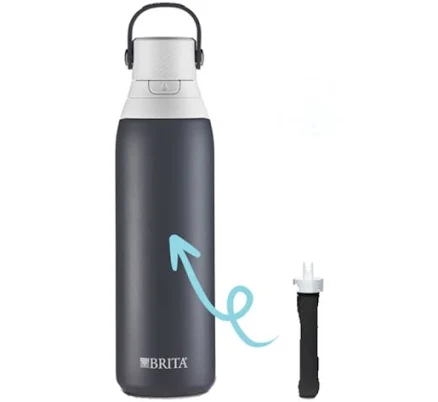
Brita 20 oz Carbon Stainless Steel Filtered Water Bottle
Lower-risk choice, though Brita provides no PFAS transparency.
Stainless steel and activated carbon are standard materials without documented PFAS use. Brita doesn't publicly share PFAS test data or policy for this product.
We flunk more products than we pass. This one earned its grade. How we grade
Material
Stainless steel bottle with activated carbon filter cartridge
Lab data
No public lab test
What Brita 20 oz Carbon Stainless Steel is made of, ingredients and materials
The 20 oz bottle body is stainless steel (typically 18/8 or similar food-grade alloy), which is chemically inert and does not leach metals or off-gas at normal use temperatures. The activated carbon filter cartridge consists of granulated or powdered carbon bonded into a replaceable insert; carbon is a passive, non-toxic medium that traps dissolved contaminants through absorption but does not dissolve into water. The bottle cap and seals are likely plastic (polypropylene or silicone), which avoid BPA formulations in modern Brita products but should not be microwaved.
What’s concerning
No PFAS disclosure
No public statement from the brand about PFAS in this product.
Bacterial/microorganism growth in filter cartridge
Activated carbon filters can harbor bacteria if replaced infrequently or if the bottle sits unused with filtered water inside. Brita advises regular replacement (every 2 months), which mitigates this risk if followed.
Filter cartridge housing degradation over time
Repeated cartridge insertion/removal can wear the threaded housing; cracks in the plastic filter seat could allow unfiltered water bypass or contamination. Inspect the housing quarterly and replace the bottle if cracks appear.
What’s reassuring
Bare uncoated material
Recorded as a bare, uncoated material with no surface coating or treatment.
BPA & bisphenols
Modern Brita bottles use BPA-free plastics, and no published recalls cite leaching from the bottle cap or gaskets. Hand-wash protocols further reduce any risk.
Source, FDA ↗Stainless steel leaching (nickel/chromium)
Food-grade stainless steel (18/8) is stable and does not leach toxic levels of nickel or chromium into water at normal temperatures. No recalls or field reports of metal contamination have been documented for Brita bottles.
Activated carbon dust or migration
Properly manufactured carbon cartridges do not shed dust into water; no established reports of carbon particles in Brita-filtered water. Only a concern if the cartridge is visibly cracked or damaged.
The full breakdown
The brand's record and disclosure
Brita has not published a dedicated PFAS removal claim or publicly committed to PFAS-free manufacturing, though the brand does market general contaminant reduction. No major product recalls for leaching or chemical contamination have been recorded for this bottle model. Brita is owned by Clorox, a company with moderate transparency on chemical sourcing; independent third-party testing is not routinely published for Brita bottles themselves.
How it compares in its category
Stainless steel filtered bottles have lower concern for leaching compared to plastic bottles, which may migrate BPA or phthalates. Most competitors (e.g., Nalgene stainless, S'well) offer similar steel construction but without integrated filters; Brita's filtration adds convenience but requires cartridge replacement discipline. Carbon-filtered bottles are lower-risk than pitcher filters for long-term bacterial regrowth if filter replacement lags, since a sealed bottle reduces standing-water exposure.
If you buy it
Replace the carbon cartridge every 2 months or 40 gallons (follow Brita's guidance), as exhausted filters lose efficacy and can become a microorganism habitat. Do not microwave the bottle cap or plastic seals; hand-wash only. Stainless steel is durable and will not degrade under normal use, but inspect the seal and filter housing for cracks or mineral buildup, especially if used with hard water. Store in a cool, dry place between uses; do not leave standing water in the filter cartridge overnight before first use.
What we don’t know
- Basis
- Model estimate, 72% confidence, not a lab result
- Lab test
- None on record for this exact product
- Brand statement
- Brita has made a specific claim
Formulations change between production runs, so check the current label. How we grade.
More water filters grades
How we score, every product runs through the same public 0-100 rubric based on materials, coatings, brand disclosure, lab findings, and recalls. See the full methodology → Spotted a mistake? Report an error.