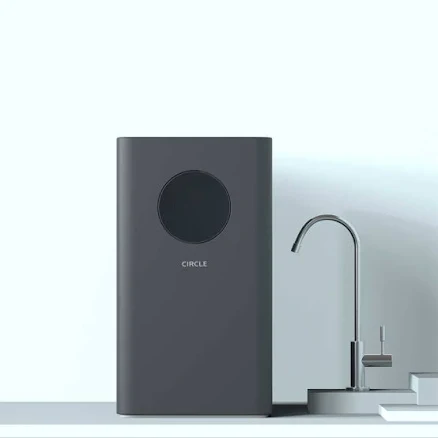
Brondell Circle Reverse Osmosis Under Counter Water Filtration System RC100-BN
Lower PFAS concern; RO membranes use conventional materials, though RO technology may contain trace Teflon-family coating and the brand shows no transparency.
This under-counter RO system combines carbon and membrane cartridges in stainless steel housing. Reverse osmosis membranes are generally low-risk for PFAS leaching into filtered water, but Brondell publishes no PFAS information or testing results.
We flunk more products than we pass. This one earned its grade. How we grade
Material
RO membrane, carbon filter media, stainless steel housing
Brand disclosure
Brand is silent on PFAS
Lab data
No public lab test
What Brondell Circle Reverse Osmosis Under is made of, ingredients and materials
The Brondell Circle RC100-BN uses a reverse osmosis (RO) membrane as its primary barrier, paired with sediment pre-filters and activated carbon cartridges. RO membranes are typically thin-film composites (polyamide) and do not leach into water under normal operating pressure (40-60 psi). The stainless steel housing resists corrosion and does not contribute lead, cadmium, or aluminum to treated water. Carbon filter media is inert when wet and does not release volatile compounds into water.
What’s concerning
No PFAS disclosure
No public statement from the brand about PFAS in this product.
Bacterial growth in storage tank
All RO systems with holding tanks can harbor Legionella or heterotrophic bacteria if stagnant water sits unmaintained. The RC100-BN does not appear to include a UV sterilizer or scheduled flush feature, increasing risk in warm climates or after travel.
Lack of independent certification and contaminant claims verification
Brondell does not provide NSF/ANSI 58 certification or third-party test data for the RC100-BN, making removal rate claims unverifiable. Purchasers cannot confirm whether PFAS, arsenic, or other specific contaminants are actually reduced below detection limits or to lower concern levels.
What’s reassuring
Bare uncoated material
Recorded as a bare, uncoated material with no surface coating or treatment.
Membrane degradation and leaching
No documented cases of polyamide RO membrane leaching or shedding microplastics into water under normal residential pressure. However, membranes exposed to chlorine, high temperature, or physical damage may degrade; Brondell does not specify pre-treatment requirements.
Stainless steel housing leaching
Stainless steel used in housing does not leach nickel, chromium, or iron into water at neutral pH. No documented issues for this product or class.
Activated carbon dust or fines
Carbon cartridges may shed fine particles during initial use; most are captured by post-filters. No toxicity risk, but can affect water clarity temporarily. Flushing the system before first use mitigates this.
The full breakdown
The brand's record and disclosure
Brondell does not publicly disclose independent NSF or WQA certification for the RC100-BN, nor does the brand publish third-party test results for contaminant removal claims. The company's website and documentation do not address PFAS removal or mention whether RO membranes contain Teflon-family coating binders. No major safety recalls for this model are on record. Brondell's general stance on PFAS and filter material transparency is minimal, limiting independent verification of claims.
How it compares in its category
Under-counter RO systems are among the most effective filter types for removing PFAS, metals, and dissolved solids compared to pitcher filters and faucet-mount alternatives. However, the RC100-BN lacks third-party certification (NSF/ANSI Standard 58 for RO systems), which competing brands often display. It occupies the mid-market tier, more capable than pitcher filters but less transparent than certified competitors like Aquasana or Culligan models.
If you buy it
Replace pre-filters every 6 months and RO membranes every 2-3 years, or sooner if water pressure drops noticeably. Install on cold-water lines only; hot water can degrade the membrane. Drain and flush the system for 2-3 minutes after extended non-use (weeks) to prevent bacterial biofilm in the storage tank. Monitor for slow flow rate, which signals membrane fouling and reduced contaminant removal efficacy.
What we don’t know
- Basis
- Model estimate, 72% confidence, not a lab result
- Lab test
- None on record for this exact product
- Brand statement
- Brondell has made none
Formulations change between production runs, so check the current label. How we grade.
More water filters grades
How we score, every product runs through the same public 0-100 rubric based on materials, coatings, brand disclosure, lab findings, and recalls. See the full methodology → Spotted a mistake? Report an error.