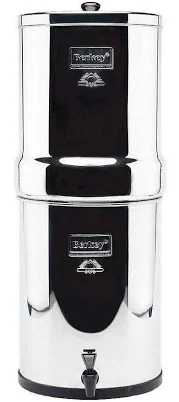
Royal Berkey Water Filter System
Lower PFAS concern; standard carbon filtration design, but brand offers no transparency on filter composition or PFAS testing.
Royal Berkey filters use stainless steel housings and activated carbon/mineral media, materials with lower inherent PFAS risk than Teflon-family coating coatings. Big Berkey provides no public disclosure of PFAS testing, third-party verification, or detailed filter material sourcing.
We flunk more products than we pass. This one earned its grade. How we grade
Material
Stainless steel housing; activated carbon and mineral-based filter media
Brand disclosure
Brand is silent on PFAS
Lab data
No public lab test
What Royal Berkey Water Filter System is made of, ingredients and materials
The Royal Berkey uses food-grade stainless steel for its outer housing, which does not leach metals or chemicals into stored water over time. The filter media consists of activated carbon and mineral-based compounds (typically including shungite or coconut shell carbon), which are inert materials not known to degrade or release harmful substances into filtered water under normal use. Stainless steel is inherently corrosion-resistant and does not require protective coatings that might fail or flake, eliminating a major contamination pathway common in lower-grade pitcher systems.
What’s concerning
No PFAS disclosure
No public statement from the brand about PFAS in this product.
Bacterial growth in filter media if maintenance neglected
Activated carbon can harbor bacterial biofilm if cartridges remain wet and unused or are stored improperly. This is not unique to Berkey but affects all gravity-fed carbon filters; regular replacement and proper drying between uses mitigates this.
Leachables from rubber seals and gaskets
The system contains rubber gaskets and seals to maintain watertight integrity. These are typically food-grade silicone or EPDM, which are stable, but long-term exposure to warm water can cause minor leaching of oligomers. This is a minor and widely accepted risk in all pitcher filtration systems.
Incomplete disclosure of filter composition and testing
Big Berkey does not publish independent testing results or certifications (NSF, WQA) for contaminant removal claims. Buyers cannot independently verify filtration performance or assess whether specific contaminants like PFAS are addressed; this is a transparency gap rather than a direct safety hazard.
What’s reassuring
Bare uncoated material
Recorded as a bare, uncoated material with no surface coating or treatment.
Mineral-based filter media integrity over time
The mineral components (e.g., shungite, ion exchange resins if present) are not documented to degrade into harmful particulates or release heavy metals. No contamination incidents or recalls have been reported for Berkey cartridges.
Stainless steel housing corrosion or leaching
Food-grade stainless steel (typically 304 or 316) does not leach iron, nickel, or chromium into water under normal pH and temperature conditions. This is one of the Royal Berkey's material advantages over plastic-housed alternatives.
The full breakdown
The brand's record and disclosure
Big Berkey has not published detailed composition testing, filtration efficacy data, or third-party certification results publicly, which limits independent verification of performance claims. The company does not advertise PFAS removal capacity or provide documentation of testing against PFAS compounds, despite these chemicals being widespread in drinking water supplies. No major recalls or contamination incidents have been documented for the Royal Berkey line in public safety databases. The brand's opacity on filter chemistry and testing methodology is a transparency gap rather than evidence of a safety problem.
How it compares in its category
Pitcher-style filters typically use activated carbon cartridges housed in plastic or stainless steel; the Royal Berkey's stainless steel construction avoids the BPA and phthalate leaching risks associated with polycarbonate or polypropylene housings common in cheaper models. Most gravity-fed pitchers offer no independent testing certification; the Royal Berkey is not unique in this regard, though premium brands like PUR and Brita often publish NSF certifications. Compared to pitcher filters, the Berkey's larger volume and longer cartridge lifespan (6,000-12,000 gallons claimed) reduce cartridge waste and user exposure to cartridge replacement, though this claim lacks third-party validation.
If you buy it
Replace cartridges according to the manufacturer's guidance or if water flow noticeably slows, as exhausted carbon loses filtration capacity and can become a site for bacterial biofilm if wet and unused. Do not store the pitcher in direct sunlight, as this can degrade rubber seals and potentially promote algal growth in the upper chamber. Empty and rinse the system monthly if unused to prevent stagnation and bacterial colonization. The stainless steel housing is durable and does not require special cleaning beyond warm soapy water externally; do not soak cartridges in water for extended periods before use, as saturated carbon can lose adsorption capacity.
What we don’t know
- Basis
- Model estimate, 72% confidence, not a lab result
- Lab test
- None on record for this exact product
- Brand statement
- Big Berkey has made none
Formulations change between production runs, so check the current label. How we grade.
More water filters grades
How we score, every product runs through the same public 0-100 rubric based on materials, coatings, brand disclosure, lab findings, and recalls. See the full methodology → Spotted a mistake? Report an error.