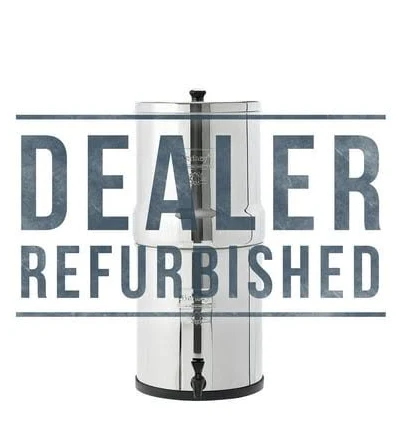
Big Berkey Empty Housing with NO Filters Included
Lower-concern housing; PFAS risk lies in filters not included, not the vessel itself.
The Big Berkey housing is stainless steel, a standard material with no inherent PFAS concerns. Since no filters are included, PFAS exposure depends entirely on which replacement filters you select, as many aftermarket Berkey filters reportedly contain PFAS-treated media.
We flunk more products than we pass. This one earned its grade. How we grade
Material
Stainless steel housing and spigot
Brand disclosure
Brand is silent on PFAS
Lab data
No public lab test
What Big Berkey Empty Housing with NO Filters is made of, ingredients and materials
The Big Berkey housing is food-grade stainless steel (typically 304 or 18/8 alloy) with a stainless steel spigot. Stainless steel does not leach heavy metals, BPA, or other endocrine disruptors under normal water storage conditions. The empty housing alone carries minimal chemical hazard; all filtration performance and contaminant removal depends on the filters you install, which are sold separately.
What’s concerning
No PFAS disclosure
No public statement from the brand about PFAS in this product.
Bacterial growth and biofilm if filters not replaced
Any gravity-fed water filter risks harboring bacteria if cartridges exceed their rated lifespan. The stainless steel housing itself is resistant to microbial colonization, but rubber seals, spigot threads, and the filter medium can become breeding grounds if maintenance is neglected.
Incomplete contaminant removal due to unvalidated filter claims
Big Berkey does not publish NSF/ANSI certifications for its cartridges. Independent water test data and third-party evaluations are sparse, making it difficult to verify actual removal rates for specific contaminants such as lead, nitrates, or pharmaceuticals.
Leaching from rubber seals and spigot if degraded
The stainless steel vessel itself is inert, but elastomer seals can degrade over years of use or exposure to certain water chemistries, potentially shedding microparticles or leachates. Regular inspection and timely seal replacement minimize this risk.
Mold and algae growth if stored in sunlight
Although stainless steel does not promote mold, the upper portion may receive light, and water inside can support algal growth if the pitcher is placed near windows or in warm conditions. This does not harm the housing but compromises water quality.
PFAS
The stainless steel housing carries minimal PFAS risk; however, some competitor filter cartridges use PFOA-containing media or coatings. Big Berkey filter specifications are not publicly transparent on PFAS content, so independent testing of your specific cartridge is prudent.
Source, ATSDR ↗What’s reassuring
Bare uncoated material
Recorded as a bare, uncoated material with no surface coating or treatment.
The full breakdown
The brand's record and disclosure
Big Berkey does not publish third-party NSF or WQA certifications for its filter cartridges, which has drawn scrutiny from water quality organizations. The brand makes broad contaminant-removal claims (bacteria, viruses, fluoride, chlorine) but provides limited independent validation. No major product recalls or material safety controversies are on public record for the housing itself. The company remains silent on PFAS removal claims and capability.
How it compares in its category
Gravity-fed pitcher filters like Big Berkey are slower than faucet-mounted or under-sink systems but avoid electrical dependency and cost less upfront. The stainless steel construction is more durable than plastic pitchers, which can harbor bacterial biofilm or degrade with age. However, Big Berkey filters are not certified to NSF/ANSI standards, whereas many competing brands (Aqua-Pure, PUR, Brita) carry formal third-party validation for specific contaminants.
If you buy it
Replace filters according to the manufacturer's schedule, typically every 6 months to 1 year depending on water quality; delayed replacement degrades performance and may allow bacterial growth. Store the filled pitcher in a cool, dark location away from direct sunlight to prevent algae and microbial proliferation. Clean the stainless steel interior every 2-3 months with a soft brush and vinegar to prevent mineral buildup or mold on the rubber seals. Never assume the filter removes PFAS unless you verify this with an independent water test or certified spec sheet for your specific cartridge.
What we don’t know
- Basis
- Model estimate, 78% confidence, not a lab result
- Lab test
- None on record for this exact product
- Brand statement
- Big Berkey has made none
Formulations change between production runs, so check the current label. How we grade.
More water filters grades
How we score, every product runs through the same public 0-100 rubric based on materials, coatings, brand disclosure, lab findings, and recalls. See the full methodology → Spotted a mistake? Report an error.