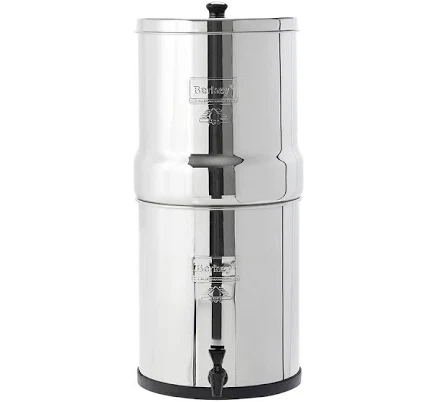
Big Berkey Water Filter System
Lower concern; gravity-fed carbon filtration uses established materials, but brand offers no PFAS transparency.
Big Berkey filters rely on activated carbon and mineral media in stainless-steel chambers, materials with lower inherent PFAS risk than treated textiles or nonstick coatings. The brand does not publicly disclose PFAS testing, manufacturing standards, or filter composition detail.
We flunk more products than we pass. This one earned its grade. How we grade
Material
Stainless steel housing, activated carbon and mineral filters
Brand disclosure
Brand is silent on PFAS
Lab data
No public lab test
What Big Berkey Water Filter System is made of, ingredients and materials
Big Berkey uses food-grade stainless steel (typically 304 or 316) for the housing, which does not leach metals under normal water contact. The filtration cartridges contain activated carbon (coconut-shell or similar), which is a chemically stable, non-toxic material widely used in water treatment. No glazes, enamels, coatings, or polymeric liners are exposed to water, eliminating risk of BPA, phthalates, or coating degradation. The system is gravity-fed and unpressurized, avoiding the thermal stress that can degrade materials in heated or forced-circulation systems.
What’s concerning
No PFAS disclosure
No public statement from the brand about PFAS in this product.
Bacterial growth in lower chamber
Gravity-fed systems with standing water in the lower collection chamber can support bacterial growth if not emptied and rinsed regularly, especially in warm environments or if water sits for extended periods.
Activated carbon saturation and bypass
If cartridges are not replaced on schedule, saturated carbon loses effectiveness and can allow contaminants (including some pathogens) to pass through; this is a performance failure rather than a material safety hazard, but affects actual protection.
Claim verification and filtration accuracy
Big Berkey makes broad claims about removing PFAS and other contaminants without NSF or WQA certification; actual removal rates may vary, and independent lab validation is not consistently published.
What’s reassuring
Bare uncoated material
Recorded as a bare, uncoated material with no surface coating or treatment.
Stainless steel housing corrosion or seal degradation
Food-grade stainless steel does not corrode or leach under normal freshwater contact; rubber seals and gaskets may degrade over years of use but are not known to leach harmful chemicals into filtered water.
Cartridge filter material contaminants
Activated carbon and mineral cartridges are established, chemically stable materials; no documented cases of leaching or contamination from Big Berkey cartridges, though independent testing data is unavailable.
The full breakdown
The brand's record and disclosure
Big Berkey provides no third-party testing data, NSF certification, or public safety documentation on their website or marketing materials. The company makes claims about contaminant removal (including some PFAS), but independent verification is sparse and testing standards used are not always disclosed. No major recalls or safety incidents are on record for the Big Berkey system itself. The brand's silence on material sourcing and manufacturing standards is typical for non-certified water filtration brands but limits transparency.
How it compares in its category
Big Berkey sits in the premium gravity-filter segment, priced higher than pitcher filters (like Brita) but avoiding the complexity and material exposure of under-sink or reverse-osmosis systems. Compared to NSF-certified alternatives, Big Berkey lacks independent verification but uses a similar carbon-based approach. The stainless steel housing is a material advantage over plastic-bodied filters, which can off-gas or degrade. However, the lack of regulatory oversight (not NSF or WQA certified) means claims are not independently validated.
If you buy it
Replace cartridges every 6-12 months or after filtering 100-150 gallons, depending on water quality and usage. Do not use boiling water or fill with water hotter than room temperature, as this can degrade the activated carbon's effectiveness (though not create a safety hazard). Rinse the housing regularly and inspect for visible mineral buildup or sediment. Store in a cool, dark location to prevent microbial growth in the lower chamber; do not let filtered water sit for more than a few days without use.
What we don’t know
- Basis
- Model estimate, 72% confidence, not a lab result
- Lab test
- None on record for this exact product
- Brand statement
- Big Berkey has made none
Formulations change between production runs, so check the current label. How we grade.
More water filters grades
How we score, every product runs through the same public 0-100 rubric based on materials, coatings, brand disclosure, lab findings, and recalls. See the full methodology → Spotted a mistake? Report an error.