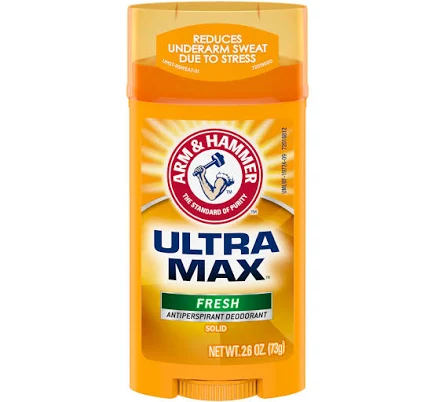
Arm & Hammer UltraMax Anti-Perspirant Deodorant Fresh Solid
Low PFAS concern; standard solid deodorant without water-resistant or nonstick treatments.
This solid antiperspirant uses talc, starch, and fragrance without waterproof treatments, Teflon-family coating coatings, or stain-resistance claims. The brand makes no PFAS disclosures, but the basic formula carries lower risk than water-resistant cosmetics.
We flunk more products than we pass. This one earned its grade. How we grade
Material
Talc, starch, fragrance blend (solid deodorant base)
Brand disclosure
Brand is silent on PFAS
Lab data
No public lab test
You may also be interested in
Top-graded picks in the categories readers replace first, every one scored on the same rubric.

- polypropylene filter housing, carbon/sediment cartridge
- We found no PFAS statement from the brand
- Bacterial growth in spent cartridges
3 hazards checked on this product, all on its full breakdown.

Aquasure
Premier Series 75 GPD Under Sink Reverse Osmosis Water Filtration System
- RO membrane, carbon filters, stainless steel housing
- We found no PFAS statement from the brand
- Bacterial and microbial growth in housing and filters
4 hazards checked on this product, all on its full breakdown.

Avocado
Vegan Mattress
- organic cotton, natural latex, coconut coir, recycled steel coils
- The brand calls it PFAS-free, which we have not verified
- Heavy metals
2 hazards checked on this product, all on its full breakdown.
What Arm & Hammer UltraMax Fresh Solid is made of, ingredients and materials
Arm & Hammer UltraMax is a solid stick deodorant built on talc, cornstarch, and fragrance compounds. Talc is a mineral powder that absorbs moisture and odor; it is inert once applied to skin and does not leach into the body through topical application. The starch component adds absorbency and slip. Fragrance blends in deodorants typically contain volatile organic compounds (VOCs) that evaporate; they do not accumulate in the product over time.
What’s concerning
Category baseline
The starting point for this type of product, before anything specific to this product is counted.
No PFAS disclosure
No public statement from the brand about PFAS in this product.
Talc contamination (asbestos risk)
Historical talc mining operations have occasionally processed ore with asbestos fibers. The FDA does not require talc in cosmetics to be tested or certified asbestos-free. Arm & Hammer has not published talc sourcing or third-party purity testing for this product. Topical skin application carries lower inhalation risk than powder formats, but certainty of contamination-free material is unavailable
Fragrance allergen and sensitization
Proprietary fragrance blends in deodorants commonly contain contact allergens (limonene, linalool, cinnamal) that trigger dermatitis in 1-3% of users. Arm & Hammer does not disclose specific fragrance components. Users with known fragrance sensitivity or atopic dermatitis report reactions to standard stick deodorants in this price tier; individual sensitivity varies widely.
What’s reassuring
Base material not linked to PFAS
The main material recorded for this product is not one associated with PFAS.
Formaldehyde / VOCs
Solid deodorant sticks have minimal water content and do not require strong broad-spectrum preservatives. No formaldehyde releasers (DMDM hydantoin, imidazolidinyl urea) have been identified in Arm & Hammer UltraMax formulations based on available ingredient listings. Risk in this format is negligible compared to emulsion-based cosmetics.
Source, ATSDR ↗Heavy metals
Arm & Hammer UltraMax Fresh (white/translucent stick) does not require synthetic colorants. No lead, cadmium, or chromium additives have been reported. Uncolored or lightly tinted solid deodorants avoid the heavy-metal risk seen in some colored powders or eyeshadows.
Source, FDA ↗Packaging leachables (aluminum or plastic)
The stick is housed in a plastic or cardboard tube; neither has been reported to leach into the solid formula under normal storage. No recalls or migration incidents exist for this product line. Solid deodorant sticks experience minimal contact with packaging materials compared to liquids.
How is this PFAS grade calculated?
The brand's record and disclosure
Arm & Hammer (Church & Dwight Co.) has not published detailed ingredient sourcing or heavy-metal testing for this deodorant line. The brand does not hold third-party certifications (EWG, NSF, Leaping Bunny) for this product. No recalls or regulatory warnings have been issued for Arm & Hammer UltraMax deodorant. The brand's silence on talc sourcing and testing reflects a broader industry pattern for solid deodorants, which have faced less scrutiny than cosmetics like powders.
How it compares in its category
Most solid deodorants (Secret, Old Spice, Dove) share the same talc/starch base, making this a category-standard formula with no material advantage or disadvantage. Aluminum-free alternatives (like Schmidt's or Native) remove aluminum salts but use similar mineral and starch fillers, so hazard profiles converge. This product sits in the mainstream middle, lower chemical complexity than gel or spray formats, no water-resistant coatings that would require PFAS.
If you buy it
Store the stick in a cool, dry place to prevent softening or separation, especially in high humidity. Replace every 2-3 months or when the stick becomes hard and difficult to apply. Do not apply to broken or irritated skin. If you develop rash or irritation, discontinue and patch-test on a small area before returning to regular use. The fragrance may trigger contact allergies in sensitive individuals; perform a 24-hour patch test if you have a history of fragrance sensitivity.
What is not known about PFAS in this product?
- Basis
- Model estimate, 72% confidence, not a lab result
- Lab test
- None on record for this exact product
- Brand statement
- Arm & Hammer has made none
Formulations change between production runs, so check the current label. How we grade.
What are the PFAS-free alternatives to Arm & Hammer UltraMax Anti-Perspirant Deodorant Fresh Solid?
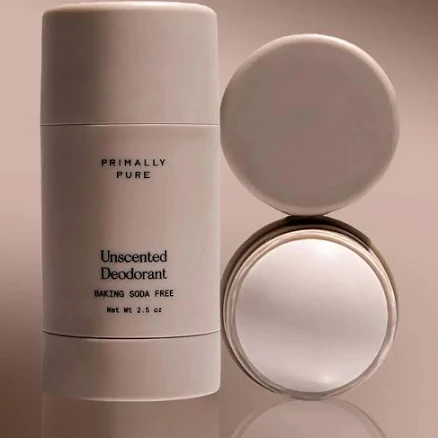
- mineral-based powder blend (arrowroot, magnesium hydroxide, mica)
- We found no PFAS statement from the brand
- Skin irritation from magnesium hydroxide alkalinity
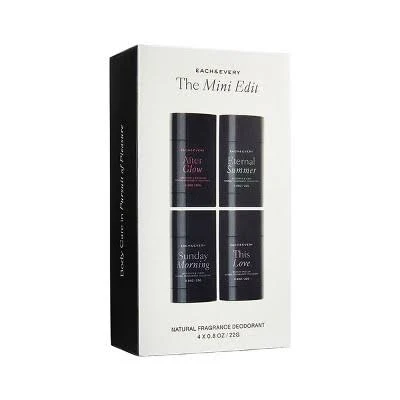
- cosmetic formulations, primary ingredients listed
- A third party reports verifying it as PFAS-free
- Fragrance allergens (natural essential oils)
2 hazards checked on this product, all on its full breakdown.
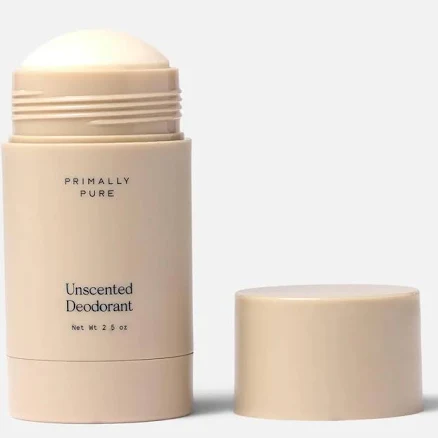
- natural mineral powders, plant-based actives, beeswax
- We found no PFAS statement from the brand
- Beeswax purity and contamination
2 hazards checked on this product, all on its full breakdown.
More deodorant grades
How we score, every product runs through the same public 0-100 rubric based on materials, coatings, brand disclosure, lab findings, and recalls. See the full methodology → Spotted a mistake? Report an error.