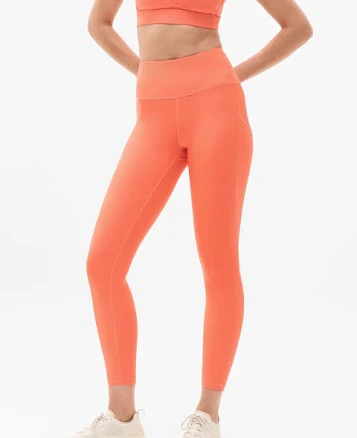
Athleta Women's Interval Stash High Rise 7/8 Legging
Lower concern. No PFAS-typical features identified in standard legging.
Athleta's leggings are untreated stretch fabric without water-resistant or stain-resistant finishes where PFAS commonly appear. Brand makes no PFAS disclosure; standard nylon activewear carries minimal PFAS risk.
Still want this one anyway? Check the price on Amazon. We’d swap it.
Material
Nylon blend, likely with elastane
Brand disclosure
Brand is silent on PFAS
Lab data
No public lab test
You may also be interested in
Top-graded picks in the categories readers replace first, every one scored on the same rubric.

- polypropylene filter housing, carbon/sediment cartridge
- We found no PFAS statement from the brand
- Bacterial growth in spent cartridges
3 hazards checked on this product, all on its full breakdown.

Aquasure
Premier Series 75 GPD Under Sink Reverse Osmosis Water Filtration System
- RO membrane, carbon filters, stainless steel housing
- We found no PFAS statement from the brand
- Bacterial and microbial growth in housing and filters
4 hazards checked on this product, all on its full breakdown.

Avocado
Vegan Mattress
- organic cotton, natural latex, coconut coir, recycled steel coils
- The brand calls it PFAS-free, which we have not verified
- Heavy metals
2 hazards checked on this product, all on its full breakdown.
What Athleta Women's Interval Stash Legging is made of, ingredients and materials
Nylon-elastane blends are common in performance leggings because nylon provides durability and elastane (spandex) enables stretch. Nylon itself is a synthetic polymer with no established leaching hazard under normal wear. The fibers are dyed during production, which introduces potential for azo dyes or heavy-metal mordants in the dyestuff, though Athleta's standard dyeing processes are not publicly documented as problematic. Elastane can degrade over repeated wash cycles and heat exposure, but does not release regulated chemicals during normal use.
What’s concerning
Category baseline
The starting point for this type of product, before anything specific to this product is counted.
No PFAS disclosure
No public statement from the brand about PFAS in this product.
Heavy metals
Nylon is routinely dyed with industrial colorants. Azo dyes and metal-based mordants (cadmium, lead, nickel) can be present in textile dyes, though EU and US regulations restrict the most toxic azo compounds. Athleta does not publish dyeing protocols or heavy-metal testing for individual garments, so presence cannot be ruled out.
Source, FDA ↗Microfiber shedding
Synthetic fiber garments including nylon-elastane blends shed microfibers during washing. This is an environmental concern and a potential inhalation concern if fibers accumulate in dryers. Washing in cold water and using a mesh bag can reduce shedding but does not eliminate it.
Elastane degradation and leaching
Elastane can degrade under heat and UV exposure, potentially releasing oligomers or residual monomers. Public health risk from this pathway is not well-established for normal wear and laundering, but contact with sweat and body heat may accelerate breakdown over time.
Skin sensitization from dyes or finish
Residual dye or finish chemicals can trigger contact dermatitis or irritation in sensitive individuals, particularly if the garment is not rinsed adequately before first wear. Washing before use reduces but does not eliminate this risk.
What’s reassuring
Base material not linked to PFAS
The main material recorded for this product is not one associated with PFAS.
Formaldehyde / VOCs
Some athletic wear includes formaldehyde-releasing resins for wrinkle or shrink resistance. No public record indicates Athleta applies such finishes to this legging. Standard dyes and elastane do not generate formaldehyde.
Source, ATSDR ↗How is this PFAS grade calculated?
The brand's record and disclosure
Athleta (Gap Inc. subsidiary) has published a Chemical Strategy and publishes restricted chemical lists, though transparency on specific manufacturing practices for individual garments remains limited. The brand does not proactively disclose PFAS use or testing for individual products, consistent with industry-wide silence on the topic. No recalls or established safety incidents have been recorded for this product line. Gap Inc. has committed to phasing certain flame retardants and formaldehyde releasers, but application to athletic wear is not itemized.
How it compares in its category
Nylon-elastane leggings are the category standard for high-performance athletic wear. This product does not use polyurethane or specialty coatings that would introduce additional leaching or off-gassing risk. No waterproof or water-repellent treatment is noted, so no PFAS-based water-repellent coating (water-repellent coating) finish is expected. Compared to cotton-blend or uncoated synthetic alternatives, this material has equivalent or lower concern for regulated chemical residues.
If you buy it
Wash in cool water and air-dry to minimize elastane degradation and reduce microfiber shedding. Avoid prolonged direct heat (dryer, radiator) as elastane loses elasticity above 60-70 degrees Celsius. Replace when the elastic waistband or leg cuffs no longer hold shape reliably, typically after 50-100 wash cycles depending on care. No special treatment is needed; standard detergent and routine laundry are appropriate.
What is not known about PFAS in this product?
- Basis
- Model estimate, 72% confidence, not a lab result
- Lab test
- None on record for this exact product
- Brand statement
- Athleta has made none
Formulations change between production runs, so check the current label. How we grade.
More activewear grades
How we score, every product runs through the same public 0-100 rubric based on materials, coatings, brand disclosure, lab findings, and recalls. See the full methodology → Spotted a mistake? Report an error.