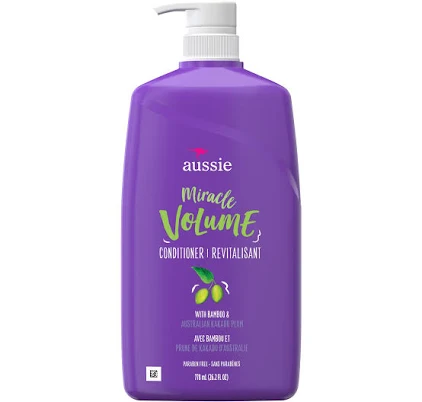
Aussie Miracle Volume Conditioner
Lower PFAS concern for a rinse-off conditioner. No evidence of intentional fluorochemistry.
This rinse-off conditioner has no surfactant or coating applications that typically require PFAS. Standard cosmetic polymers in conditioners pose lower concern than waterproof or grease-resistant products.
We flunk more products than we pass. This one earned its grade. How we grade
Material
water-based conditioner, polymeric conditioning agents
Brand disclosure
Brand is silent on PFAS
Lab data
No public lab test
You may also be interested in
Top-graded picks in the categories readers replace first, every one scored on the same rubric.

- polypropylene filter housing, carbon/sediment cartridge
- We found no PFAS statement from the brand
- Bacterial growth in spent cartridges
3 hazards checked on this product, all on its full breakdown.

Aquasure
Premier Series 75 GPD Under Sink Reverse Osmosis Water Filtration System
- RO membrane, carbon filters, stainless steel housing
- We found no PFAS statement from the brand
- Bacterial and microbial growth in housing and filters
4 hazards checked on this product, all on its full breakdown.

Avocado
Vegan Mattress
- organic cotton, natural latex, coconut coir, recycled steel coils
- The brand calls it PFAS-free, which we have not verified
- Heavy metals
2 hazards checked on this product, all on its full breakdown.
What Aussie Miracle Volume Conditioner is made of, ingredients and materials
Aussie Miracle Volume Conditioner is a water-based formulation relying on polymeric conditioning agents (likely silicones or polyquaternium compounds) to coat and smooth hair. These ingredients are standard in rinse-off conditioners and are designed to be washed away after application, limiting prolonged skin or ingestion exposure. The water-based matrix means no volatile organic solvents or heavy carrier oils that pose inhalation or accumulation risks during typical use.
What’s concerning
Category baseline
The starting point for this type of product, before anything specific to this product is counted.
No PFAS disclosure
No public statement from the brand about PFAS in this product.
Fragrance allergens and sensitizers
Aussie products typically contain 'fragrance' (undisclosed proprietary blend), which may include common contact allergens such as limonene or linalool. Rinse-off exposure minimizes risk compared to leave-on products, but sensitive individuals may still experience scalp irritation or allergic contact dermatitis.
Polymeric conditioning agent buildup
Silicones and polyquaternium compounds can accumulate on hair over weeks of repeated use, leading to dulling, stiffness, or reduced effectiveness. This is cosmetic rather than a health hazard, but may prompt consumers to switch products or use clarifying treatments.
What’s reassuring
Base material not linked to PFAS
The main material recorded for this product is not one associated with PFAS.
1,4-dioxane (unintended byproduct)
No published testing or recall data exists for 1,4-dioxane in Aussie conditioners. Modern conditioner formulations rarely show detectable levels, but Aussie's lack of transparency on this contaminant means it cannot be definitively ruled out without independent testing.
Heavy metals
Aussie conditioners are typically clear or pale amber liquids with minimal pigmentation, reducing the likelihood of lead, cadmium, or arsenic contamination from synthetic dyes. No recalls or contamination reports are on record for this product line.
Source, FDA ↗Formaldehyde / VOCs
While older rinse-off conditioners sometimes used DMDM hydantoin or imidazolidinyl urea, these are less common in contemporary mass-market formulas. No evidence indicates Aussie uses these agents, but ingredient lists are not publicly detailed.
Source, ATSDR ↗How is this PFAS grade calculated?
The brand's record and disclosure
Aussie (owned by Procter & Gamble) does not publicly disclose detailed ingredient sourcing, heavy metal testing, or third-party certifications on this product. The brand has no established history of major product recalls or contamination incidents in the personal care space. No evidence exists that Aussie has signed transparency pledges on 1,4-dioxane removal or formaldehyde-releaser elimination, though such contaminants are not typical in modern conditioner formulations.
How it compares in its category
This conditioner sits in the mainstream mass-market segment, offering lower cost and wider availability than salon-grade or certified-organic alternatives. Compared to products certified by third parties (e.g., EWG Verified, Leaping Bunny), Aussie provides no independent safety or toxicity audit. It is broadly comparable in composition and hazard profile to peer brands like Pantene and Garnier; none command a significant safety premium within the mass-market rinse-off category.
If you buy it
Apply conditioner only to mid-lengths and ends, avoiding the scalp to minimize skin exposure to any trace contaminants. Rinse thoroughly with water after 1-3 minutes; prolonged contact increases uptake of any potential irritants. Store at room temperature away from direct heat or sunlight to prevent polymer degradation and separation. Discontinue use if redness, itching, or rash develops; these may signal fragrance or preservative sensitivity rather than a product defect.
What is not known about PFAS in this product?
- Basis
- Model estimate, 72% confidence, not a lab result
- Lab test
- None on record for this exact product
- Brand statement
- Aussie has made none
Formulations change between production runs, so check the current label. How we grade.
What are the PFAS-free alternatives to Aussie Miracle Volume Conditioner?
- Water, conditioning agents, organic plant extracts
- We found no PFAS statement from the brand
- Heavy metals
3 hazards checked on this product, all on its full breakdown.
- water-based conditioner, typical surfactants and botanical extracts
- We found no PFAS statement from the brand
- Heavy metals
3 hazards checked on this product, all on its full breakdown.
More conditioner grades
How we score, every product runs through the same public 0-100 rubric based on materials, coatings, brand disclosure, lab findings, and recalls. See the full methodology → Spotted a mistake? Report an error.