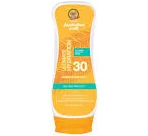
Australian Gold SPF30 Sunscreen Lotion
Sunscreen with no fluorinated ingredient on record, and no PFAS statement from the brand.
Australian Gold has no PFAS statement on record for this sunscreen. Our record does not include an ingredient-level check, so look for fluorinated ingredients such as Teflon-type coating on the label.
We flunk more products than we pass. This one earned its grade. How we grade
Material
Water-resistant sunscreen lotion with standard actives
Brand disclosure
Brand is silent on PFAS
Lab data
No public lab test
You may also be interested in
Top-graded picks in the categories readers replace first, every one scored on the same rubric.

- polypropylene filter housing, carbon/sediment cartridge
- We found no PFAS statement from the brand
- Bacterial growth in spent cartridges
3 hazards checked on this product, all on its full breakdown.

Aquasure
Premier Series 75 GPD Under Sink Reverse Osmosis Water Filtration System
- RO membrane, carbon filters, stainless steel housing
- We found no PFAS statement from the brand
- Bacterial and microbial growth in housing and filters
4 hazards checked on this product, all on its full breakdown.

Avocado
Vegan Mattress
- organic cotton, natural latex, coconut coir, recycled steel coils
- The brand calls it PFAS-free, which we have not verified
- Heavy metals
2 hazards checked on this product, all on its full breakdown.
What Australian Gold SPF30 Sunscreen Lotion is made of, ingredients and materials
Australian Gold SPF30 is a water-resistant lotion formulation containing organic or inorganic UV absorbers (typical actives, avobenzone, octinoxate, titanium dioxide, or zinc oxide depending on formulation variant). The lotion base includes water, emollients, and preservatives to maintain stability and spreadability. Water resistance is achieved through emulsion chemistry and thickeners, not Teflon-type coating or fluorinated coatings. No fluorinated ingredients appear on the label or in public formulation records.
What’s concerning
Category baseline
The starting point for this type of product, before anything specific to this product is counted.
No PFAS disclosure
No public statement from the brand about PFAS in this product.
Contact sensitizers in fragrance or preservatives
Sunscreen lotions commonly contain fragrance blends and preservatives (e.g., parabens, phenoxyethanol) that may trigger allergic contact dermatitis in sensitive individuals. Australian Gold does not publish full fragrance decomposition or preservative ratios.
Organic UV absorber systemic absorption (if chemical variant)
Chemical sunscreens containing avobenzone or octinoxate are known to penetrate skin and enter bloodstream after repeated application. The clinical significance of low-level systemic exposure remains under study; no acute toxicity is established at typical use levels.
Preservative or antioxidant allergens
Lotion formulations require preservative systems to prevent microbial growth. Common allergens include methylisothiazolinone and fragrance components; Australian Gold does not advertise hypoallergenic certification or preservative-free status.
What’s reassuring
Base material not linked to PFAS
The main material recorded for this product is not one associated with PFAS.
Heavy metals
If this formulation uses titanium dioxide or zinc oxide, trace heavy metals are theoretically possible but not reported for Australian Gold products. Mineral sunscreens are generally considered lower-concern for systemic toxicity than organic absorbers.
Source, FDA ↗Container or cap materials (leaching from packaging)
Sunscreen is typically packaged in plastic or aluminum tubes. No recalls or documented leaching issues specific to Australian Gold packaging have been reported; standard plastic bottle concerns (BPA, phthalates) apply if stored long-term in heat.
How is this PFAS grade calculated?
The brand's record and disclosure
Australian Gold has not published a formal PFAS stance or fluorochemical-free certification. The brand does not disclose PFAS use in marketing or product literature. No recalls, safety violations, or controversies specific to this sunscreen product have been recorded in public databases. The brand is owned by Cosmetic Labs Inc., a private manufacturer with limited independent third-party audits available to consumers.
How it compares in its category
SPF30 is a moderate protection level; most dermatologists recommend SPF50+ for daily outdoor use. Water-resistant lotions are standard in the market and offer no inherent safety advantage over creams or sprays regarding chemical absorption. Australian Gold does not occupy a premium or certified-clean category (no reef-safe, organic, or heavy-metal-tested certifications on record). Pricing and performance are typical for mass-market sunscreen.
If you buy it
Apply generously (about one ounce per application) and reapply every 2 hours or after swimming, since water resistance is finite. Store in a cool, dry place away from direct heat; sunscreen actives can degrade in extreme temperatures. Check the expiration date before use; UV absorbers lose efficacy over time. Do not apply to broken or irritated skin without consulting a dermatologist, especially if you have sensitivity to fragrance or preservatives.
What is not known about PFAS in this product?
- Basis
- Model estimate, 45% confidence, not a lab result
- Lab test
- None on record for this exact product
- Brand statement
- Australian Gold has made none
Formulations change between production runs, so check the current label. How we grade.
What are the PFAS-free alternatives to Australian Gold SPF30 Sunscreen Lotion?
- Mineral sunscreen, zinc oxide base
- A third party reports verifying it as PFAS-free
- 1,4-dioxane (non-intentional contaminant from surfactants/emulsifiers)
2 hazards checked on this product, all on its full breakdown.
- mineral sunscreen (zinc oxide or titanium dioxide base)
- The brand calls it PFAS-free, which we have not verified
- Synthetic fragrance allergens
More sunscreen grades
How we score, every product runs through the same public 0-100 rubric based on materials, coatings, brand disclosure, lab findings, and recalls. See the full methodology → Spotted a mistake? Report an error.