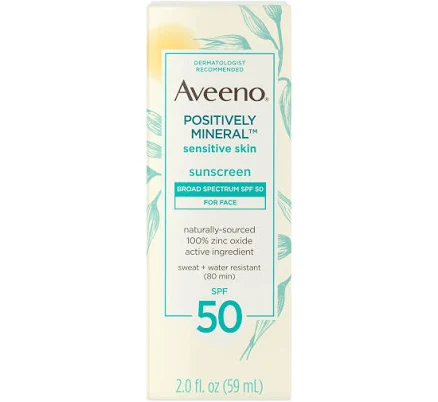
Aveeno Positively Mineral Sensitive Face Sunscreen
Low-medium risk; mineral formula without waterproof claims elevates safety.
Zinc oxide and titanium dioxide carry lower PFAS risk than chemical alternatives and the product lacks waterproof or water-resistant marketing. Aveeno makes no public PFAS disclosure.
We flunk more products than we pass. This one earned its grade. How we grade
Material
mineral sunscreen (zinc oxide/titanium dioxide), typical cosmetic excipients
Brand disclosure
Brand is silent on PFAS
Lab data
No public lab test
You may also be interested in
Top-graded picks in the categories readers replace first, every one scored on the same rubric.

- polypropylene filter housing, carbon/sediment cartridge
- We found no PFAS statement from the brand
- Bacterial growth in spent cartridges
3 hazards checked on this product, all on its full breakdown.

Aquasure
Premier Series 75 GPD Under Sink Reverse Osmosis Water Filtration System
- RO membrane, carbon filters, stainless steel housing
- We found no PFAS statement from the brand
- Bacterial and microbial growth in housing and filters
4 hazards checked on this product, all on its full breakdown.

Avocado
Vegan Mattress
- organic cotton, natural latex, coconut coir, recycled steel coils
- The brand calls it PFAS-free, which we have not verified
- Heavy metals
2 hazards checked on this product, all on its full breakdown.
What Aveeno Positively Mineral Face Sunscreen is made of, ingredients and materials
This is a mineral (physical) sunscreen using zinc oxide and titanium dioxide as active UV blockers, which sit on skin rather than absorbing into it. These minerals are considered low-hazard UV protectants with decades of safety history. The formula also contains typical emollients, silicones, and humectants (glycerin, dimethicone, and similar) that are standard in skincare and carry minimal toxicity concerns at cosmetic use levels. No chemical UV absorbers like oxybenzone or avobenzone are present, which eliminates a common allergen and endocrine-concern category.
What’s concerning
Category baseline
The starting point for this type of product, before anything specific to this product is counted.
No PFAS disclosure
No public statement from the brand about PFAS in this product.
Formaldehyde / VOCs
Cosmetic sunscreens typically use preservatives like methylchloroisothiazolinone or imidazolidinyl urea, which may release trace formaldehyde over shelf life. Full ingredient list is required to assess this specific batch; Aveeno does not publicly disclose preservative choices for this product.
Source, ATSDR ↗Fragrance allergens
Product is marketed for sensitive skin and typically includes minimal fragrance, but full fragrance component disclosure is not provided by brand. Individual sensitivity to common fragrance allergens (limonene, linalool) cannot be ruled out without complete ingredient transparency.
What’s reassuring
Base material not linked to PFAS
The main material recorded for this product is not one associated with PFAS.
Talc contamination (absent)
No talc is listed in the ingredient deck for this product. Talc contamination risk does not apply here.
Heavy metals
Zinc oxide and titanium dioxide are regulated mineral pigments with established purity standards; contamination risk is low in mainstream sunscreens. No recalls or testing warnings exist for Aveeno's mineral sunscreen line.
Source, FDA ↗Silicone accumulation (topical)
Dimethicone and similar silicones are widely used in sunscreens and do not penetrate skin or bioaccumulate systemically. No toxicity concern is established for cosmetic-use levels on healthy skin.
How is this PFAS grade calculated?
The brand's record and disclosure
Aveeno (Johnson & Johnson subsidiary) has no known recalls specific to this sunscreen and maintains general cosmetic safety compliance. However, the brand does not publicly disclose PFAS testing or commit to phase-out pledges, which is increasingly expected in the skincare sector. J&J faced historical litigation over talc contamination in other products, but Aveeno's sunscreen does not list talc as an ingredient. No third-party certifications (e.g., EWG Verified, reef-safe) are claimed on this product.
How it compares in its category
Mineral sunscreens are generally regarded as having lower skin penetration concern than chemical alternatives because active ingredients do not penetrate skin or metabolize systemically. This product sits in the mainstream-accessible tier; brands like Blue Lizard and Badger offer similar zinc-oxide formulas with stronger environmental/PFAS messaging, while luxury options (Colorescience, Supergoop) command higher prices for comparable mineral protection. Aveeno's positioning emphasizes sensitive skin compatibility, which aligns with mineral sunscreen advantages but lacks differentiation in hazard profile.
If you buy it
Mineral sunscreens can leave visible white cast; apply and blend thoroughly to avoid patchy coverage that reduces UV protection efficacy. Store in a cool, dry place away from direct heat, as silicone-based emollients can separate under extreme temperature but do not degrade into harmful byproducts. Reapply every two hours if swimming or sweating; this product makes no waterproof claim, so water exposure will compromise protection faster. Discontinue if any irritation occurs, though mineral formulas are less likely to trigger allergic reactions than chemical alternatives.
What is not known about PFAS in this product?
- Basis
- Model estimate, 72% confidence, not a lab result
- Lab test
- None on record for this exact product
- Brand statement
- Aveeno has made none
Formulations change between production runs, so check the current label. How we grade.
What are the PFAS-free alternatives to Aveeno Positively Mineral Sensitive Face Sunscreen?
- Mineral sunscreen, zinc oxide base
- A third party reports verifying it as PFAS-free
- 1,4-dioxane (non-intentional contaminant from surfactants/emulsifiers)
2 hazards checked on this product, all on its full breakdown.
- mineral sunscreen (zinc oxide or titanium dioxide base)
- The brand calls it PFAS-free, which we have not verified
- Synthetic fragrance allergens
More sunscreen grades
How we score, every product runs through the same public 0-100 rubric based on materials, coatings, brand disclosure, lab findings, and recalls. See the full methodology → Spotted a mistake? Report an error.