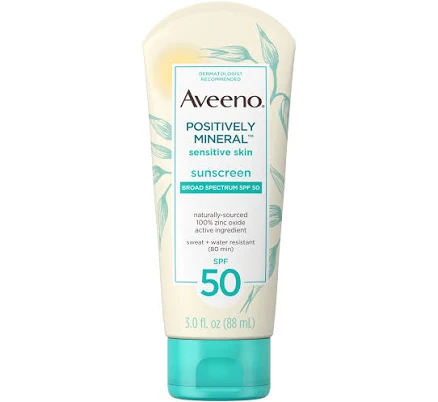
Aveeno Positively Mineral Sensitive Skin Sunscreen Lotion
Low-medium risk; mineral sunscreen without fluorinated additives.
Zinc oxide and titanium dioxide are not PFAS compounds and serve as the active ingredients. Aveeno makes no PFAS claims, though mineral-only formulations typically carry lower risk.
We flunk more products than we pass. This one earned its grade. How we grade
Material
mineral sunscreen (zinc oxide, titanium dioxide)
Brand disclosure
Brand is silent on PFAS
Lab data
No public lab test
You may also be interested in
Top-graded picks in the categories readers replace first, every one scored on the same rubric.

- polypropylene filter housing, carbon/sediment cartridge
- We found no PFAS statement from the brand
- Bacterial growth in spent cartridges
3 hazards checked on this product, all on its full breakdown.

Aquasure
Premier Series 75 GPD Under Sink Reverse Osmosis Water Filtration System
- RO membrane, carbon filters, stainless steel housing
- We found no PFAS statement from the brand
- Bacterial and microbial growth in housing and filters
4 hazards checked on this product, all on its full breakdown.

Avocado
Vegan Mattress
- organic cotton, natural latex, coconut coir, recycled steel coils
- The brand calls it PFAS-free, which we have not verified
- Heavy metals
2 hazards checked on this product, all on its full breakdown.
What Aveeno Positively Mineral Sunscreen Lotion is made of, ingredients and materials
Aveeno Positively Mineral uses zinc oxide and titanium dioxide as UV blockers, which sit on the skin surface rather than absorbing into it. These inorganic minerals are used as alternatives to chemical sunscreens (like oxybenzone or avobenzone) because they don't penetrate or undergo metabolic breakdown. The lotion base is formulated without water-resistant polymer coatings, which reduces the theoretical pathway for PFAS incorporation that water-resistant sunscreens sometimes carry. Mineral formulations have a longer safety track record in dermatology, though they may leave visible white cast on darker skin tones.
What’s concerning
Category baseline
The starting point for this type of product, before anything specific to this product is counted.
No PFAS disclosure
No public statement from the brand about PFAS in this product.
Fragrance allergens and irritants
Product is labeled 'hypoallergenic' but contains fragrance compounds. Individuals with fragrance sensitivity may experience contact dermatitis or photosensitivity; patch testing recommended for sensitive skin before full-face application.
Titanium dioxide nanoparticle inhalation risk
If product is spray-applied, inhaled titanium dioxide nanoparticles theoretically pose minimal lung risk but data in humans is limited. Lotion formulation eliminates spray inhalation route. Use lotion, not spray version if respiratory sensitivity is a concern.
Skin irritation from zinc oxide or inactive ingredients
Individual sensitivity to zinc oxide occurs in a small percentage of users; marketed for sensitive skin but may cause irritation, dryness, or breakouts in some individuals. Patch testing on a small area for 24-48 hours is prudent before full-face use.
What’s reassuring
Base material not linked to PFAS
The main material recorded for this product is not one associated with PFAS.
Heavy metals
FDA-regulated zinc oxide and titanium dioxide are subject to purity standards; no recalls or heavy metal contamination reported for Aveeno Positively Mineral. Dermal absorption through intact skin is negligible with topical mineral sunscreens.
Source, FDA ↗Formaldehyde / VOCs
No formaldehyde releasers are reported in available ingredient disclosures. Standard cosmetic preservatives (phenoxyethanol, methylisothiazolinone) are present but not known carcinogens at topical concentrations.
Source, ATSDR ↗How is this PFAS grade calculated?
The brand's record and disclosure
Aveeno (Johnson & Johnson subsidiary) does not publicly disclose detailed PFAS testing or commitment statements specific to this product line. The brand has faced no major recalls or safety litigation tied to Positively Mineral sunscreens. J&J as a parent company has faced historical legal challenges on talc (unrelated to this mineral sunscreen) but does not include talc in this formula. The company maintains general FDA compliance but remains largely silent on emerging contaminant screening beyond regulatory minimums.
How it compares in its category
This product sits in the mainstream mineral sunscreen tier, competing with CeraVe, Blue Lizard, and Coppertone Sport mineral variants. Compared to chemical sunscreens, it avoids hormonal endocrine concerns but trades off texture (thicker, whiter) for lower systemic absorption risk. Compared to premium mineral brands (EltaMD, Colorescience), Aveeno offers wider retail availability and lower cost but fewer independent third-party certifications. No independent testing data is publicly available comparing PFAS or heavy metal content across these brands.
If you buy it
Apply generously (quarter teaspoon for face) and reapply every two hours, or immediately after water exposure. Store in cool, dry conditions away from direct heat to prevent separation or ingredient degradation. Check the product visually for discoloration or separation before each use; if the texture changes significantly, replacement is prudent. Discontinue use and consult a dermatologist if rash, irritation, or photosensitivity develops, though allergic reactions to zinc oxide or titanium dioxide are rare. Do not ingest; keep out of children's mouths.
What is not known about PFAS in this product?
- Basis
- Model estimate, 72% confidence, not a lab result
- Lab test
- None on record for this exact product
- Brand statement
- Aveeno has made none
Formulations change between production runs, so check the current label. How we grade.
What are the PFAS-free alternatives to Aveeno Positively Mineral Sensitive Skin Sunscreen Lotion?
- Mineral sunscreen, zinc oxide base
- A third party reports verifying it as PFAS-free
- 1,4-dioxane (non-intentional contaminant from surfactants/emulsifiers)
2 hazards checked on this product, all on its full breakdown.
- mineral sunscreen (zinc oxide or titanium dioxide base)
- The brand calls it PFAS-free, which we have not verified
- Synthetic fragrance allergens
More sunscreen grades
How we score, every product runs through the same public 0-100 rubric based on materials, coatings, brand disclosure, lab findings, and recalls. See the full methodology → Spotted a mistake? Report an error.